


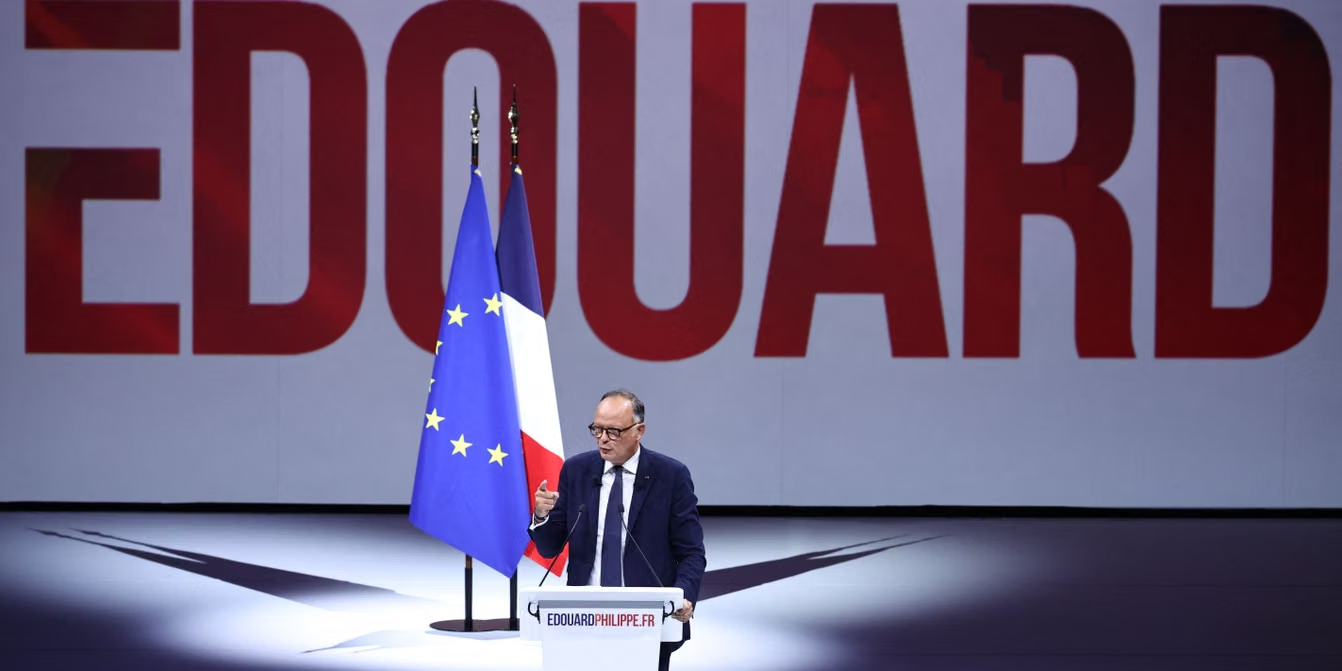
France’s leading politicians stepped back into public view over the weekend, marking the start of a new French political season 2027 ahead of the next presidential vote. Several major figures appeared at public events and interviews, signaling that campaign season is now truly underway.
The gathering brought together names from across the political map. Younger leaders on the right shared the stage with senior figures from past governments, while the sitting prime minister used his platform to focus on more immediate concerns. It was a rare moment when so many rivals appeared in public within a single weekend, each testing messages ahead of the long campaign to come.
Analysts say the early start reflects how unsettled French politics has become since snap elections split parliament into competing blocs. No single party holds a majority, and recent years have seen a rapid turnover of prime ministers. That instability has pushed political parties to begin positioning early, hoping to win back public trust before voters head to the polls.
Much of the public attention has centered on figures from the far right, who continue to poll strongly. Their rivals on the center and left are working to build unified alliances, aware that a divided opposition could hand another advantage to their opponents. Former leaders from past governments have also re-entered the conversation, offering their own views on the party’s direction and the shape of any future coalition.
Behind the public appearances, a quieter battle is unfolding over the national budget. Government leaders have warned that a stable spending plan must pass before the political season becomes too heated, or the country risks renewed financial uncertainty. That warning has added urgency to talks between rival factions, many of whom remain reluctant to compromise so early in the race.
Public opinion surveys suggest voters remain frustrated with the pace of political change. Trust in national institutions has slipped in recent years, and many citizens say they want clearer answers on the economy, immigration, and public services. Candidates are expected to address these themes directly as the months progress, competing to appear both stable and bold.
Political commentators note that the early jockeying could shape how alliances form later in the race. Smaller parties may need to choose sides sooner than usual, while larger blocs will look to absorb undecided voters. The outcome of these early moves could determine which candidates gain enough momentum to lead their coalitions into the final rounds of voting.
For now, the focus remains on public appearances, interviews, and carefully worded statements designed to test which messages resonate. Every public event is being closely watched for hints about strategy, alliances, and who might eventually emerge as the strongest challenger.
With more than a year remaining before the vote, few expect the field to settle quickly. Instead, analysts predict a long and closely watched contest, with public support shifting as new issues rise and fall. The coming months will likely bring more rallies, interviews, and policy announcements as each camp tries to build lasting support.
For everyday citizens, the early start offers a chance to hear directly from the people who may lead the country next. Town hall meetings, media appearances, and public debates are expected to multiply as autumn approaches, giving voters more opportunities to compare visions for the years ahead. Whether this early momentum translates into lasting support remains to be seen, but the French political season 2027 has clearly begun in earnest, setting the tone for what promises to be a closely contested and consequential race.
