


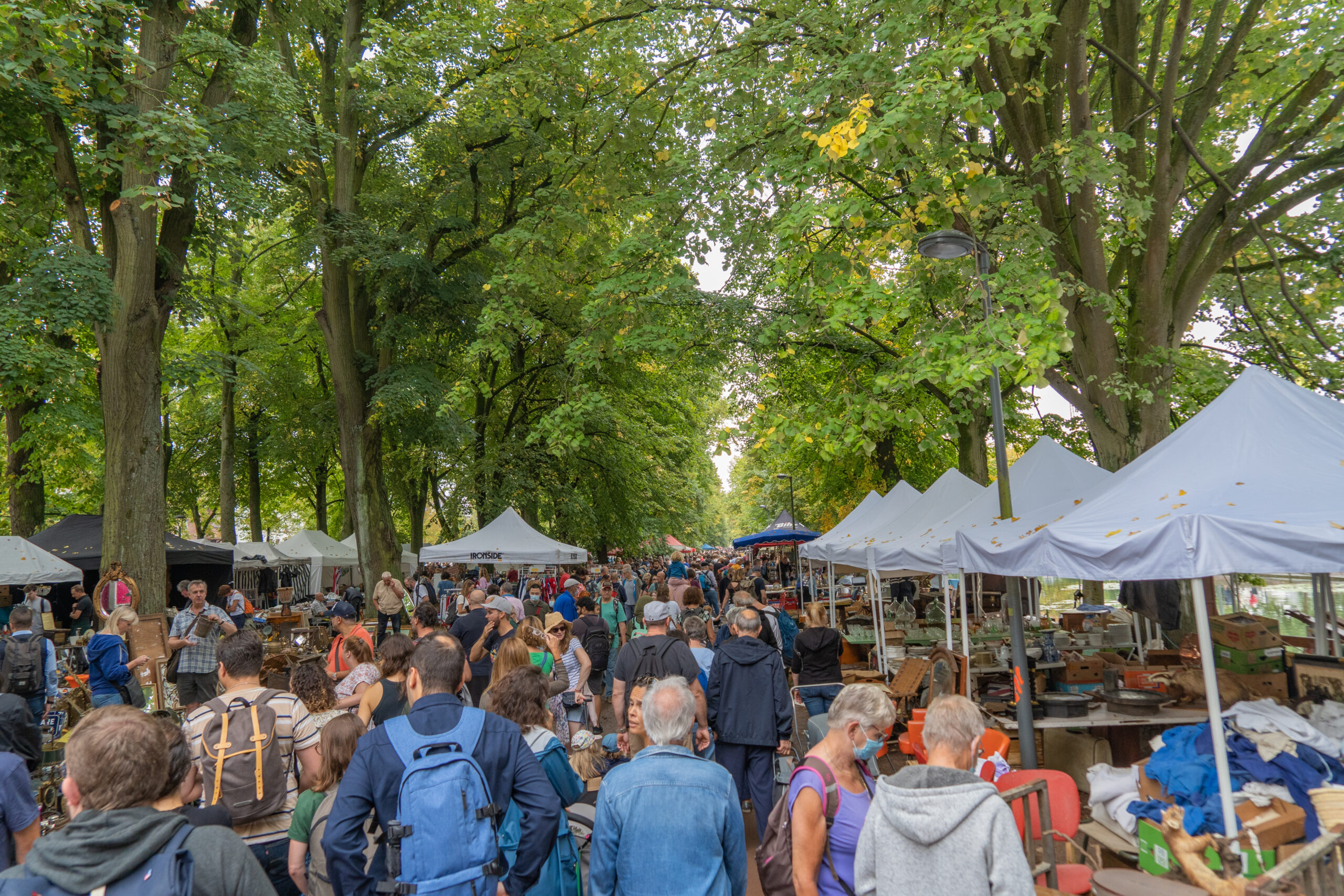
Europe’s largest flea market is reaching its final hours today, as the annual Lille Braderie wraps up a weekend that transformed the northern French city into a sprawling open air marketplace stretching across roughly one hundred kilometers of streets. The event, which began Saturday morning, runs until this evening, capping thirty four straight hours of bargain hunting, antiques, and the food tradition that has become inseparable from the occasion.
Organizers expect between two and three million visitors to pass through the city over the course of the weekend, drawn by more than ten thousand vendors selling everything from serious antique furniture and Art Deco jewelry to vintage clothing, books, and household curiosities. The scale of the event places it firmly among the largest street markets anywhere in Europe, with sellers setting up stalls across the historic Vieux Lille district, the Grand Place, and neighborhoods including Wazemmes, each offering a distinct flavor within the broader event.
The Braderie traces its origins back centuries, with the first written record of a trading fair on the site dating to 1127, when it was known as the Franche Foire. The modern name derives from an old Flemish word meaning to roast, first used in 1446 when two Flemish merchants received permission to sell roasted chicken during the fair, establishing a culinary tradition that continues in dramatically expanded form today.
Food remains as central to the Braderie experience as the shopping itself, with the event’s signature dish of moules frites, mussels served with fries, consumed in staggering quantities throughout the weekend. Restaurants across the city compete informally to build the tallest pile of empty mussel shells outside their establishments, a quirky visual tradition that has become one of the event’s most recognizable features. Organizers estimate that visitors consume close to five hundred tons of mussels over the course of the weekend.
Beyond the shopping and dining, the Braderie carries a genuine festival atmosphere, with street performers, musicians, and traditional folklore groups adding to the lively mood throughout the city center. The event’s massive scale means that Lille’s normal traffic patterns are entirely suspended for the weekend, with the city center closed to vehicles and pedestrians reclaiming streets that are typically filled with cars and buses.
Serious antique collectors have long recognized the Braderie as offering genuine finds among the volume of goods on display, distinguishing it from more generic flea markets. French vintage posters, rustic tools, decorative textiles, and quality porcelain regularly surface among the stalls, drawing dedicated collectors who travel specifically for the antiques on offer in the Vieux Lille area, where professional dealers concentrate their offerings.
The event’s accessibility has helped cement its status as a major draw for visitors well beyond France’s borders. Lille’s position close to the Belgian border and its strong rail connections make the city easily reachable from Brussels in around thirty five minutes and from Paris in roughly an hour, while the Eurostar connection brings London within about eighty minutes of the festivities, helping explain the truly international character of the crowds that descend on the city each year.
As today’s closing hours approach, vendors will begin the process of packing up stalls that in some cases were set up as early as Friday evening in anticipation of the weekend rush. For a city whose identity is deeply tied to this centuries old tradition, the Braderie’s conclusion each year marks both the end of summer festivities and a moment of civic pride in an event that has endured for nearly nine hundred years since its earliest recorded beginnings.
