


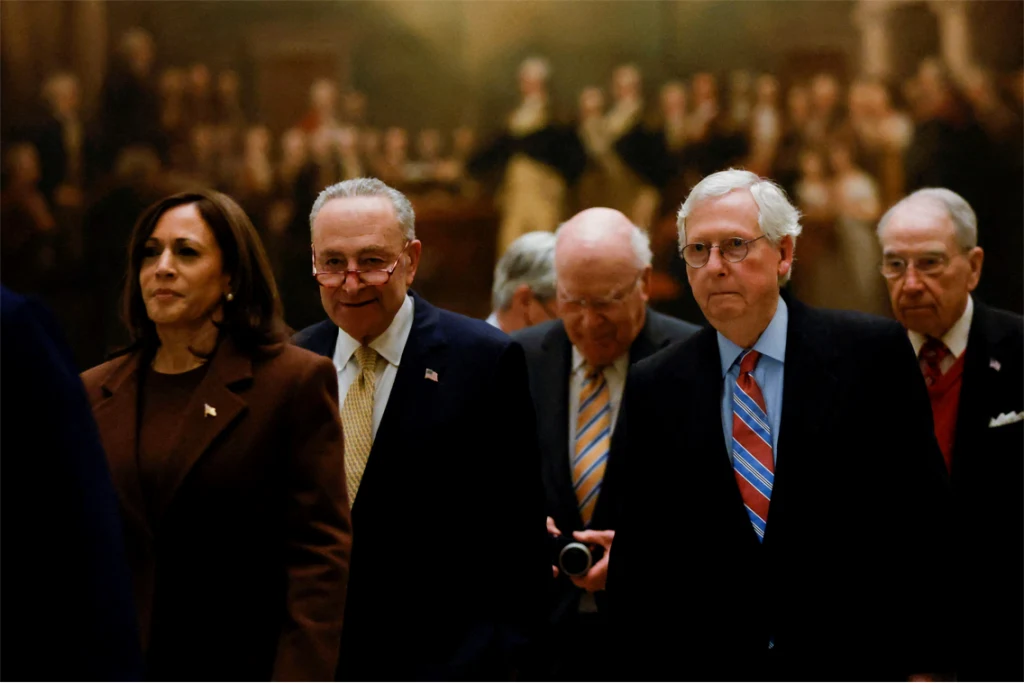
American political leaders from both parties are showing cross-party cooperation on U.S. foreign policy priorities. Lawmakers have emphasized unity in supporting strategic alliances abroad despite domestic political differences.
Recent bipartisan efforts, including high-profile senators’ trips to Asia, highlight the importance of presenting a united front in international diplomacy. Officials said these initiatives aim to strengthen relationships with key allies and demonstrate U.S. commitment to global stability.
Republican and Democratic leaders stressed that maintaining strong diplomatic ties is a shared priority. By coordinating across party lines, lawmakers aim to reinforce partnerships with countries critical to regional security, economic growth, and global cooperation.
Observers noted that bipartisan backing on foreign policy enhances credibility. International partners see a consistent message from Washington, which reassures allies and signals a coordinated U.S. stance on security, trade, and diplomatic engagement.
The cross-party cooperation extends to multiple regions, including Asia and Europe. Lawmakers cited strategic partnerships, economic collaboration, and military alliances as key areas where unity is essential. Officials said that coordinated diplomacy helps address shared global challenges effectively.
Analysts emphasized that such cooperation is especially important amid rising geopolitical tensions. A united approach ensures that U.S. foreign policy priorities are clear and consistent, reducing uncertainty for allies and strengthening negotiation positions with other nations.
Bipartisan support also reflects a commitment to multilateralism and long-term strategy. By reinforcing shared objectives, lawmakers signal that U.S. foreign policy is guided by national interests and global responsibility rather than domestic political shifts.
Leaders from both parties highlighted the importance of ongoing dialogue with international partners. These discussions cover security cooperation, trade agreements, technology partnerships, and joint responses to global crises. Coordinated engagement ensures that U.S. policies remain effective and credible.
Domestic observers said that bipartisan unity on foreign policy priorities helps bridge political divides at home. By focusing on shared goals abroad, lawmakers demonstrate that national security and global leadership can transcend party lines.
Officials noted that bipartisan diplomacy also benefits U.S. economic interests. Strengthening alliances supports trade, investment, and supply chain stability, which are crucial for long-term growth. Lawmakers said cooperation ensures that U.S. foreign policy promotes both security and prosperity.
This cross-party approach underscores the importance of collaboration in international relations. By showing unity on foreign policy priorities, American leaders reinforce alliances, strengthen global partnerships, and send a clear message that U.S. commitments abroad are steadfast, regardless of political differences.
