


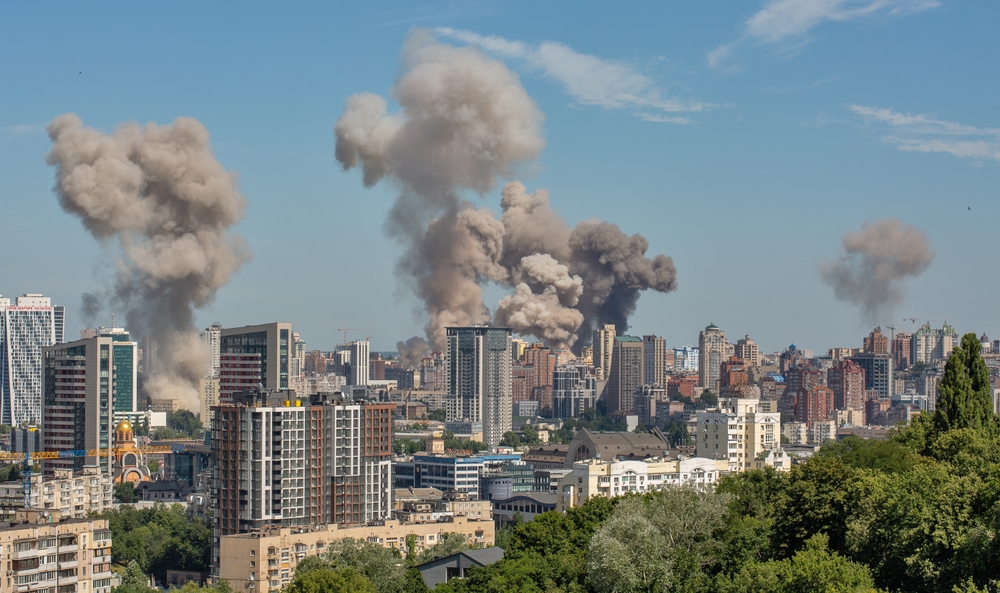
Russian forces launched a large-scale attack on Kyiv, killing four and injuring 27. Fires broke out, and buildings suffered extensive damage.
Mayor Vitali Klitschko reported rescue teams could not yet retrieve two bodies from the rubble, as authorities continue gathering details about the victims. Emergency crews treated at least 27 injured people across multiple districts.
Ukrainian President Volodymyr Zelenskyy condemned the strikes, calling them a deliberate attack on civilians and infrastructure.
Weapons and Casualties
Zelenskyy detailed the assault, stating Russia used 430 drones and 18 missiles, including ballistic and aeroballistic types. Powerful explosions shook the city as air defenses activated. Nine people, including a pregnant woman, required hospitalization. Two children, aged 7 and 10, also suffered injuries.
At least 11 multi-storey residential buildings sustained damage in Shevchenkivskyi, Holosiivskyi, and other districts. Falling debris caused fires near a medical facility and inside a nonresidential building. Authorities urged residents to stay in shelters and warned of potential power and water outages.
In surrounding regions, strikes damaged homes and critical infrastructure, injuring at least six people. A 55-year-old man in Bila Tserkva suffered thermal burns and was hospitalized. Ukraine’s Air Force reported additional strikes across the country.
Wider Conflict and Strategic Gains
The attacks coincided with Russian advances in southern Ukraine. Ukrainian forces withdrew from several villages in Zaporizhzhia following fierce battles. Over four weeks, Russian forces claimed nine settlements in Donetsk, eight in Zaporizhzhia, seven in Dnipropetrovsk, and five in Kharkiv.
Despite these gains, Russia’s war of attrition caused heavy casualties and armor losses. Ukraine maintained incremental territorial control. The Institute for the Study of War noted Russia’s siege of Pokrovsk moved slowly because commanders dispersed elite drone operators and special forces too broadly.
