


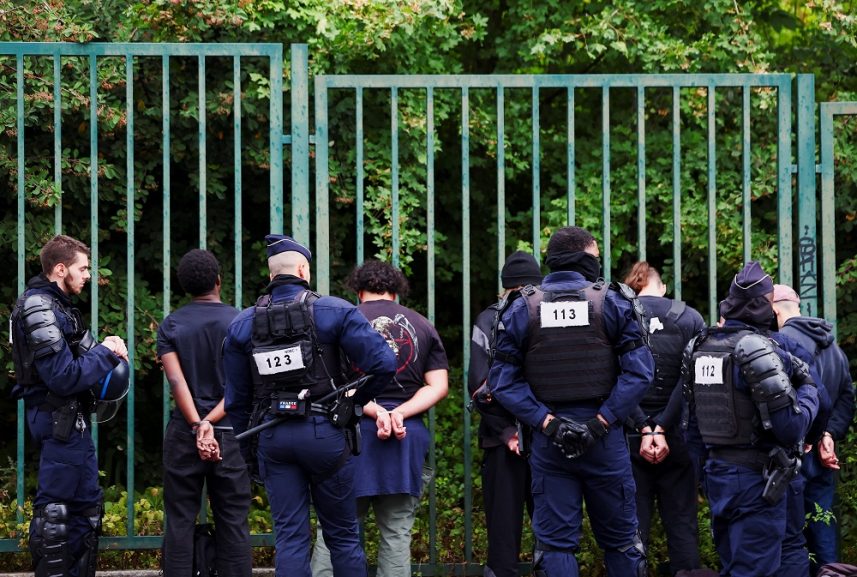
Protesters across France staged large demonstrations on Wednesday under the banner of the Block Everything movement. The protests disrupted traffic, blocked roads, and led to clashes with police. Demonstrators expressed anger at planned budget cuts and frustration with the political elite.
Authorities deployed thousands of police officers and security forces nationwide to respond quickly to the blockades. Officials confirmed dozens of arrests in different cities. Despite widespread unrest, the government said France was not entirely paralyzed, as blockades were removed soon after they were set up.
The protests come during a tense political week. Only two days earlier, lawmakers voted out Prime Minister Francois Bayrou in a confidence vote. His proposals to reduce the country’s growing debt faced strong opposition in parliament. On Tuesday, President Emmanuel Macron appointed Sebastien Lecornu as the new prime minister, his fifth in less than two years. This decision sparked outrage among left-wing groups, who accused the president of ignoring public anger.
In Paris, demonstrators set up barricades near schools and blocked traffic with burning objects. Firefighters were called to remove debris, while police reported 132 arrests in the city. Protesters targeted President Macron directly, blaming him for the crisis. Union leaders at the scene claimed the unrest was not just about ministers but about the president’s leadership style.
The Block Everything movement began in May as an online campaign. It was initially shared by right-wing groups but later spread to left-wing and far-left activists. The movement has no central leadership and relies heavily on social media to mobilize supporters. Researchers note similarities to the Yellow Vest protests of 2018, which also grew into a broader anti-Macron uprising.
In Nantes, protesters blocked highways with burning tires and bins. Police used tear gas to disperse crowds who attempted to occupy a roundabout. Similar scenes played out in Montpellier, where demonstrators clashed with police at roadblocks. A protester carried a banner demanding Macron’s resignation. Police responded with tear gas after objects were thrown at officers.
Highways across France saw major traffic disruption. Operator Vinci reported blockades and delays near Marseille, Montpellier, Lyon, and Nantes. In Bordeaux, around 50 hooded individuals tried to start a blockade. In Toulouse, a fire near the train station briefly stopped services before firefighters brought it under control.
Interior Minister Bruno Retailleau said 80,000 police and security officers were deployed nationwide, including 6,000 in Paris. Media reports estimated that 100,000 people could join the protests. Authorities stressed their goal was to keep roads clear while allowing peaceful demonstrations.
Protesters said the actions were meant to send a clear signal to the government. They argue that budget cuts, debt reduction measures, and political maneuvering are creating more hardship for ordinary people. Demonstrators accuse Macron of pushing austerity policies while ignoring the struggles of citizens facing high living costs.
The Block Everything protests highlight deep public discontent with the country’s leadership. Many fear that political instability, combined with unpopular economic policies, will only fuel further unrest. Comparisons with the Yellow Vest movement underline the risk of a prolonged standoff between the government and angry citizens.
Observers say the movement is difficult for the government to contain because of its loose organization. With no clear leaders or negotiation channels, authorities face challenges in addressing demands. Analysts warn that the protests could intensify if the government continues with unpopular fiscal reforms.
For now, France remains on edge as demonstrations continue across major cities. Whether the Block Everything movement fades or grows into a new wave of long-term unrest will depend on how the government responds to the widespread anger on display.
