


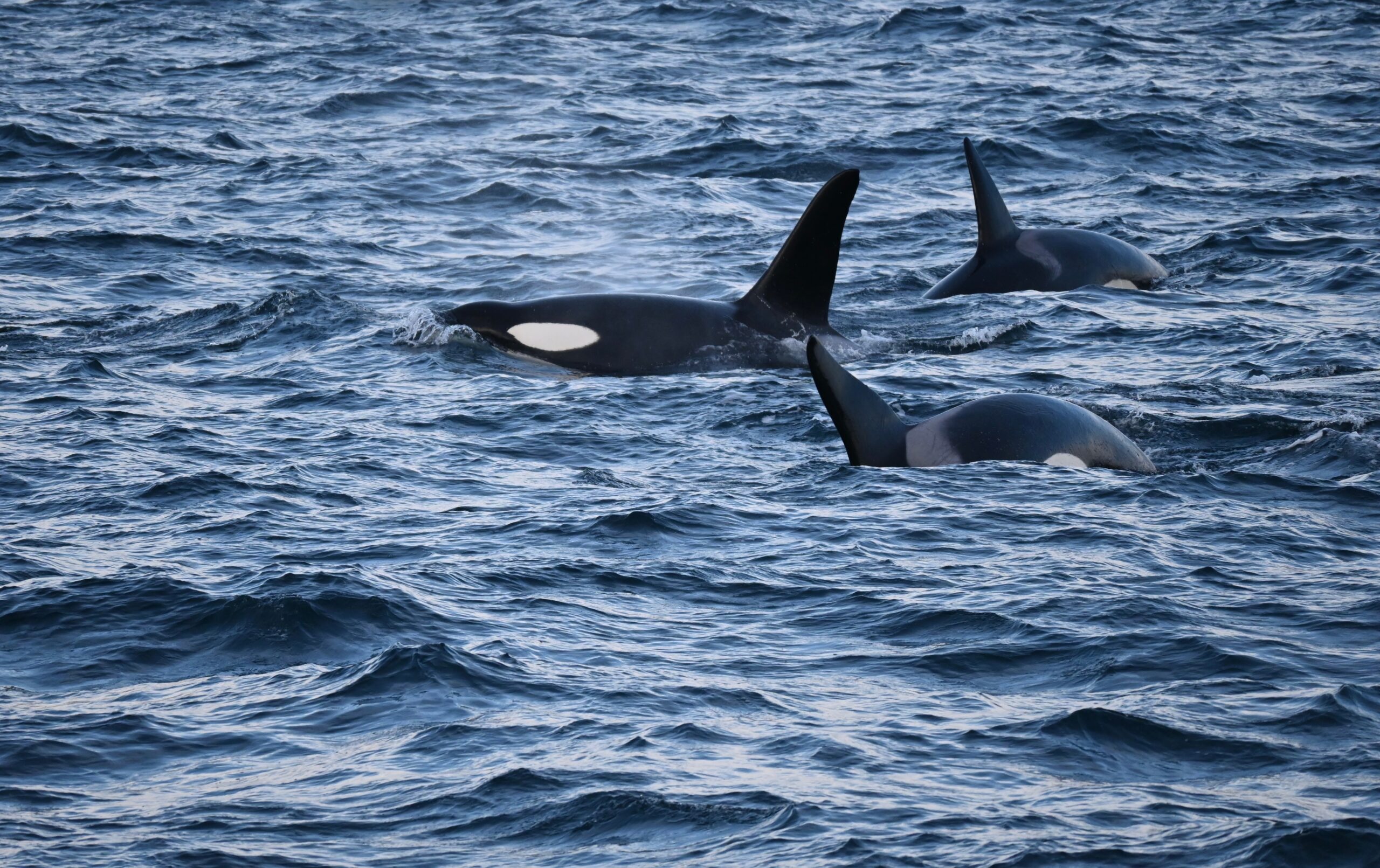
Scientists have documented orcas and Pacific white-sided dolphins hunting together off British Columbia — the first evidence of cooperative foraging between the two species.
Northern resident killer whales, which rely almost entirely on Chinook salmon, were observed following dolphins that acted like “scouts.” The dolphins chased salmon ahead of them, allowing the whales to catch the fish. In return, the dolphins fed on leftovers when the whales tore the salmon apart at the surface.
Researchers used drones, underwater video and acoustic tags to track the animals and found no signs of aggression. Instead, the whales consistently positioned themselves behind the dolphins, strongly suggesting intentional cooperation.
Recordings also picked up alternating echolocation clicks from both species, raising the possibility they were listening to each other to improve their hunt.
Scientists now want to learn whether whales that partner with dolphins are more successful hunters — but the discovery already shows how remarkably adaptable both species can be.
