


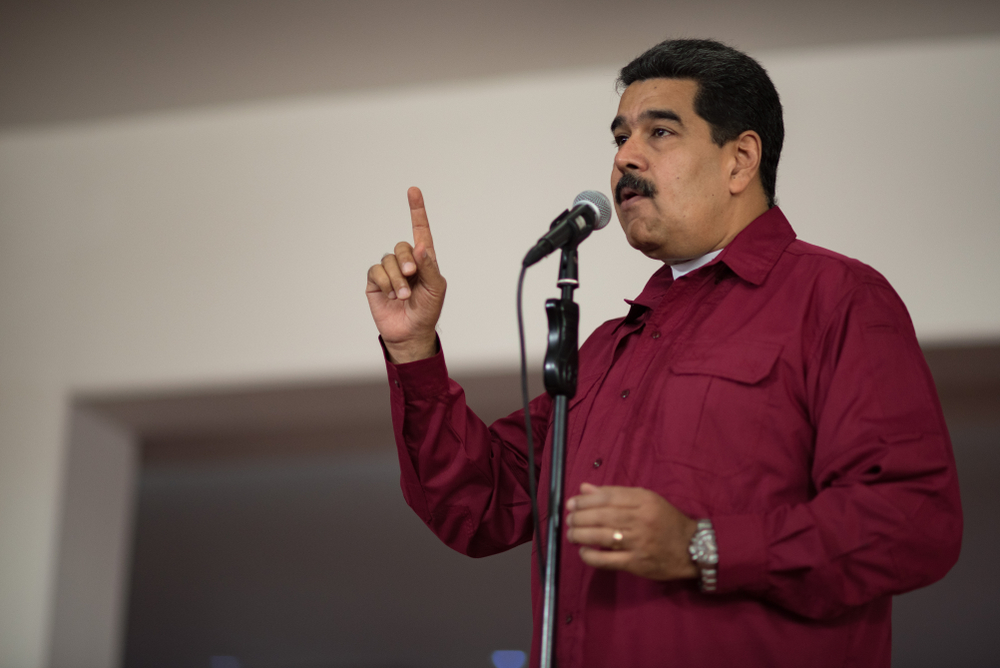
In a move that shocked the international community, US forces arrested Venezuelan President Nicolás Maduro and his wife, Cilia Flores, in Caracas and transported them to New York to face criminal charges. Following the operation, President Donald Trump announced that the United States would take temporary control of Venezuela until a safe and orderly transition could be established.
“We are going to run the country until such time as we can do a safe, proper and judicious transition,” Trump said during a news conference at his Mar-a-Lago resort. “We can’t take a chance that somebody else takes over Venezuela who doesn’t have the good of the Venezuelan people in mind.”
US Assumes Interim Leadership
Trump said the country would be managed by a designated team including Secretary of State Marco Rubio, Defense Secretary Pete Hegseth, and Chairman of the Joint Chiefs of Staff General Dan Caine. He offered few details on how the interim administration would operate.
At the press conference, Trump also claimed that Venezuela’s vice president, Delcy Rodríguez, had been sworn in as Maduro’s successor and was ready to cooperate with US plans. Venezuelan officials, however, have not confirmed any such swearing-in.
Trump indicated that US companies would be involved in rebuilding Venezuela’s damaged oil infrastructure, saying, “We’re going to have our very large United States oil companies… spend billions of dollars, fix the badly broken infrastructure, and start making money for the country.” He added that a “second and much larger attack” could occur if necessary.
Legal Justification and Political Response
Secretary of State Rubio insisted that the operation did not require congressional approval, describing it as a law enforcement action supported by the military. Maduro, he said, had been indicted in the United States in 2020 and was a fugitive with a $50 million reward. Trump added that Congress had not been informed to avoid potential leaks.
The operation drew immediate criticism from Democrats. Senator Mark Warner warned that such actions could set a dangerous precedent, questioning what would stop other countries from abducting foreign leaders under similar claims. Warner also accused the administration of hypocrisy, noting Trump’s previous pardon of former Honduran President Juan Orlando Hernández, who had been convicted of drug trafficking in the US.
Uncertain Future for Venezuela
Republicans in Congress largely supported the move. Senator Roger Wicker praised Trump for a “successful mission” and said the operation targeted criminal networks tied to Maduro. He urged Venezuelans to act quickly to restore stability and prosperity in their country.
Analysts, however, cautioned that the intervention could trigger instability. Daniel DePetris of Defense Priorities warned that the country could face military splits, growth of criminal groups, civil conflict, or even the rise of a new autocrat.
The Trump administration has offered multiple justifications for its actions, from combating drug trafficking to reclaiming oil resources and promoting democracy. But DePetris argued that Venezuela, long struggling economically, poses little direct threat, describing it as a bankrupt state with a collapsing economy.
“This operation could reshape the country, but whether the outcome is positive or negative remains uncertain,” he said.
