


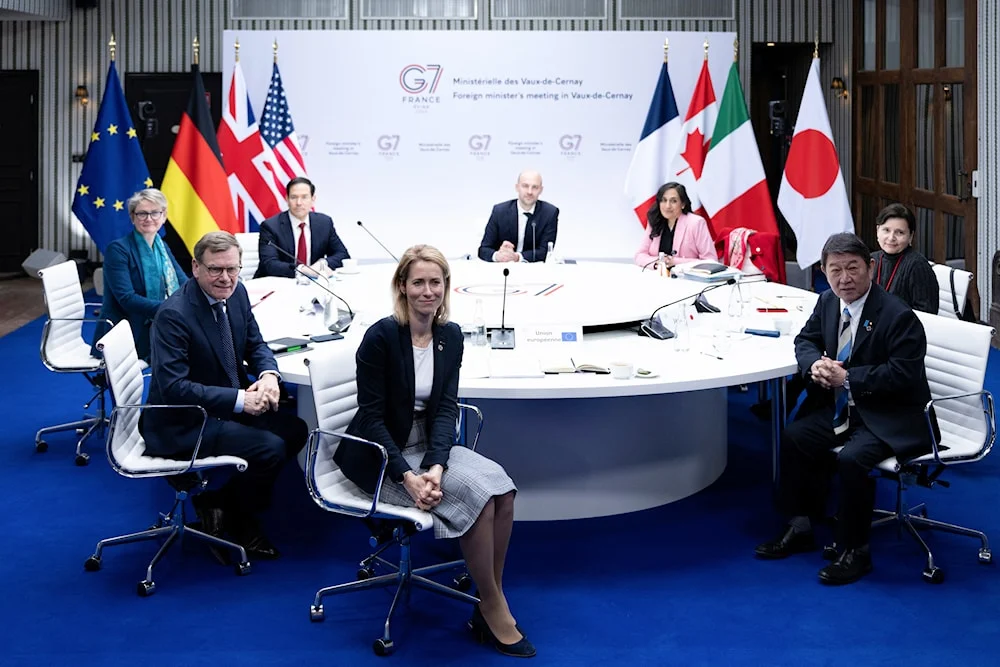
The G7 Trade Talks Paris have begun at a time of rising global tension. Trade ministers from leading economies met in Paris to discuss key issues shaping the global economy. The meeting comes as trade disputes and supply risks continue to grow.
The talks are part of the Group of Seven, which includes United States, France, Germany, Japan, Italy, Canada, and United Kingdom. These countries aim to coordinate policies on trade and economic security.
The G7 Trade Talks Paris are taking place over two days. Ministers are focusing on topics like critical minerals, global supply chains, and digital trade. However, a major issue—new tariff threats from Donald Trump—is not expected to be discussed directly in the main sessions.
Trump recently warned that the US could increase tariffs on European cars and trucks. This move could impact trade between the US and the European Union. The two sides had earlier agreed to cap tariffs on auto imports at 15 percent, lower than rates applied to other partners.
Despite the tension, officials say the tariff issue will be handled outside the formal G7 framework. Meetings between key leaders are planned on the sidelines. Jamieson Greer is expected to meet Maros Sefcovic during the visit.
They will also meet Roland Lescure to discuss trade relations. These talks may help address concerns over tariffs and strengthen cooperation.
The G7 Trade Talks Paris are also shaped by global events. The ongoing conflict in the Middle East has disrupted energy supply. The Strait of Hormuz remains affected, limiting the flow of oil and raising costs worldwide.
This situation has increased the urgency of securing supply chains. One major focus of the talks is critical minerals. These materials are essential for products like electric vehicle batteries, computer chips, and advanced technology.
France, as the host, has set four main priorities for the meeting. The first is addressing industrial overcapacity. This issue affects global trade balance and has been linked to long-term tensions, especially involving large manufacturing economies.
The second priority is economic security. Leaders want to ensure stable access to key resources. They are exploring ways to diversify supply and reduce reliance on single sources.
Another topic is the future of the World Trade Organization. The organization has faced challenges in recent years. Its role as a global trade referee has weakened, partly due to disagreements among major powers.
Officials say reforms are needed to make the system more effective. The goal is to adapt global trade rules to current economic realities.
E-commerce is also on the agenda. The rapid growth of online shopping has created new challenges. Many small parcels enter countries without tariffs, creating competition issues for local businesses.
To address this, new policies are being introduced. The US has already removed some exemptions on low-value imports. The EU plans to introduce a flat customs duty on small packages later this year.
The G7 Trade Talks Paris highlight the complex nature of global trade today. Countries must balance cooperation with competition. They also need to respond to fast-changing economic conditions.
The meeting will lead into the upcoming G7 leaders’ summit. This event is scheduled for mid-June near Lake Geneva. It is expected to address broader global challenges.
As the talks continue, the focus remains on stability and cooperation. The G7 Trade Talks Paris aim to find solutions that support growth and reduce risk in a changing world economy.
