


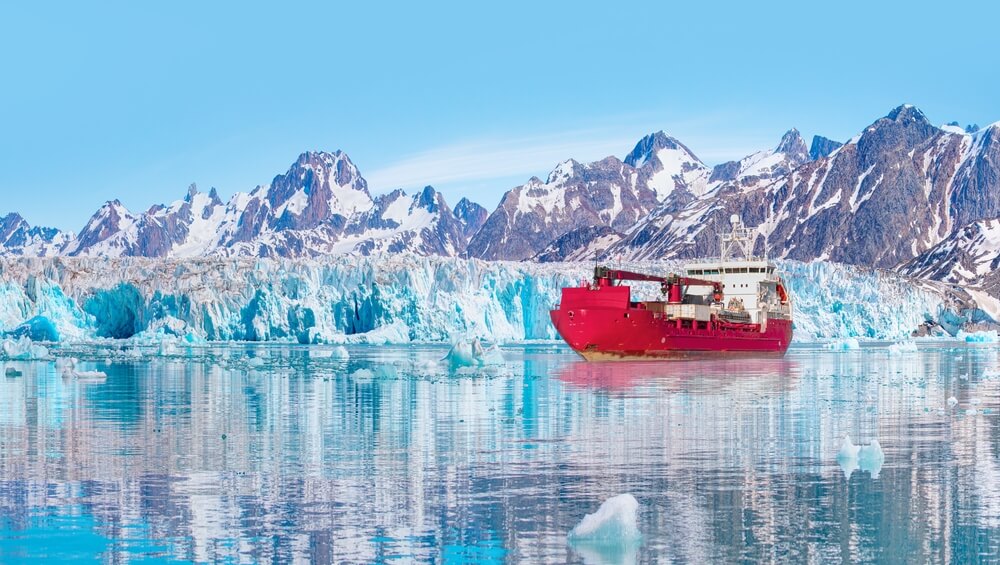
Warming Waters Open the Arctic to More Ships
As global temperatures rise, Arctic sea ice is melting faster than ever, opening waterways that were once frozen year-round. This has triggered a surge in shipping traffic through the region, from cargo vessels to fishing boats and cruise liners. While these new routes shorten travel times between continents, they come with a hidden cost: black carbon, or soot, released from ship engines. When it settles on snow and ice, it darkens the surface, absorbs more sunlight, and accelerates melting — creating a dangerous feedback loop.
“It ends up in a never-ending cycle of increased warming,” says Sian Prior of the Clean Arctic Alliance. “We need to regulate emissions and black carbon, in particular. Both are completely unregulated in the Arctic.”
Cleaner Fuel Proposals Face Political Roadblocks
To curb the impact, France, Germany, Denmark, and the Solomon Islands have proposed that the International Maritime Organization require ships north of the 60th parallel to use “polar fuels,” lighter alternatives that produce less carbon pollution than conventional maritime fuels. The proposal outlines how companies would comply and which areas it would cover.
Yet progress is slow. A 2024 ban on heavy fuel oil has had minimal impact due to loopholes, and broader regulations to cut shipping emissions have been delayed amid geopolitical tensions. Past U.S. pushback under former President Donald Trump slowed IMO efforts on carbon fees, and environmental priorities often take a backseat to national security or economic interests in Arctic nations.
Traffic and Pollution Are Surging
Shipping in the Arctic is on the rise. Between 2013 and 2023, the number of vessels north of the 60th parallel grew by 37%, and the total distance they traveled increased 111%, according to the Arctic Council. Black carbon emissions have risen alongside traffic, from 2,696 tonnes in 2019 to 3,310 tonnes in 2024, with fishing vessels contributing the most.
Environmental advocates argue that regulating ship fuel is the most practical way to reduce black carbon, since limiting traffic outright is unlikely. The Northern Sea Route, which offers shorter voyages between Asia and Europe, is only navigable a few months each year and requires icebreakers. Some companies, citing safety and environmental concerns, have pledged to avoid the route. “The debate around the Arctic is intensifying, and commercial shipping is part of that discussion,” says Søren Toft, CEO of Mediterranean Shipping Company. “Our position at MSC is clear. We do not and will not use the Northern Sea Route.”
