


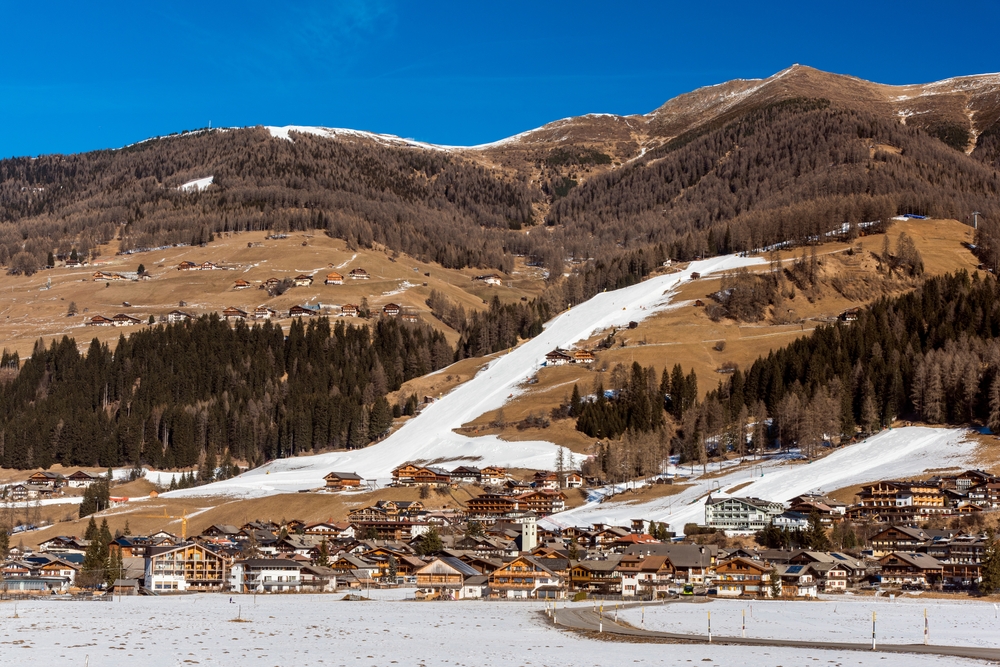
Europe’s ski industry is facing an unprecedented challenge. Rising temperatures and decreasing snowfall are forcing resorts across the continent to rethink how they operate and the very future of winter sports is at stake.
Snow Is No Longer Guaranteed
Even in Italy’s Dolomites, where the 2026 Winter Olympics will open in Milan-Cortina, snow is no longer certain. Natural snowfall is becoming rare and resorts increasingly rely on artificial snow to keep slopes open. Producing snow requires large amounts of water and electricity, pushing up operational costs and making lift passes more expensive. For many European skiers, the once-accessible thrill of winter sports is becoming out of reach.
Climate Change and the Winter Olympics
The warming climate is also reshaping the Winter Olympics. A 2021 study found that by 2050 only four past Olympic host cities Lake Placid, Lillehammer, Oslo, and Sapporo will have reliable snow. If global temperatures rise by four degrees Celsius, almost all historic locations will be unsuitable, leaving only Sapporo by 2080. Even with the Paris Agreement’s two-degree target, just nine former host cities would remain viable by mid-century.
Costs, Water, and the Future of the Alps
Winter tourism generates around 180 billion euros annually, with the Alps at its heart. Germany, Italy, and France have the highest number of ski resorts, yet over half of Europe’s 2,234 resorts are at high risk of low snow under current warming trends. Artificial snow requires roughly a million liters of water per hectare and substantial electricity, adding to greenhouse gas emissions. Meanwhile, skiing costs have risen by almost 35 percent since 2015, with the steepest increases in Switzerland, Austria, and Italy, putting many resorts out of reach for average visitors. Europe’s ski industry faces a critical moment as climate change challenges the tradition and accessibility of winter sports.
