


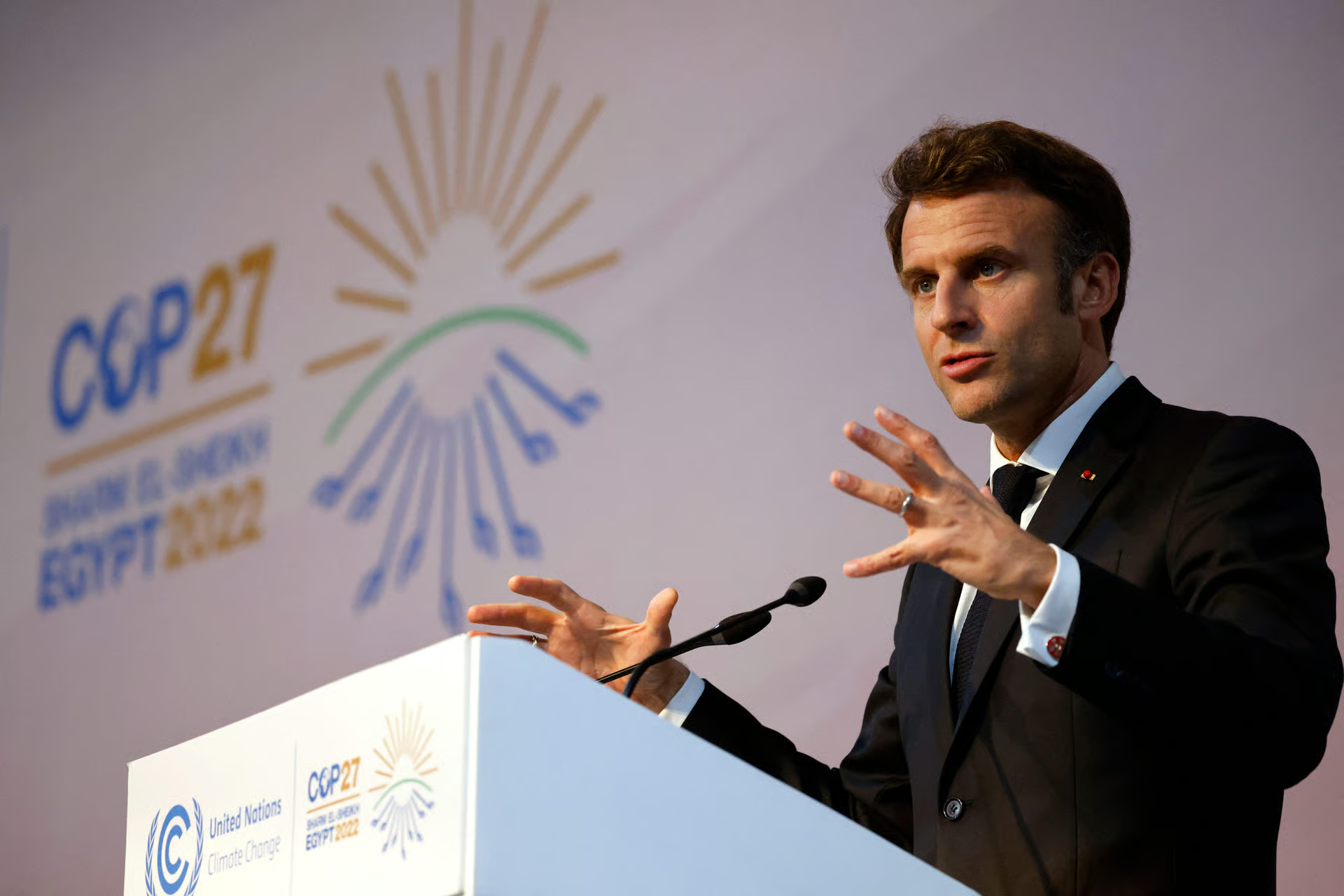
The EU Climate Funding Plan is being advanced by the French government as part of a wider effort to speed up Europe’s green transition. The proposal focuses on increasing financial support for clean energy projects across major cities, including urban hubs like Paris.
France is leading discussions within the European Union to expand funding for renewable energy, low-carbon infrastructure, and climate adaptation projects. The plan aims to strengthen Europe’s ability to meet long-term climate targets while also supporting economic growth through green investment.
Officials say the EU Climate Funding Plan will help accelerate the shift away from fossil fuels. It is designed to support projects such as solar energy expansion, wind power development, energy-efficient buildings, and improved public transport systems.
A key focus of the proposal is increasing investment in green infrastructure in major cities. Urban areas are responsible for a large share of emissions, so improving city energy systems is seen as essential. The plan encourages cities to adopt cleaner technologies and reduce carbon output.
French policymakers argue that stronger EU-level funding is needed to keep climate goals on track. They say many countries face high costs in transitioning to clean energy, and shared funding can reduce financial pressure on individual member states.
The EU Climate Funding Plan also aims to attract private investment. By offering financial incentives and guarantees, the EU hopes to encourage businesses to invest in renewable energy and sustainable infrastructure projects.
Supporters of the plan say it could create new jobs in green industries. These include roles in construction, engineering, energy production, and technology development. Experts believe the transition could also help modernize Europe’s industrial base.
Environmental groups have welcomed the proposal, saying it is a step in the right direction. They stress that faster action is needed to address rising global temperatures and climate risks. However, they also call for clear timelines and strong enforcement.
The plan is expected to be discussed further among EU member states in the coming months. Negotiations will focus on how funds are distributed and which projects receive priority support. Some countries may push for more flexibility in how the money is used.
France has positioned the EU Climate Funding Plan as part of its broader climate strategy. The government has already invested heavily in renewable energy and energy efficiency programs at the national level. Now it is seeking to scale up these efforts across Europe.
If approved, the plan could significantly increase funding for climate-related projects over the next decade. This would support the EU’s long-term goal of becoming climate neutral by mid-century.
Experts say the success of the plan will depend on cooperation between member states. Strong coordination will be needed to ensure funds are used effectively and projects deliver real emissions reductions.
The proposal highlights the growing importance of climate policy in European politics. As climate risks increase, governments are under pressure to act faster and invest more in sustainable solutions.
The EU Climate Funding Plan reflects this shift. It shows how environmental policy is becoming central to economic planning and long-term development strategies across Europe.
