


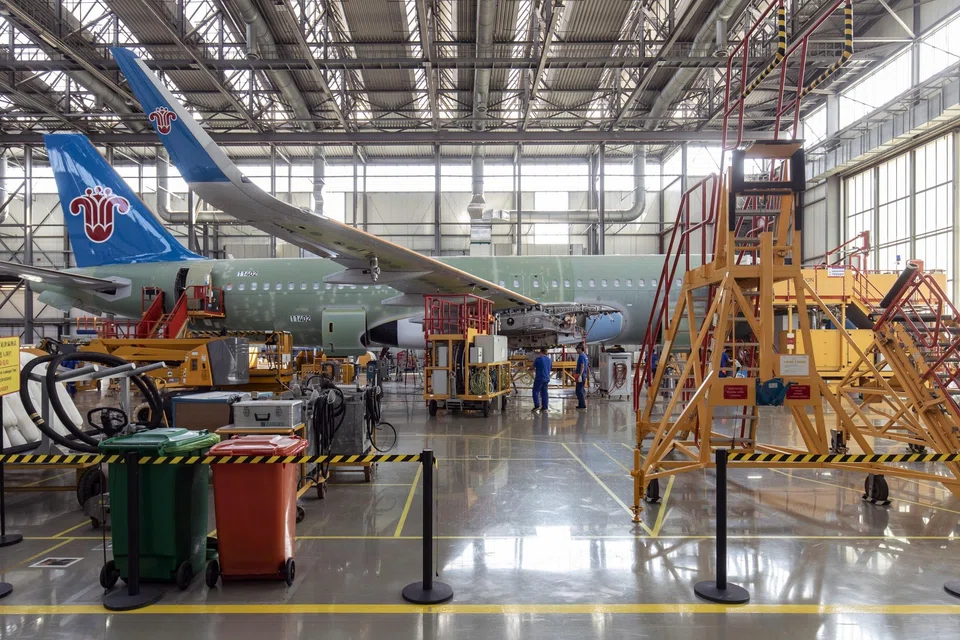
Airbus has secured a major Airbus China Aircraft Deal worth about US$21.4 billion, strengthening its position in one of the world’s most important aviation markets. The order comes from China Southern Airlines and its subsidiary Xiamen Airlines. It includes a total of 137 A320neo aircraft. The deal highlights strong demand for short-haul passenger jets in China and reinforces Airbus’s dominance in the region.
China Southern Airlines will receive 102 aircraft, while Xiamen Airlines will take 35 aircraft. The A320neo model is widely used by airlines for its fuel efficiency and lower operating costs. Although the official value of the contract is $21.4 billion, airlines usually receive large discounts on bulk orders of this size.
The Airbus China Aircraft Deal also had an immediate impact on financial markets. Airbus shares rose as much as 5 percent in Paris trading after the announcement. However, the company’s stock is still down about 12 percent so far in 2026 due to earlier pressure from supply chain issues and delivery delays.
China remains the second-largest aviation market in the world after the United States and the largest in Asia. It is a key growth area for global aircraft manufacturers. Airlines in the country continue to expand fleets to meet rising travel demand. Aircraft ordered from Airbus and Boeing are typically distributed among major state-owned carriers across China.
This latest deal follows a series of large orders from Chinese airlines. In March, China Eastern Airlines ordered 101 A320neo jets. Last year, Air China placed a $9.53 billion order for 60 Airbus aircraft. These repeated deals show steady and long-term demand for Airbus aircraft in the Chinese market.
Since July 2022, Chinese airlines have ordered or committed to around 700 Airbus jets. This makes Airbus the leading aircraft supplier in China. The company currently has about 2,400 aircraft operating in the country. Airbus also produces part of its single-aisle aircraft in Tianjin, which strengthens its supply chain and delivery network in Asia.
The Airbus China Aircraft Deal comes at a time of ongoing competition with Boeing. The US manufacturer has seen its China business slow after the 737 Max crashes in 2018 and 2019. Political tensions between Washington and Beijing have also affected Boeing’s ability to secure new orders in the region. Airbus has taken advantage of this gap by securing large and repeated contracts.
At the same time, Airbus continues to face production challenges. Supply chain disruptions and engine delivery delays have impacted output targets. The company relies heavily on engine supplier Pratt & Whitney, which has slowed production of the A320 family. Despite this, Airbus is working to increase monthly production rates to meet strong global demand.
The company aims to produce between 70 and 75 narrow-body aircraft per month by the end of next year. It also plans to stabilize production at that level beyond 2027. These targets are designed to support long-term demand from airlines, especially in Asia.
The Airbus China Aircraft Deal is seen as a strong signal of confidence from Chinese carriers in Airbus aircraft. Airlines continue to expand fleets as passenger traffic grows across the region. China’s aviation market remains central to global aircraft sales and long-term industry growth.
While Airbus has faced recent profit pressure due to delays and operational issues, major orders like this help stabilize future revenue expectations. Analysts say China will remain a key driver of Airbus growth in the coming years as demand for air travel continues to rise and airlines modernize their fleets.
