


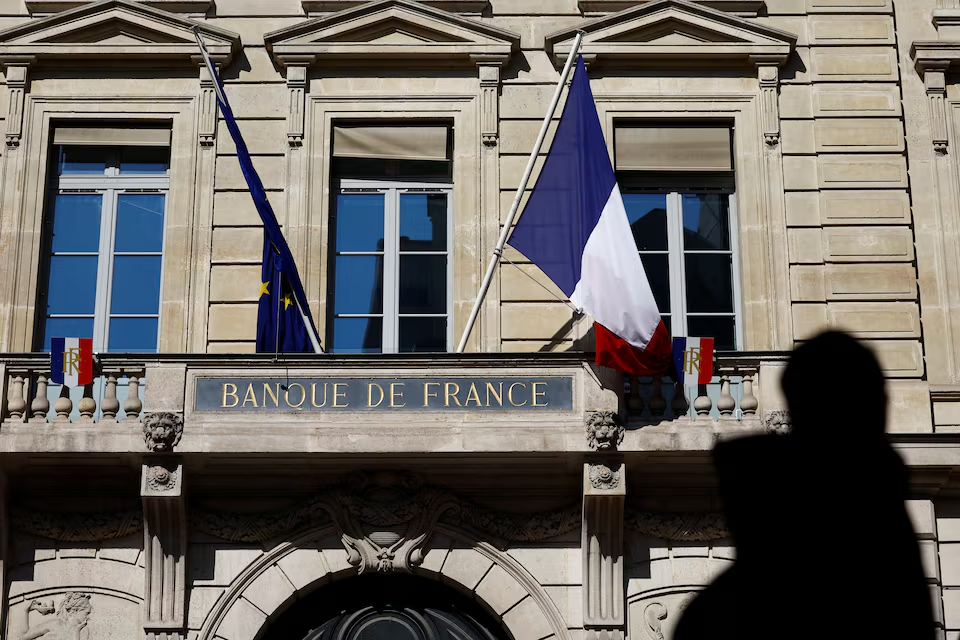
Emmanuel Moulin, President Emmanuel Macron’s nominee to lead the Bank of France, has defended the importance of central bank independence during a tense parliamentary confirmation hearing in Paris. The debate over the Bank of France independence comes as lawmakers prepare for a closely contested vote that could determine his appointment.
Moulin, a former chief of staff to Macron and experienced finance official, told lawmakers that he would act independently if confirmed as governor. He stressed that the central bank must remain free from political pressure to ensure economic stability and trust in the currency. His remarks were made before France’s Senate finance committee as opposition parties raised concerns about political influence.
The nomination has sparked criticism from opposition lawmakers, who argue that Macron is placing close allies in key institutions ahead of the end of his presidential term. France’s next presidential election is scheduled for April next year, and far-right parties are expected to be strong contenders. Critics say such appointments could extend Macron’s influence beyond his time in office.
Moulin’s background includes senior roles in France’s finance ministry and time spent in banking. Supporters say this gives him strong technical experience for one of Europe’s most important financial positions. However, his close ties to Macron have become a central point of debate. Some lawmakers fear that personal connections could weaken institutional neutrality.
Under France’s system, Moulin’s confirmation depends on a combined vote from finance committees in both houses of Parliament. He could be blocked if at least 60 percent of lawmakers vote against him. This makes the process highly competitive and politically sensitive. The outcome is expected to reflect broader tensions between the government and opposition blocs.
If confirmed, Moulin would become governor of the Bank of France, a 226-year-old institution. In this role, he would also sit on the European Central Bank’s governing council. This position gives him influence over interest rate decisions affecting the entire eurozone. He would also oversee regulation of French banks and financial stability policies.
During the hearing, Moulin emphasized that he could not pre-commit to decisions at upcoming European Central Bank meetings. He said policy choices depend on economic data, especially in a volatile global environment. He pointed to uncertainty in energy markets and geopolitical tensions as key factors affecting inflation trends.
He also said policymakers must closely monitor inflation expectations. According to Moulin, inflation stability depends on three main indicators: underlying inflation trends, energy price shocks, and wage growth. He warned that persistent shocks could require stronger policy responses from central banks. However, temporary disruptions may not require aggressive action.
Moulin added that wage developments will be particularly important in assessing long-term inflation risks. Rising wages can signal stronger inflation pressure if they are sustained over time. He said central bankers must remain cautious in interpreting short-term economic changes. This approach reflects a data-driven monetary policy stance.
Opposition lawmakers remain unconvinced by his assurances. They argue that independence is not only about policy statements but also about institutional distance from political leadership. Some fear that appointing close allies of the president could blur those boundaries. The debate reflects long-standing tensions in France over executive influence in financial institutions.
The controversy also comes at a time when Europe’s economy is facing multiple pressures. Inflation has eased in recent months but remains above central bank targets in some areas. Energy price volatility and global uncertainty continue to affect economic forecasts. These challenges make the role of the Bank of France governor especially important.
Supporters of Moulin argue that his experience makes him well suited for the position. They say continuity and expertise are crucial during periods of economic uncertainty. They also argue that professional background, not political affiliation, should determine appointments to central financial institutions.
The Bank of France independence debate highlights broader questions about governance in France and the eurozone. Central banks are designed to operate free from political pressure to maintain credibility in financial markets. Any perception of political influence can affect trust in monetary policy decisions.
The parliamentary vote on Moulin’s appointment is expected to be tight. Its outcome will not only determine leadership at the Bank of France but also signal how much influence President Macron retains over key institutions as his term approaches its end.
