


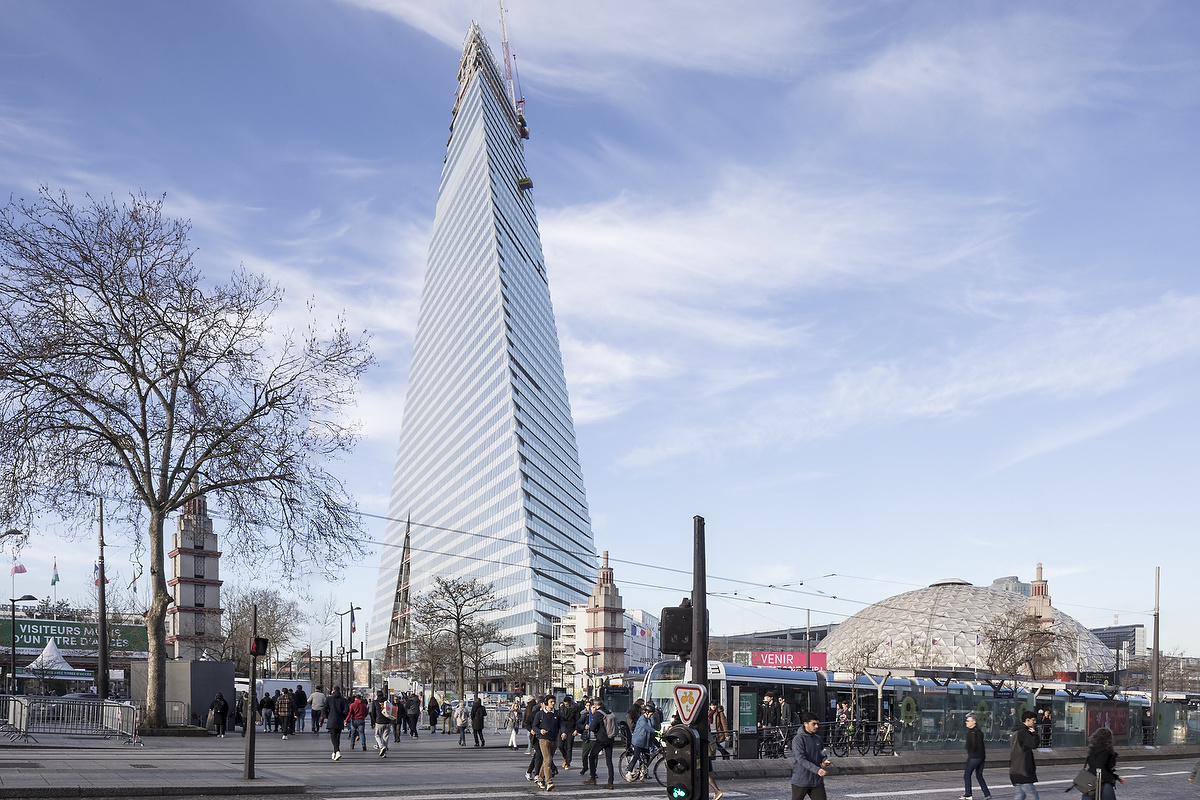
The Paris Triangle Tower, designed by Herzog & de Meuron, is finally nearing completion after more than two decades of planning, delays, and public debate.
The project, officially known as Tour Triangle, is located in the 15th arrondissement of Paris. The 180-meter glass tower recently reached its full height of 42 stories in April 2026, marking a major milestone in one of the city’s most controversial modern developments.
The Paris Triangle Tower project was first proposed around 20 years ago. Since then, it has faced legal challenges, political opposition, and financial setbacks before construction finally began in 2022.
Developers say the building is now in its final stage and will become the third tallest structure within Paris city limits. It stands behind the Eiffel Tower and Tour Montparnasse, but due to strict city planning rules, it is expected to remain among the tallest buildings in central Paris for years.
City authorities reinstated a height limit in 2023, restricting future skyscraper construction and reinforcing Paris’s long-standing resistance to tall buildings in the historic core of the city.
The Paris Triangle Tower was designed by Swiss architecture firm Herzog & de Meuron in collaboration with Valode & Pistre. It is positioned at the edge of the city near the Porte de Versailles area, close to the ring road that surrounds Paris.
The design features a triangular glass structure intended to reduce shadows on surrounding neighborhoods while maximizing internal light and energy efficiency. Architects say the shape responds to the urban environment and surrounding residential zones.
The base of the building is designed as a public space. It will include a daycare center, health services, cultural facilities, shops, cafés, and restaurants aimed at encouraging public use and pedestrian access.
At the top of the tower, the upper floors will include a hotel, office spaces, dining areas, and a panoramic viewing platform offering views across Paris.
The project is part of a broader redevelopment effort in the area, which also includes improvements to the Paris Expo exhibition center. Officials say the tower is intended to support urban regeneration at the southern edge of the city.
However, the Paris Triangle Tower has been one of the most debated construction projects in modern French architecture. Over the years, it has faced strong opposition from environmental groups, heritage organizations, and local political parties.
Critics have argued that the tower’s scale and glass design conflict with Paris’s historic skyline. Some have also raised concerns about environmental impact, urban density, and the need for more housing rather than large commercial developments.
The project experienced multiple setbacks, including a rejection by city councillors in 2014. That decision was later overturned, and after further legal and political battles, construction permits were finally approved in 2015.
The project then moved through several court challenges before financing was secured in 2021. Construction officially began in 2022, more than 15 years after the initial proposal phase.
Despite the controversy, supporters of the project say the Paris Triangle Tower represents modern urban development and helps expand the city’s economic and commercial infrastructure without large-scale expansion into surrounding areas.
Architects say the tower is designed to balance modern needs with respect for Paris’s historic identity. They argue that its placement at the edge of the city limits reduces visual impact on iconic landmarks.
The nearly completed structure has been documented by photographer Stefano Candito, whose images show the tower’s glass façade and its growing presence within the surrounding urban landscape.
The images highlight how the building interacts with nearby residential blocks, transport routes, and exhibition spaces. They also capture the final phase of construction as interior work and finishing details continue.
The Paris Triangle Tower is expected to open soon, becoming a major mixed-use landmark featuring commercial, public, and hospitality functions.
City planners say the project reflects a broader shift in Paris urban development, as the city balances historic preservation with modern infrastructure needs.
Other major redevelopment projects are also underway across Paris, including museum renovations, park transformations, and commercial district upgrades.
The completion of the Paris Triangle Tower marks the end of one of the longest and most debated architectural projects in the French capital’s recent history.
