


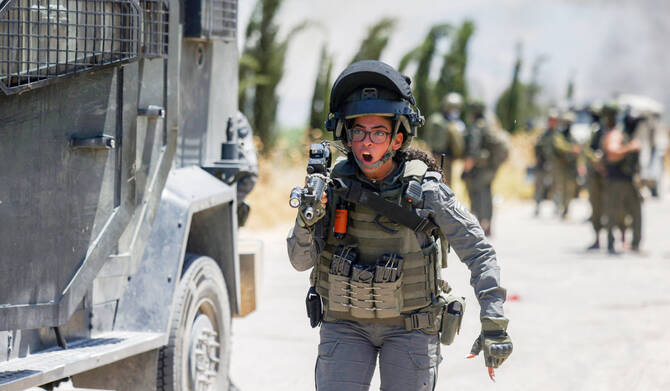
France is working with several countries to coordinate possible national sanctions against individuals linked to violence in the occupied West Bank, according to European diplomats. The move reflects growing tensions between Western governments and Israel over settlement expansion and rising unrest in the region.
The proposed measures would include travel bans and asset freezes targeting specific individuals. However, officials said the plans are still being discussed and have not yet been finalized. Different countries may prepare separate lists of sanctioned individuals depending on their own legal frameworks.
Diplomats say the effort is being led by France in coordination with several partners, including the United Kingdom and Norway. The goal is to increase pressure on those accused of involvement in settler-related violence in the West Bank.
The discussions come amid escalating violence involving Israeli settlers in the occupied territory. Western governments have expressed increasing concern about the impact of settlement activity on stability and on the prospects for a future Palestinian state.
Officials argue that continued expansion of settlements is making it more difficult to reach a long-term political solution. They say new construction projects, including the controversial E1 settlement plan near Jerusalem, could further divide the territory and limit geographic continuity for Palestinians.
The E1 project, located east of Jerusalem, has been a particular point of international concern. Critics say it would effectively split parts of the West Bank and isolate East Jerusalem, which Palestinians view as the capital of a future independent state.
One European diplomat said there is no agreement at the European Union level for stronger collective action, which has pushed several countries to consider coordinated national measures instead. The lack of unanimity within the EU has made bloc-wide sanctions difficult to approve.
As a result, individual governments are now exploring parallel steps outside formal EU structures. Diplomats said this approach allows willing countries to act together even if the wider bloc remains divided on the issue.
Another diplomat said announcements could come within days, although exact timing remains uncertain. Officials stressed that discussions are ongoing and subject to political approval in each country.
Israeli officials have strongly rejected previous sanctions efforts. Foreign Minister Gideon Sa’ar criticized earlier European measures, saying they were politically motivated and unfairly targeted Israeli citizens and entities based on political positions rather than evidence.
Despite such criticism, several Western countries have recently increased diplomatic pressure on Israel. In May, seven nations including France, the United Kingdom, Australia, and Canada issued statements expressing concern about rising tensions in the West Bank.
Officials say the situation on the ground has become more volatile due to ongoing settlement activity and repeated clashes. They warn that continued instability could further complicate peace efforts and regional diplomacy.
The debate has also highlighted divisions between European Union members. While some countries support stronger action, others remain cautious about imposing sanctions due to political and economic considerations.
France has taken a more active diplomatic role in recent months. French officials say they want to keep international focus on the Israeli-Palestinian conflict at a time when other global crises, including wars in Ukraine and the Middle East, are dominating attention.
A diplomatic source said that France has already taken some measures in response to violence in the West Bank and that additional steps remain possible depending on developments.
The issue is expected to be discussed further at an upcoming meeting in Paris on June 12. The gathering will include representatives from Israeli and Palestinian civil society groups, as well as foreign ministers from around a dozen countries.
The meeting marks one year since the adoption of a United Nations-backed declaration outlining a roadmap toward a two-state solution. That framework has since been supported by several countries recognizing Palestinian statehood, though implementation remains stalled.
French officials say the goal of the upcoming talks is to keep diplomatic momentum alive and encourage dialogue between stakeholders. They hope the meeting will maintain international attention on the issue despite competing global crises.
The latest sanctions discussions highlight a broader shift in how some Western countries are responding to events in the West Bank. Rather than relying solely on multilateral EU action, several governments are now considering coordinated national steps to increase pressure on individuals linked to violence.
As negotiations continue, the situation remains fluid, with no final decisions yet announced. However, diplomats say the growing coordination between countries signals a more assertive approach to addressing instability in the occupied territory.
