


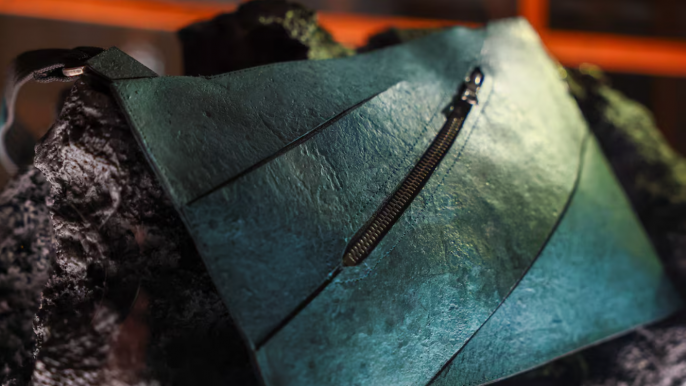
A highly unusual handbag made from lab-grown “dinosaur leather” has failed to sell at a Paris auction after bids came in far below expectations. The experimental item, created using biotechnology and ancient biological material, drew global attention but did not reach its estimated price range.
The dinosaur leather bag was offered at the Drouot auction house in Paris by auctioneers Giquello. It had been expected to sell for between $500,000 and $740,000, or about €300,000 to €500,000. However, final bids reportedly reached only around $150,000, falling short of the reserve price.
The item was described as a “one-of-a-kind” luxury object made using lab-grown material developed from Tyrannosaurus rex cells. According to details shared by its creators, the material was produced using biotechnology and cell-culture techniques designed to grow dinosaur skin in a controlled laboratory environment.
Developers said the process involved collagen traces taken from a T-Rex femur fossil discovered in Montana in the United States around 25 years ago. Scientists then used advanced bioengineering methods to replicate and grow the material into usable leather-like sheets.
Unlike synthetic vegan leather, which is often made from plastic-based materials, the creators described this product as biologically derived material. They claimed it was made from “100 per cent skin” linked to an extinct animal species that lived around 67 million years ago. The statement added to the debate around how such materials should be classified in both science and luxury markets.
The auction listing attracted significant international attention due to the unusual combination of biotechnology, fashion, and prehistoric science. Experts said the item represented one of the most experimental uses of biofabrication ever presented in a commercial auction setting.
However, despite the publicity, bidders appeared hesitant to meet the high valuation. Auctioneers said it was difficult to set a clear market price for the item because there are no comparable products in existence. The valuation was based on both the rarity of the material and the complex process used to create it.
The failure to sell highlights the uncertainty around demand for highly experimental luxury goods. While innovation in lab-grown materials is increasing across fashion and design industries, market acceptance for such extreme concepts remains unclear.
The bag was first revealed in Amsterdam in spring 2026 before being transported to Paris for auction. It was positioned as both a scientific milestone and a luxury collectible, aimed at high-end buyers interested in rare and unconventional objects.
Despite its unsuccessful sale, the item has sparked discussion in both scientific and fashion communities about the future of bioengineered materials. Researchers continue to explore lab-grown alternatives for leather production, although most current applications remain focused on sustainability rather than prehistoric reconstruction.
For now, the dinosaur leather bag remains unsold, standing as a striking example of how innovation and market reality do not always align in the world of experimental luxury goods.
