


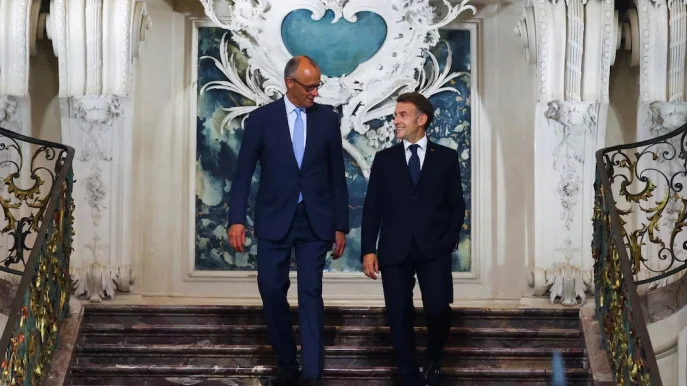
France and Germany have agreed to strengthen their defence cooperation as European nations work to improve their military capabilities and increase security cooperation. The latest agreements were announced during a joint cabinet meeting between French President Emmanuel Macron and German Chancellor Friedrich Merz.
The France Germany Defence Partnership reflects a broader effort by both countries to deepen military cooperation while responding to changing security conditions in Europe. The leaders also discussed missile defence, long-range strike systems, and future defence projects despite recent disagreements over a joint fighter aircraft program.
Macron and Merz met as part of their regular bilateral cabinet discussions, which are designed to improve cooperation on major political, economic, and security issues. Their latest meeting focused heavily on defence following growing concerns about Europe’s long-term security environment.
During a joint news conference, Merz said both countries remain committed to protecting freedom, security, and collective defence. He explained that France and Germany are taking practical steps to strengthen their military cooperation while supporting broader European security goals.
One of the main priorities announced during the meeting was closer cooperation on missile defence systems. The two governments also agreed to continue work on long-range military capabilities that could improve Europe’s ability to respond to future security challenges.
The leaders also addressed international trade issues. Both expressed concern about what they described as high levels of government support for industry in China. They argued that such policies create unfair competition for European businesses and manufacturers.
Merz said he supports continued dialogue rather than a trade conflict. He noted that discussions should focus on issues such as industrial overcapacity and broader economic conditions while protecting jobs and industries across Europe.
Another important topic was nuclear deterrence. France and Germany have begun discussions on expanding cooperation in this area as European governments review future defence planning.
Merz said any new arrangements would be developed carefully and gradually. He emphasized that closer cooperation would support, rather than replace, existing commitments within the North Atlantic Treaty Organization.
As part of this cooperation, German military personnel will participate in a French nuclear exercise for the first time. The move represents a new stage in defence collaboration between the two neighboring countries.
During their visit, the two leaders inspected a military air base where a French Rafale fighter aircraft capable of carrying nuclear weapons conducted refueling operations alongside a German Eurofighter aircraft. The exercise demonstrated growing operational cooperation between the two armed forces.
Macron also clarified France’s position on financing its nuclear deterrent. He said France will continue to fully fund its own nuclear program and confirmed there are no plans for Germany to contribute financially.
The meeting also addressed the Future Combat Air System, commonly known as FCAS. Earlier this year, plans for a shared fighter aircraft faced major setbacks following disagreements between industrial partners involved in the project.
Despite those difficulties, both leaders said the wider FCAS program will continue. Future work will focus on advanced digital systems, including cloud-based technologies designed to improve communication and coordination between military platforms.
Macron said manufacturers are continuing development on the remaining parts of the program. He added that both governments plan to strengthen oversight and project management for future defence cooperation to reduce the risk of similar disputes.
The earlier disagreements centered on industrial responsibilities between major aerospace companies involved in the project. Officials now hope stronger governance will help future collaboration move forward more smoothly.
European defence cooperation has gained greater attention as governments across the continent review their long-term security strategies. Many countries are increasing military investment while seeking stronger partnerships with neighboring allies.
France and Germany remain two of Europe’s largest defence powers, and their cooperation plays an important role in many regional security initiatives. Their latest agreements signal continued efforts to strengthen military readiness while supporting broader European defence capabilities.
Although challenges remain, both leaders presented a united message during the meeting. They said closer defence cooperation, continued investment in advanced military technology, and stronger coordination between European partners will remain key priorities as the continent responds to evolving security and economic challenges.
