


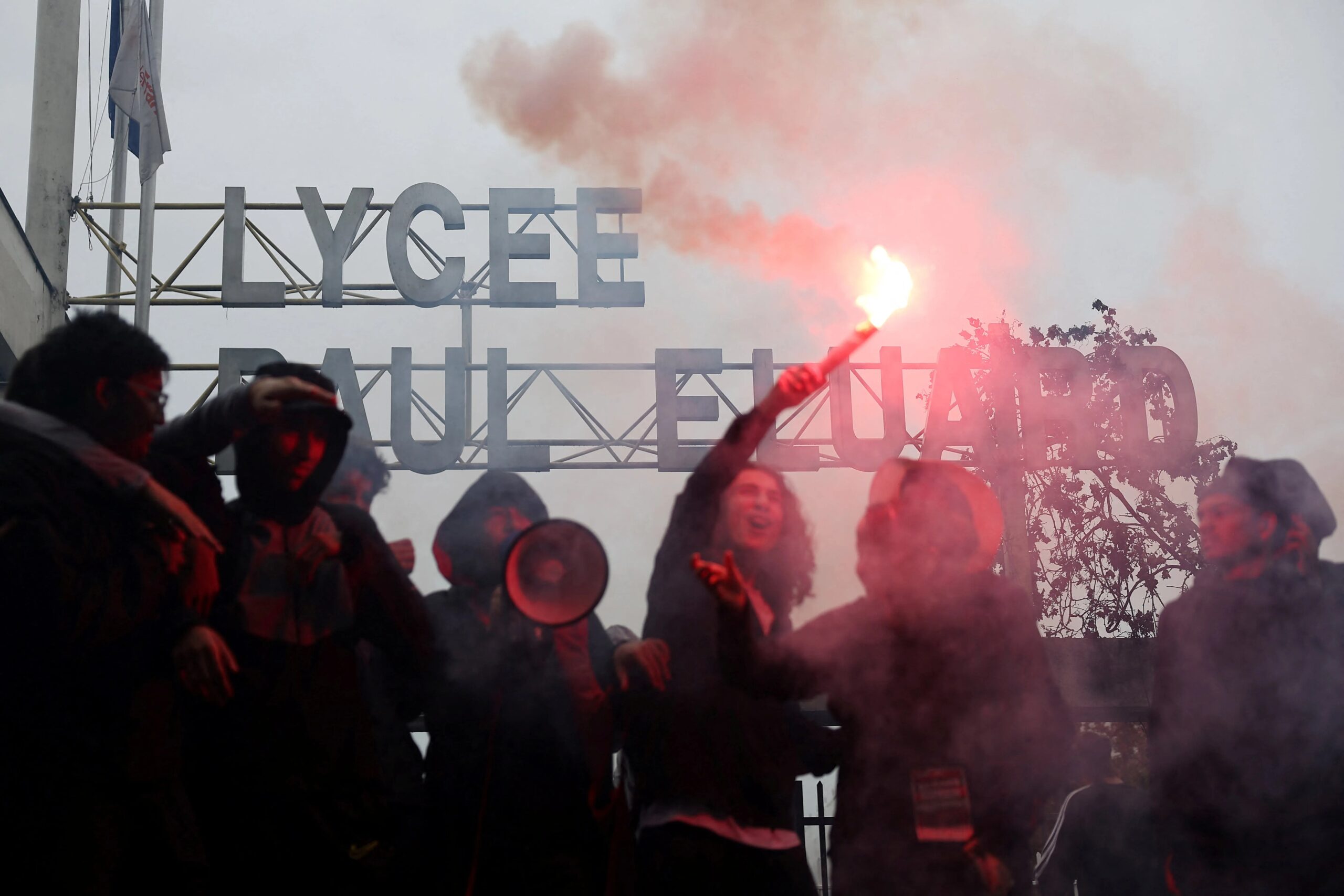
Student protests continued to put pressure on the French government on October 5 as hundreds of schools prepared for further disruption. The protests began over complaints about poor school conditions, teacher shortages and overcrowded classrooms, but they have grown into a wider national dispute. Students in several parts of France have taken part in demonstrations, while authorities have struggled to prevent some gatherings from becoming violent. The issue has now become one of the major political challenges facing President Emmanuel Macron’s government.
The movement began after students complained about conditions in schools, especially shortages of teachers and problems with buildings and equipment. Many students say they are studying in crowded classrooms and dealing with facilities that are not good enough for modern education. The complaints have been particularly strong in disadvantaged areas, where students and teachers often face greater pressure. The protests have therefore developed into a debate about inequality as well as education.
According to reports on October 5, as many as 500 schools were expected to suspend classes or operate with limited teaching because of safety concerns. Education Minister Edouard Geffray said around 400 to 500 schools had already been affected on Friday and that a similar number could face disruption on Monday. Officials said several schools had suffered damage from fires or looting connected with the demonstrations. The government has also reported injuries among education workers.
The scale of the protests has increased pressure on the government to respond. Police have made thousands of arrests since the demonstrations began, with many of those arrested being minors. Police officers and students have also been injured during clashes. The government has condemned violence and property damage while acknowledging that students have legitimate concerns about their schools. Officials now face the difficult task of addressing those concerns without allowing the protests to turn into a wider public order crisis.
The protests are also becoming part of a broader political argument over France’s 2027 budget. Education receives a large share of public spending, and the government is under pressure to control its finances while protecting essential services. Students and unions argue that schools need more investment, while the government must balance those demands against other spending needs. This has made education one of the most visible areas of the wider debate over public finances.
The CGT labour union has also called for workers to take part in a major demonstration on Tuesday. That could increase the scale of the movement by bringing students and workers together. If that happens, the government could face a broader protest movement rather than a dispute limited to schools. The possibility has increased concern among officials who are already dealing with disruptions across several regions.
Jean-Luc Mélenchon and his France Unbowed party have expressed support for the student movement. The political involvement has added another dimension to the protests because Mélenchon is positioning himself for another presidential campaign. His support for students has drawn attention to the political importance of younger voters, although the protests themselves began with complaints about school conditions rather than a single political party.
The government has continued to call for peaceful demonstrations. Officials say students have the right to protest but cannot justify violence or attacks on public property. Police have been instructed to protect schools and public buildings while allowing lawful demonstrations to continue. The response will be closely watched because heavy-handed policing could increase anger, while a weak response could allow further damage.
For students, the main demands remain focused on practical problems inside schools. They want enough teachers, better facilities and improved learning conditions. Many believe these problems have been ignored for too long. For the government, however, the challenge is now much wider because the demonstrations have become a national political issue.
October 5 therefore marks another important stage in the French school protests. With hundreds of schools affected and more demonstrations expected, pressure on Macron’s government is likely to continue. The coming days will show whether officials can calm the movement through talks and new measures or whether the protests will expand into a larger confrontation involving students, unions and political groups.
