


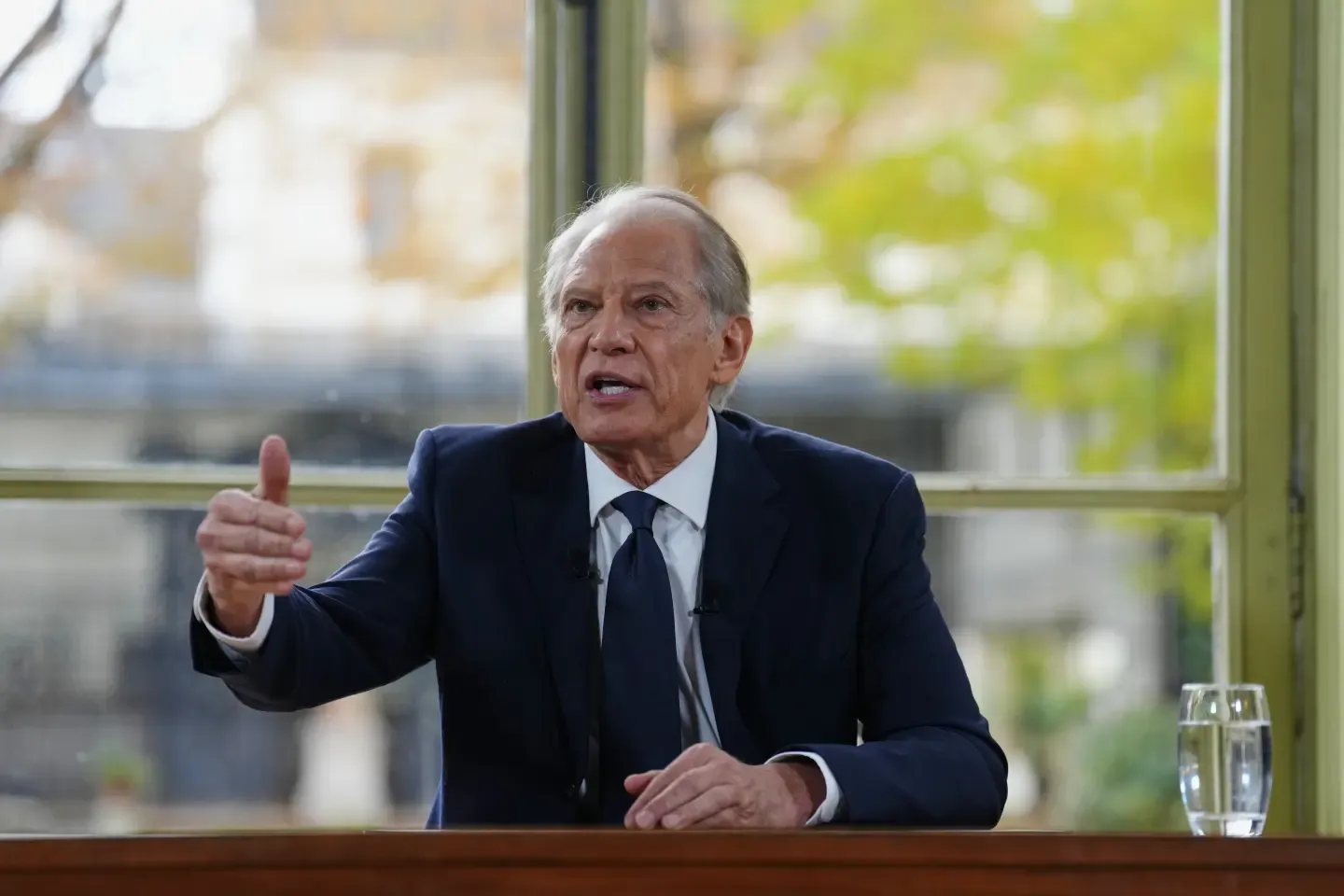
Former French Prime Minister Dominique de Villepin has officially entered the race for the 2027 presidential election, presenting himself as a candidate who wants to restore France’s political direction and international influence. The 73-year-old made the announcement in Paris, invoking the legacy of Charles de Gaulle and arguing that the country needs a different approach to leadership. His decision adds another high-profile name to an already competitive political contest.
De Villepin criticised the record of President Emmanuel Macron, pointing to rising inequality, environmental concerns, public debt and what he described as a decline in French society. He argued that the country needs a president who can bring people together rather than concentrate political authority in the hands of one individual. He also called for a different style of government, with the head of state acting as an arbiter and guide rather than dominating every political decision.
The former prime minister warned that a victory for Marine Le Pen and the National Rally would pose a serious threat to France. He criticised the party’s history and its positions on immigration and national identity. De Villepin also distinguished the far right from the radical left, rejecting the idea that the two political movements should be treated as equivalent threats. His comments suggest that opposing the National Rally will be a central part of his campaign.
De Villepin is best known internationally for his opposition to the 2003 invasion of Iraq. His speech at the United Nations, where he argued against military action, became one of the most recognised moments of his political career. He now hopes to use that reputation and his experience in government to attract voters who want a stronger French voice abroad. However, he will first need to secure the required endorsements from elected officials to qualify for the presidential ballot.
His candidacy comes as French politics remains divided over the economy, immigration, public services and the country’s role in Europe. Polls suggest that the National Rally could remain a strong contender, making it difficult for other parties to build a successful alternative. De Villepin will need to turn his announcement into a national campaign and convince voters that his political experience offers a credible path forward.
