


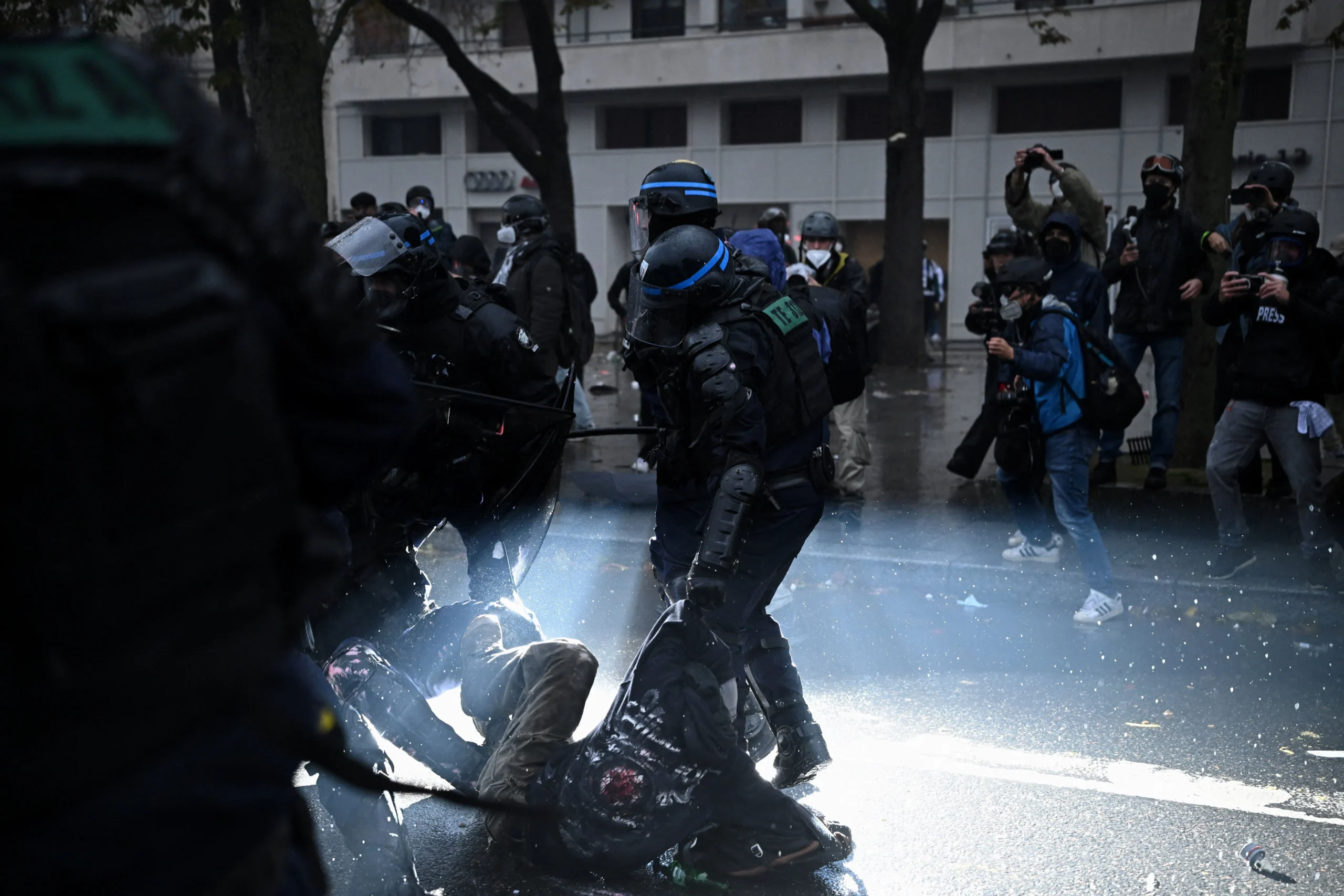
France faced a new wave of nationwide protests and strikes on Thursday, November 5, as trade unions, students and public workers challenged President Emmanuel Macron’s government. Demonstrations took place in cities across the country, with unions demanding better wages, stronger public services and more support for education.
The protests came after weeks of public unrest that had created growing pressure on the government. Earlier demonstrations over living costs, school conditions and employment concerns had led to clashes and damage to public buildings. The latest mobilisation became another major test for Macron as France prepares for its next presidential election.
Around 260 demonstrations were planned across the country. French intelligence officials expected between 500,000 and 700,000 people to join protests outside Paris. Authorities prepared a major security operation, with around 70,000 police officers expected to be deployed nationwide.
Students were among the groups taking part. Many said they were concerned about the condition of schools, a lack of resources and uncertainty about future opportunities. Teachers also joined the strike, with the Education Ministry estimating that 17.5 percent of public primary school teachers would stop working.
Public transport and other services faced possible disruption. Railway unions called on workers to join the action, while the strike also affected parts of the country’s energy sector. Nuclear power production was reduced, although transport services reported no major disruption during the day.
The government said it was taking steps to prevent a repeat of the violence seen during earlier demonstrations. Officials defended the actions of security forces but also said allegations of police misconduct would be investigated.
Macron had already held a security meeting ahead of the protests. His government is facing pressure from several directions, including economic concerns, demands for better public services and criticism of its response to earlier unrest.
The demonstrations also carry political importance. Opposition parties are seeking to gain support from public frustration, while candidates are preparing for the presidential campaign.
The unions say their demands go beyond one policy issue. They want higher wages, better working conditions and stronger investment in services used by ordinary people. The government now faces the challenge of responding to those demands while maintaining public order and restoring confidence in its leadership.
