


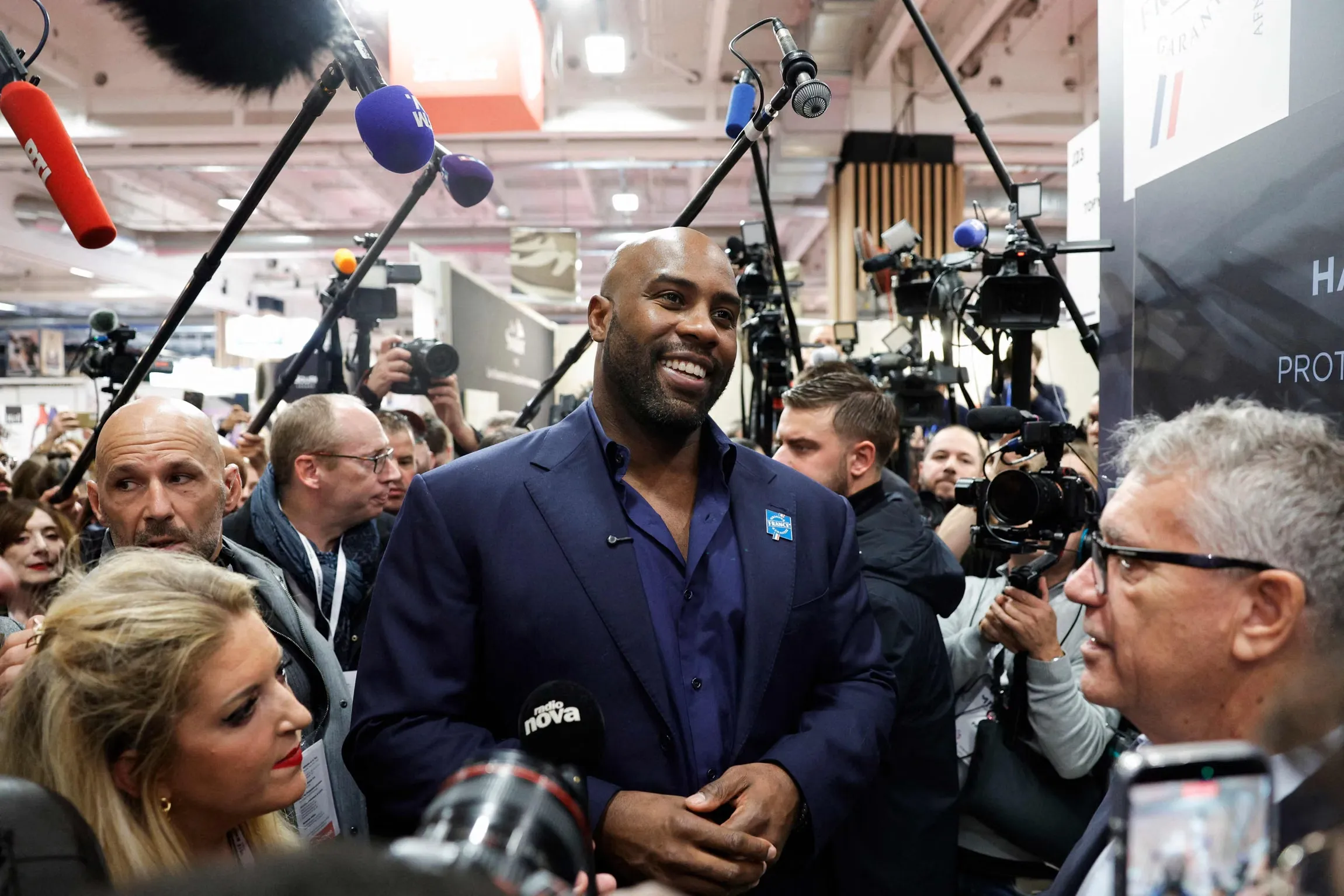
Five-time Olympic judo champion Teddy Riner is preparing to enter France’s 2027 presidential election, bringing one of the country’s most recognisable sporting figures into national politics. The 37-year-old athlete has built an international reputation through years of success in judo, and his popularity could give him an unusual level of public visibility as he begins his political journey. Riner has presented himself as an independent candidate who does not want to be associated with President Emmanuel Macron or any established political family. He says France needs ambition, hard work and a stronger sense of direction, particularly for younger generations who are concerned about their future.
Riner has begun meeting people and discussing national issues as he considers the programme he would present to voters. His early consultations have included healthcare workers and other professionals, suggesting that he wants to understand public concerns before announcing detailed policies. However, he has not yet presented a complete political platform. His campaign therefore faces a major challenge: turning his sporting popularity into a credible political programme covering the economy, public services, education, security and France’s role in Europe.
His appearance at a Paris trade fair attracted considerable attention, with visitors approaching him for photographs and conversations. Riner has also shown caution about being publicly associated with Macron, whose political standing has become a sensitive issue. The champion has described praise from the president as a potentially damaging political gesture, making clear that he wants to maintain distance from the current administration. His campaign is receiving support from business partner Philippe Veran, although some people involved in the early preparation of the project have stepped back.
The candidacy has also attracted scrutiny over reported tax disputes involving businesses linked to Riner. He has said that the matters have been handled properly. Beyond these questions, he must still build a political organisation and secure the support required to qualify for the presidential ballot. French election rules require candidates to collect 500 endorsements from elected officials. With the first round approaching in 2027, Riner has limited time to establish a national campaign. His next steps will show whether his public popularity can become a serious political force.
