


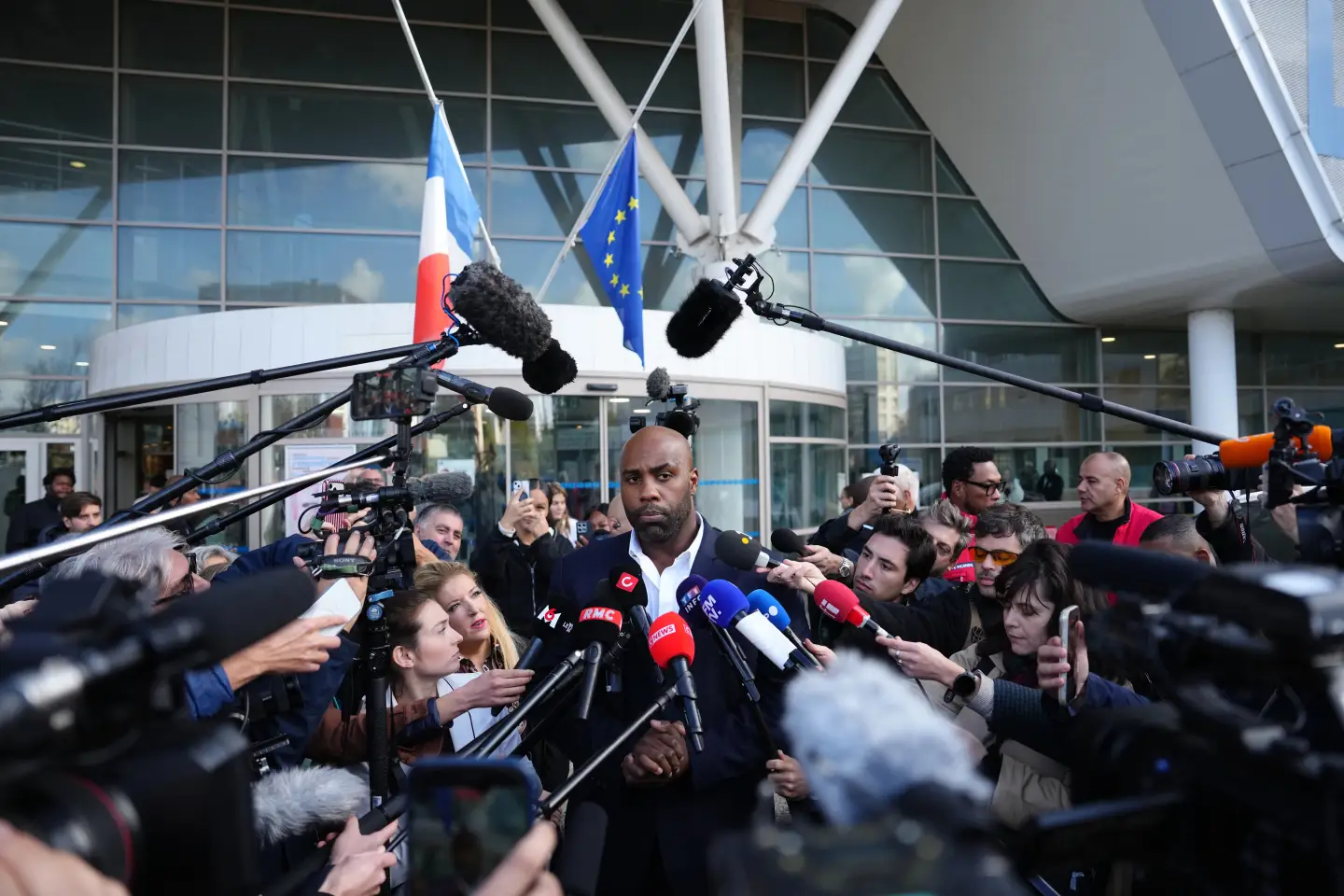
French Olympic judo champion Teddy Riner has announced his intention to run for president, bringing one of the country’s best-known sporting figures into an increasingly competitive political landscape. The 37-year-old athlete has won five Olympic gold medals and built a large public following through his sporting achievements. His decision has attracted considerable attention, although his path towards the presidential ballot will involve significant political challenges. Under French election rules, candidates must obtain support from at least 500 elected officials before they can officially appear on the first-round ballot in April.
Riner has presented himself as a candidate who does not belong to either the political left or right. He has spoken about the need for common sense and described a country facing fear, anger and social division. However, his early statements have not yet provided a detailed explanation of the policies he would pursue if elected. Issues such as public debt, security, immigration, employment and France’s position in Europe are likely to become central questions as the campaign develops.
His first campaign appearance took place at a hospital in the northern suburbs of Paris, where he met staff members and spoke about the challenges facing the country. The event attracted strong media interest, demonstrating the public attention his sporting career can bring to his political ambitions. Nevertheless, political analysts have questioned whether popularity and sporting success will be enough to establish credibility in a demanding presidential contest.
Marine Le Pen, who is widely regarded as a leading contender in the coming election, has also questioned the absence of a clear political programme from Riner. France’s presidential system requires candidates to demonstrate not only public appeal but also the ability to manage complex domestic and international issues. Riner’s supporters may see him as a fresh alternative to established politicians, while critics are likely to focus on his limited political experience. His next challenge will be turning public recognition into a serious campaign supported by elected officials and a clear policy platform.
