


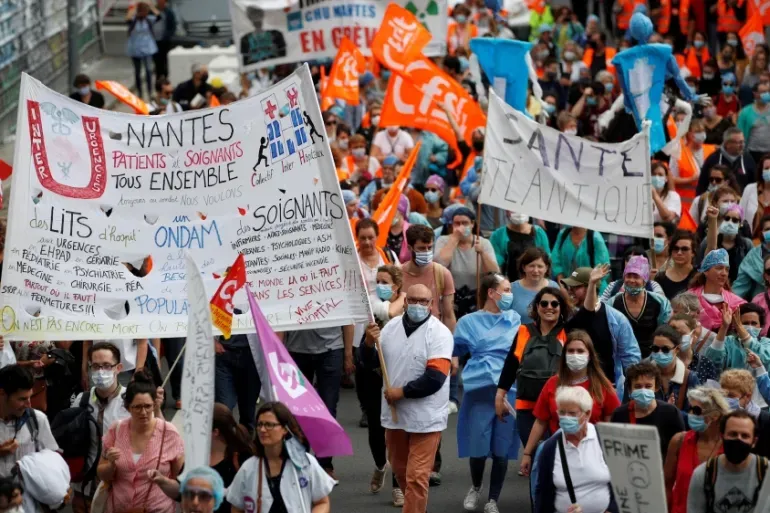
Hospital workers across France are holding a nationwide mobilization today, with two major unions calling for demonstrations and symbolic actions outside hospitals and care facilities to protest pay levels, staffing shortages, and difficult working conditions across the country’s public health system. Unlike a full walkout, today’s action centers on visible protests and symbolic gestures rather than complete work stoppages, though local strike action remains possible in some regions.
Organizers behind the mobilization point to a deeply strained public health infrastructure as the core driver of today’s action. Unions cite roughly sixty thousand unfilled nursing vacancies across the country, alongside persistently low wages and inadequate training opportunities for healthcare staff. Workers are demanding that salaries be tied more closely to inflation, arguing that current pay structures have failed to keep pace with the rising cost of living facing healthcare workers just like other segments of the French workforce.
The staffing shortage at the center of today’s protest reflects a challenge that has built over several years within France’s public hospital system. Nursing positions have gone unfilled even as patient demand has continued climbing, creating mounting pressure on the healthcare workers who remain in the system to cover gaps left by unfilled roles. Union representatives argue this combination of understaffing and stagnant pay has pushed many experienced healthcare workers toward burnout or entirely out of the profession.
Today’s action forms part of a broader wave of labor unrest affecting multiple sectors across France this September. Firefighters across the country’s fire stations remain covered by a separate strike notice running for much of the month, backed by nine different unions and associations calling for increased funding, service modernization, improved equipment, and a stronger recruitment drive to address staffing gaps within emergency services as well.
The timing of today’s hospital mobilization carries particular symbolic weight. September 8 was specifically chosen because it coincides with the government’s presentation of a bill aimed at modernizing several state services, giving healthcare unions a moment when public and media attention would already be focused on government policy toward public sector institutions. Firefighter unions have similarly chosen symbolic dates for their own actions, timing their October 20 protest to align with the first parliamentary vote on the 2027 budget.
Patients and families with scheduled hospital appointments today have been advised that local delays or reorganizations remain possible depending on how many staff participate in the demonstrations, particularly affecting pre-planned and non-emergency appointments. Emergency care is expected to continue functioning normally throughout the protest, since French labor law requires minimum service levels to be maintained in critical care settings regardless of union action.
This mobilization adds to an already crowded calendar of labor disputes affecting France throughout September, spanning sectors from aviation and public transport to energy and now healthcare. A separate, broader public sector demonstration is planned for September 15, though further details about the scale and specific demands of that upcoming action have not yet been fully announced by organizing unions.
As healthcare workers take to the streets outside hospitals and care facilities today, the government faces mounting pressure to address the underlying staffing and pay concerns driving today’s protest, particularly given how directly these issues affect the quality of care available to patients across the country. Whether today’s demonstrations translate into concrete policy changes will likely become clearer in the weeks ahead, as unions continue pressing their case alongside the broader wave of September labor action unfolding across multiple sectors of the French economy.
