


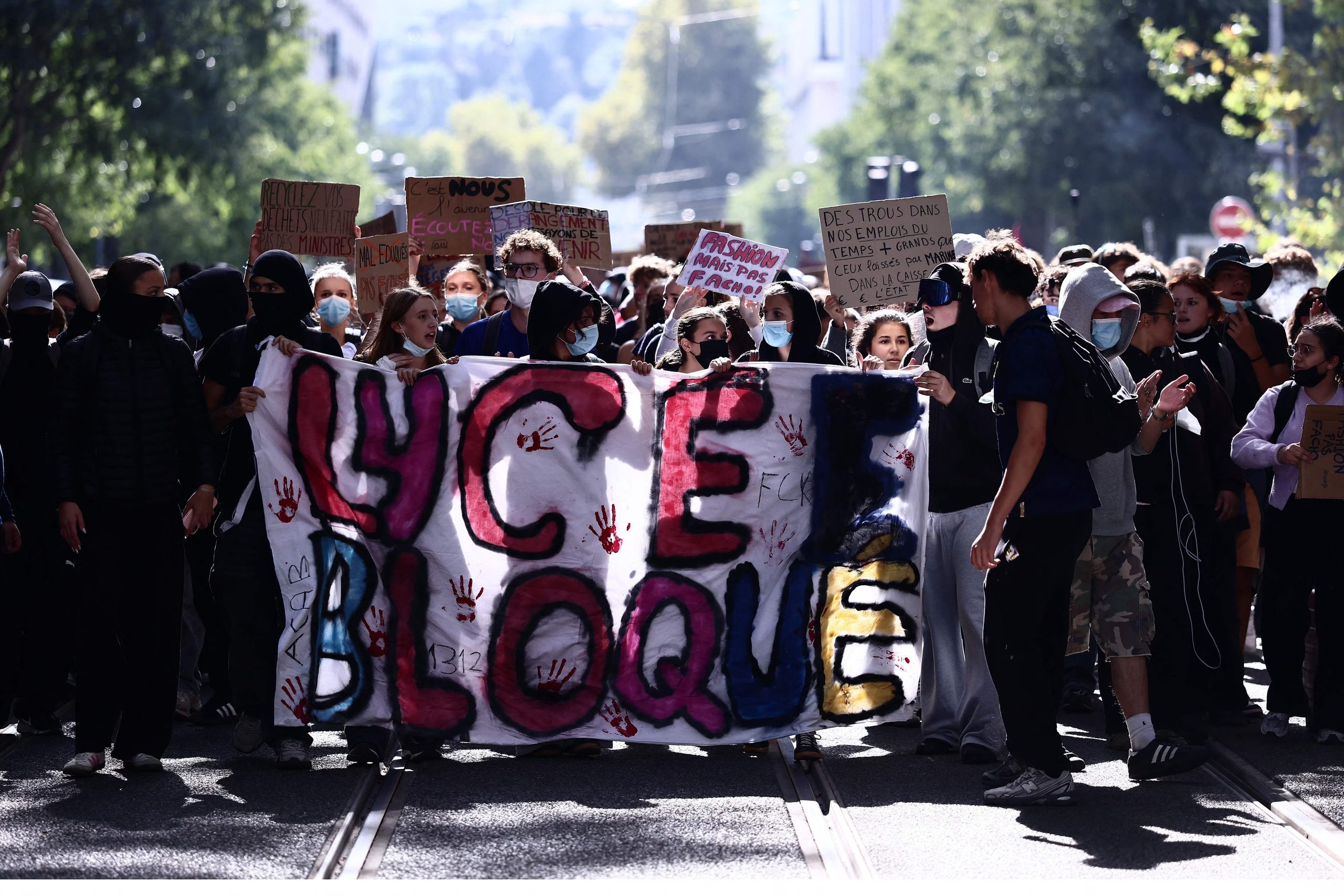
Student protests in France continued on Wednesday, October 7, as young people across the country demanded better conditions in schools and more support for public education. The demonstrations have grown from local complaints into a national movement, with students blocking school entrances and gathering in city centres. Many protesters say their schools suffer from a lack of teachers, crowded classrooms and buildings that need major repairs. The movement has also attracted parents, teachers and trade union members who say the problems have been ignored for too long.
The protests began several weeks ago after students in several areas raised concerns about the condition of their schools and the shortage of staff. Since then, the movement has spread to many parts of France. Students have used barricades, demonstrations and class boycotts to draw attention to their demands. In Paris, groups of teenagers gathered outside schools and carried signs calling for greater investment in education. Some demonstrations remained peaceful, while others became tense when police attempted to clear blocked entrances or public roads.
The scale of the movement has increased pressure on the government at a difficult political moment. More than 400 schools have been closed or affected because of the protests, while large demonstrations have taken place in Paris and other major cities. Authorities have also reported injuries among students, teachers and police officers during clashes. The violence has become an important part of the political debate, with officials calling for calm while protesters and rights groups question whether police responses have been proportionate.
Students say their main concerns are focused on education rather than wider political issues. They want more teachers to reduce class sizes and ensure that lessons are not repeatedly cancelled. They also want better maintenance of school buildings and improved resources for students from poorer areas. Many young protesters argue that education should receive greater attention because schools shape their future employment and opportunities. For them, the demonstrations are a way to demand changes before problems become even harder to solve.
The government has acknowledged some of the concerns raised by students. Prime Minister Sebastien Lecornu has said that authorities need to address problems involving teacher replacements, school infrastructure and working conditions. However, the government is also facing serious limits on public spending. France is dealing with a large budget deficit and rising borrowing costs, making it difficult to promise major new spending without identifying where the money will come from.
The protests are also taking place ahead of France’s 2027 presidential election, giving the movement a wider political importance. Young people who are participating today will include many first time voters in the next election. Political parties on both the left and right are trying to respond to the unrest, although they disagree sharply about its causes and the appropriate government response. The issue of education could therefore become part of a larger debate about public services, taxation and government spending.
For now, students are expected to continue demonstrations while officials attempt to reduce tensions. The government faces the difficult task of responding to genuine concerns about schools while also maintaining public order and controlling spending. The protests have already shown that education problems can quickly become a national political issue when large numbers of young people become involved. Wednesday’s demonstrations indicate that the movement has not disappeared, and pressure on the government is likely to continue as students demand visible changes in schools across France.
