


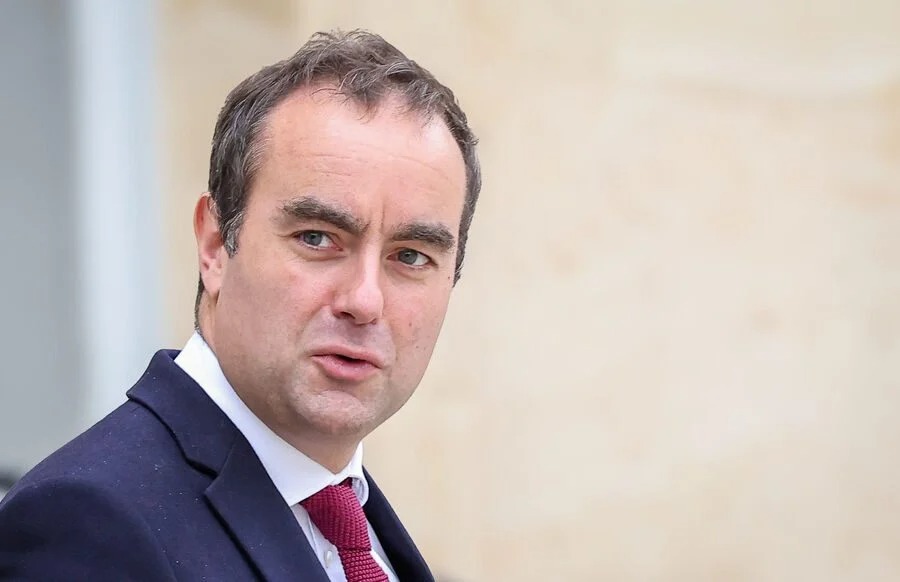
Prime Minister Sebastien Lecornu announced this week that his government’s 2027 budget will contain what he described as a fiscal effort of approximately 54 billion euros, aiming to bring France’s public deficit down to 5 percent of gross domestic product. Speaking in an interview with Le Figaro, Lecornu described the plan as a significant course correction designed to considerably cool down what he called the engine of spending that increases relentlessly every year.
The prime minister acknowledged the political risk inherent in the proposal, describing it as an offensive approach to reducing public spending in a country he says has grown too dependent on it. He was careful to stress that despite the scale of the adjustment, the plan falls far short of genuine austerity, framing it instead as a necessary and measured correction to a spending trajectory he says has become unsustainable.
Without this intervention, Lecornu warned that the 2027 deficit would approach 6.5 percent of GDP. He specifically cited the geopolitical context driving interest rates higher as a major complicating factor, noting that France will need to find an additional 10 billion euros next year simply to cover rising debt servicing costs tied to that broader environment. The prime minister has set a target of 4.8 percent of GDP excluding new military spending, rising to the full 5 percent once defense increases are factored in.
Notably, Lecornu acknowledged that France will miss its originally planned return to a 5 percent deficit this year, attributing the shortfall specifically to the war in Iran and drought conditions that have affected the country’s finances in ways not anticipated when this year’s budget was originally voted. That admission marks a rare moment of the government publicly conceding that external shocks have disrupted its own fiscal planning targets.
The 54 billion euro figure does not represent an equivalent reduction in public spending between 2026 and 2027, but rather measures the effort against spending’s natural upward trajectory in the absence of corrective measures, while also incorporating additional revenue. Social security spending alone would rise by 22 billion euros without intervention, driven largely by an aging population, while debt servicing costs would climb 10 billion euros and local government operating expenses would increase a further 7 billion euros absent any restraining action.
Lecornu stated that overall government spending will remain strictly at the same level as 2026, a commitment that will require identifying savings and additional revenue sufficient to offset these naturally rising cost pressures. Several specific measures, particularly those touching pension policy, remain to be finalized, meaning the full picture of exactly how the 54 billion euro target will be achieved has not yet been completely detailed publicly.
The announcement immediately drew political reaction, with both the National Rally and left wing parties reportedly threatening to censure the government over the proposed budget, continuing a now familiar pattern of budget related political brinkmanship that has characterized Lecornu’s tenure. Separately, Benjamin Haddad, the minister delegate for European affairs, firmly denied any government push to reduce France’s contribution to the European Union budget, despite reports suggesting Lecornu himself had raised the idea.
As the budget proposal moves toward formal presentation and eventual parliamentary consideration, President Emmanuel Macron has convened party leaders this week to discuss the broader international situation and its domestic consequences, suggesting the coming weeks will bring intensive political negotiation over both the substance of these fiscal measures and the parliamentary math needed to see them through a National Assembly where no single party commands a majority.
