


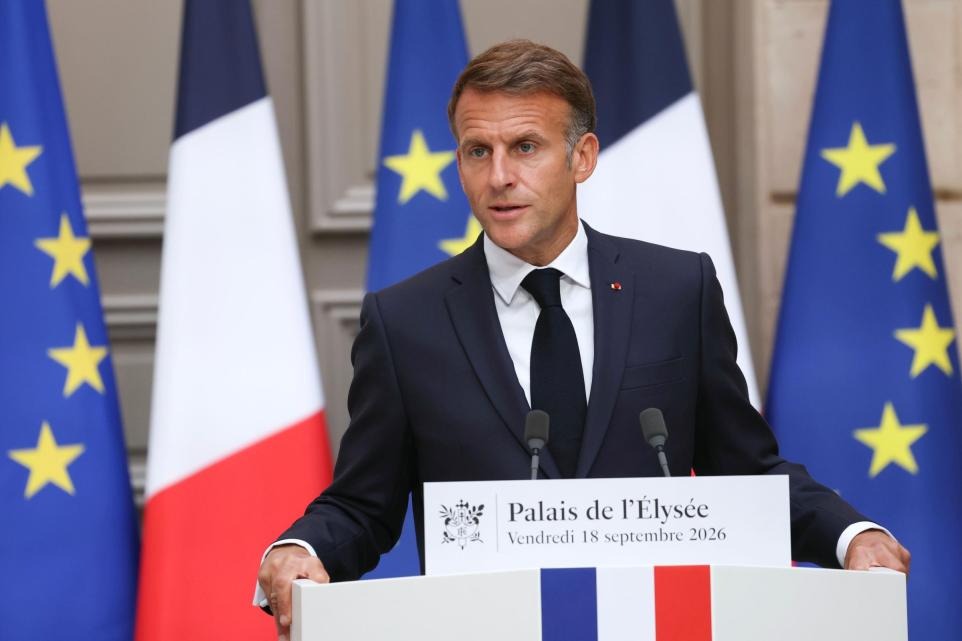
French President Emmanuel Macron has ordered a new plan to guard the country’s key sites. He spoke on Friday after a long meeting at the Elysee Palace in Paris. Leaders from every party in parliament joined him. Senior ministers and security chiefs were also there. The talks looked at the wars in Ukraine and the Middle East.
Macron said the threat to France and Europe has grown sharply in recent weeks. He pointed to what he called a Russian hybrid threat. Hybrid attacks are not open war. They include sabotage, cyber attacks, false news and stray drones. They also include meddling in elections.
The president told his government to build a shield for vital sites. The plan will cover power, transport and other key services. It will also cover the most sensitive arms and tech plants. These sites make weapons and parts for the French army. Macron said the plan must stop drone raids and cyber attacks.
He listed a string of events from the summer months. A drone strike hit a train that runs between Kyiv and Warsaw. Another drone attempt took place near Leipzig in Germany. A missile was fired close to a Danish warship. Drones also crossed into the air space of several European states.
France has felt the pressure too, the president said. The country has faced false news drives and cyber raids. Macron said the aim behind these acts is clear. He thinks Moscow wants to scare Europe into dropping its support for Ukraine. He said the plan will fail and the result will be the opposite.
Interior Minister Laurent Nunez has already met the regional prefects. Prefects are the top state officials in each part of France. They have been told to raise their guard at once. Police and local teams will check sites that could be easy targets. Some sites may get new rules on drone flights nearby.
The plan is still being written and no cost has been given. Macron set no date for the work to end. He said the state will not wait for the next attack. He wants the first steps to begin quickly. A full report is due to go to ministers in the coming weeks.
The move fits a wider shift across Europe. Other leaders have raised the same alarm this month. Poland warned of new sabotage risks on its own soil. The European Commission has set out fresh plans on security. Several states are now buying kit that can spot and down small drones.
France runs one of the largest arms industries in Europe. Its plants build jets, missiles, ships and armoured vehicles. Many sit close to towns and public roads. That makes them hard to seal off. A small drone can film a site from far away.
Cyber risk is the second half of the plan. State teams have logged more attacks on public bodies. Hospitals, town halls and firms have all been hit in recent years. Some attacks lock files and demand money. Others quietly steal data over long periods.
Macron also called for a meeting of G7 energy ministers. He wants allies to look at fuel and power supply risks together. Energy grids have become a common target across the region. A single fault can cut power to millions of homes. Officials say the risk grows in winter, when demand peaks.
Not everyone in Paris welcomed the announcement. Some opposition figures said the plan comes far too late. Others asked how the state will pay for it. France is already under pressure to cut its public debt. Ministers have promised that defence spending will be protected.
There has been no formal reply from Moscow. Russia has denied such claims in the past. It has called the charges baseless. European officials say they have shared proof with allies. They argue the pattern is too broad to be chance.
For people in France, the day to day impact may be small at first. Most of the work will happen out of sight. Sites may add fences, sensors and new guard shifts. Staff at sensitive plants could face tighter checks. Macron said the goal is simple. He wants France to be ready, not afraid.
