


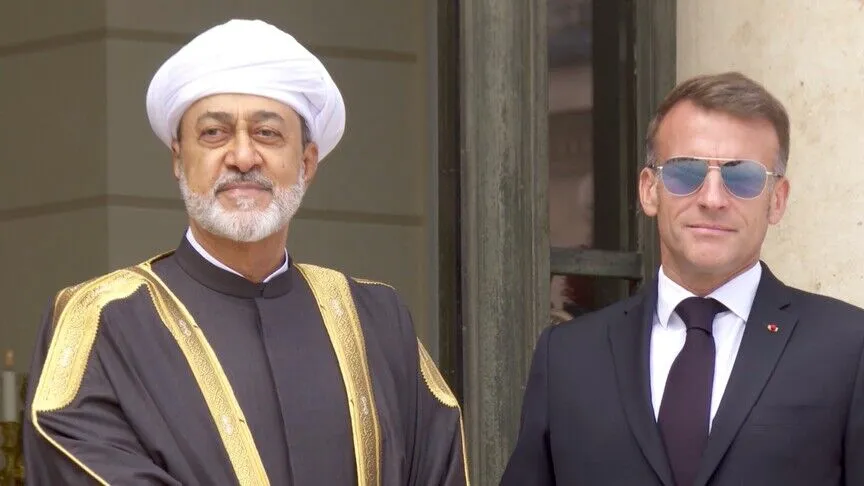
Oman and France have signed 12 agreements to expand cooperation across several key sectors during Sultan Haitham bin Tariq’s official visit to Paris. The agreements were signed on Monday at the Élysée Palace in the presence of Sultan Haitham and French President Emmanuel Macron.
The visit marks Sultan Haitham’s first official trip to France since becoming Oman’s ruler in 2020. It also represents the first visit by an Omani sultan to Paris in nearly 40 years, highlighting the importance both countries place on strengthening their long-standing relationship.
Officials from both governments said the new agreements are designed to deepen bilateral cooperation while creating new opportunities for investment, trade, technology, and sustainable development. The visit comes at a time of heightened regional tensions in the Middle East, adding diplomatic significance to the discussions.
According to Omani officials, both leaders reaffirmed their commitment to building a stronger strategic partnership by expanding economic cooperation and encouraging greater investment between the two countries.
The signed agreements cover a wide range of sectors. They include cooperation in education, logistics, ports, startup development, civil aviation, training, water resources, renewable energy, and space technology.
One of the key economic agreements is a memorandum of understanding on investment promotion. The agreement brings together Oman’s Ministry of Commerce, Industry and Investment Promotion and the French ministry responsible for foreign trade and investment. Officials expect the deal to encourage new business opportunities and increase investment flows between the two countries.
Another important agreement focuses on cooperation in space activities. Oman and France signed a declaration of intent that will promote collaboration between Oman’s Foreign Ministry and France’s Ministry for Europe and Foreign Affairs. The partnership aims to support future projects involving space research and advanced technology.
Renewable energy also played a major role during the visit. Oman signed a contract for the first phase of the Al-Kamil and Al-Wafi Solar Power Plant project with France’s EDF Renewables. The planned facility will have a generating capacity of 500 megawatts and forms part of Oman’s efforts to increase clean energy production.
The two countries also reached an agreement on the Wadi Dayqah Dam pumped-storage hydropower project. The agreement was signed between Oman’s Authority for Public Services Regulation and France’s EDF Group. Officials believe the project will strengthen electricity storage capacity while supporting the country’s transition toward renewable energy sources.
Beyond energy and investment, the agreements seek to improve cooperation in transport, education, and infrastructure. Officials said stronger collaboration in these sectors will help promote innovation, improve economic growth, and support long-term development goals in both countries.
Relations between Oman and France have continued to grow since diplomatic ties were established more than five decades ago. Both nations have worked together on economic, political, cultural, and security issues while maintaining regular diplomatic engagement.
Sultan Haitham’s visit reflects the continued importance of that relationship. It also builds on decades of cooperation between Muscat and Paris across multiple sectors.
The last official visit by an Omani ruler to France took place in May 1989, when the late Sultan Qaboos bin Said traveled to Paris. That visit marked the first official trip by an Omani sultan to France and helped strengthen diplomatic relations between the two countries.
Officials from both governments expressed confidence that the newly signed agreements will create additional opportunities for cooperation in the years ahead. They said expanding partnerships in renewable energy, technology, investment, and infrastructure will benefit both economies while supporting broader regional cooperation.
The Oman France Agreements signed during Sultan Haitham’s visit demonstrate both countries’ commitment to expanding their strategic partnership. As the agreements move into the implementation stage, officials expect closer collaboration across multiple industries and stronger economic ties between Muscat and Paris in the coming years.
