


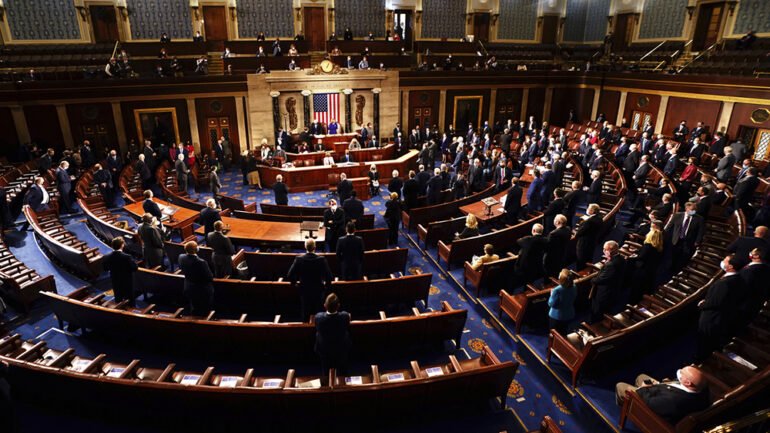
The U.S. Senate voted 52–47 to advance a resolution aimed at limiting the president’s use of military force without congressional approval. The bipartisan measure is seen as a significant step toward reinforcing constitutional checks and balancing power between the executive and legislative branches.
Officials said the resolution ensures that major military actions must have Congress’s consent, strengthening oversight and accountability. Lawmakers from both parties emphasized the importance of maintaining constitutional authority over decisions that could involve U.S. forces abroad.
Supporters of the resolution argue that it protects democratic principles by requiring debate and approval before committing troops to conflict. They say that unchecked military action could have serious consequences, and congressional input is essential for transparent decision-making.
The Senate’s vote highlights growing concern over presidential authority in military matters. Recent administrations have faced criticism for engaging in foreign conflicts without formal congressional approval. The new resolution aims to prevent similar situations and promote responsible governance.
Defense analysts say the resolution does not limit the president’s ability to respond to immediate threats. Instead, it focuses on ensuring that extended or large-scale military operations receive legislative review. This approach balances national security with democratic oversight.
Bipartisan support reflects a shared commitment to constitutional checks. Senators from both parties noted that maintaining a proper balance between branches of government is critical for long-term stability. Congressional oversight helps prevent unilateral decisions that could lead to unintended conflicts.
Critics of the measure warned that strict limitations could slow responses to urgent threats. They argued that flexibility is sometimes necessary for national security. However, proponents stressed that emergency powers remain intact, allowing the president to act quickly when needed.
Experts said the resolution is part of ongoing discussions about the War Powers Act, a law designed to limit the executive branch’s ability to engage in military action without legislative consent. The Senate’s action signals renewed interest in clarifying these powers in today’s geopolitical environment.
The resolution will now proceed to further debate and potential votes before becoming law. Lawmakers are expected to review its provisions carefully, considering both the need for rapid action in emergencies and the importance of congressional oversight.
Public advocacy groups have praised the Senate’s vote, saying it strengthens democratic accountability. Citizens concerned about military engagement and foreign policy see the resolution as a tool to ensure elected representatives have a say in critical national security decisions.
Observers note that bipartisan support may encourage further collaboration on other measures related to defense, diplomacy, and foreign aid. Strengthening checks on presidential authority could serve as a model for future legislation addressing executive power in other areas of governance.
Lawmakers emphasized that maintaining balance between branches protects not only democratic principles but also the lives of U.S. military personnel. Ensuring careful deliberation before military engagement reduces risks for troops and promotes strategic decision-making.
The Senate’s action is being closely watched by international partners and military allies. Demonstrating that U.S. military decisions have legislative oversight may influence global perception and signal a commitment to transparency and accountability.
Analysts say the resolution could have long-term impacts on U.S. foreign policy. By involving Congress in decisions about military force, the government may pursue more deliberate, coordinated, and well-supported strategies abroad. Checks and balances are key to maintaining effective and lawful defense policy.
This resolution marks a notable effort to strengthen constitutional governance while protecting national security interests. As debate continues, lawmakers, military officials, and citizens alike will follow the process closely to ensure a careful balance between executive authority and congressional oversight.
