


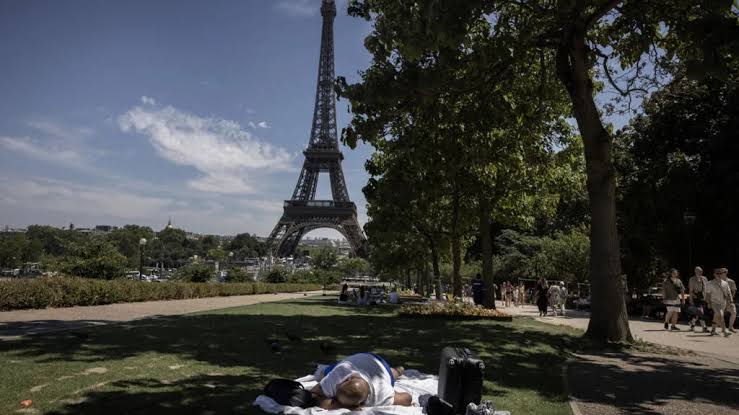
France is facing another period of extreme heat as the country experiences its third major heatwave since May. High temperatures have forced several famous landmarks in Paris to close earlier than usual while officials continue urging residents and visitors to take precautions during the severe weather.
The national weather service placed large parts of the country under its highest heat warning over the weekend. The Paris region was among the areas affected as temperatures climbed well above seasonal averages. Millions of people across mainland France were living under either the highest or second-highest heat alert.
One of the most noticeable changes came at the Eiffel Tower. Officials announced that the famous landmark would close at 4:00 p.m. on both Saturday and Sunday because of the extreme temperatures. During the busy summer tourism season, the tower normally remains open until after midnight, making the early closure an unusual measure.
Other popular attractions also adjusted their schedules to protect visitors and staff. The Louvre Museum, the world’s most visited museum, announced early afternoon closures for several days. The Musée d’Orsay also reduced its opening hours as temperatures continued to rise across the French capital.
The heatwave also affected major sporting events. Organizers of the Tour de France shortened one stage of the famous cycling race by about 30 kilometers because of concerns over rider safety. The route change removed a challenging hilly section to reduce the impact of racing under intense heat. It marked the first time in the race’s history that a stage was shortened specifically because of extreme temperatures.
Cyclists have faced difficult conditions throughout the competition. Several riders said temperatures above 35 degrees Celsius have made hydration and recovery much harder. Teams have relied heavily on extra water, ice, and cooling measures during each stage.
Weather officials expanded heat warnings across much of the country. More than 20 departments were placed under the highest level of alert, while dozens of others remained under an orange warning. Together, these regions include millions of residents as well as large numbers of tourists visiting France during the summer holiday season.
The extreme weather has also increased the risk of wildfires. Dry vegetation and strong summer heat have created dangerous conditions across several regions. Local authorities canceled Bastille Day fireworks displays in many towns to reduce the chance of accidental fires.
Government officials reported that wildfires have already burned significantly more land this year than during the same period last year. Emergency services remain on high alert as firefighters prepare for the possibility of additional outbreaks during the coming days.
President Emmanuel Macron urged the public to remain careful during the holiday period. He reminded people that many wildfires begin because of human activity and encouraged everyone to act responsibly while enjoying outdoor activities.
The latest heatwave follows earlier periods of unusually high temperatures in late spring and early summer. Official figures showed that the June heatwave was linked to more than 2,000 excess deaths across the country. Earlier hot weather in May also contributed to hundreds of additional deaths, highlighting the growing health risks associated with extreme temperatures.
Health officials continue advising people to stay hydrated, avoid outdoor activities during the hottest hours of the day, and regularly check on older adults and vulnerable family members. They also recommend using shaded areas, wearing light clothing, and limiting physical activity whenever possible.
Scientists have repeatedly warned that climate change is increasing the frequency and intensity of heatwaves across Europe. Rising global temperatures have made prolonged periods of extreme heat more common, leading governments to strengthen emergency planning and public health measures.
Weather forecasts indicate that hot conditions are expected to continue through the Bastille Day holiday. Authorities remain prepared to extend safety measures if temperatures stay at dangerous levels.
As France continues to manage another intense heatwave, officials are urging residents and visitors to follow public safety guidance while enjoying the country’s holiday season. With millions of people traveling during one of the busiest weekends of the year, authorities hope early action will help reduce health risks and keep both people and popular tourist attractions safe.
