


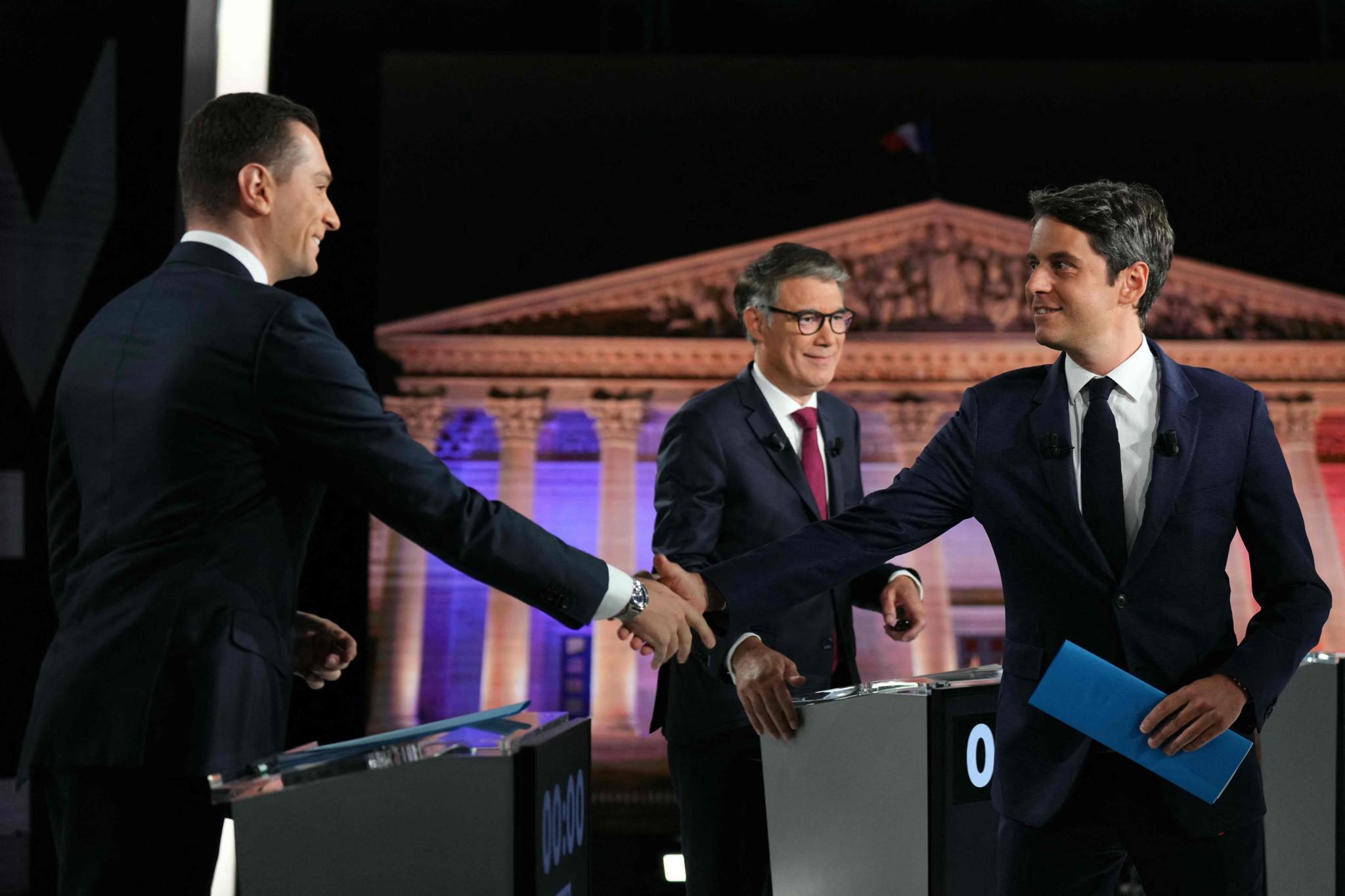
France’s next presidential race is already taking shape. Seven leading candidates met in the first major debate on Thursday, August 27. The debate put the country’s weak economy and high public debt at the center of the campaign. The meeting took place in Paris as political parties began to set out their plans for the 2027 election.
The candidates agreed on one point. France faces a serious economic problem. They did not agree on how to fix it. The debate showed a wide gap between the left, center and right. Debt, pensions, public spending and the role of the state were among the key issues.
Marine Le Pen, the leader of the far-right National Rally, used the debate to speak directly to business leaders. She said France must restore control over its public finances. She also promised to repay the country’s debt if she wins the 2027 election. Her message was aimed at voters and business owners who fear that France’s debt could limit future growth.
Jean-Luc Mélenchon took a very different view. The left-wing leader has argued for a major change in France’s economic policy. During the debate, he supported removing parts of the national debt. His position puts him far from Le Pen on the question of how France should manage its public money.
Other major figures also joined the debate. They included centre-left politician Raphaël Glucksmann, former Prime Minister Gabriel Attal and former Prime Minister Édouard Philippe. Their presence showed how broad the field could become before the election.
The debate comes at a difficult time for the French government. France has a minority government under Prime Minister Sébastien Lecornu. The government must find enough support in parliament to pass its 2027 budget. That task could prove hard because no single political group has a clear majority.
The budget issue is now closely linked to the presidential race. Candidates must explain how they would cut the deficit while also meeting public demands for better services. Pensions are one of the most difficult areas. Any plan to reduce pension spending is likely to face strong political resistance.
The debate also showed the importance of business confidence. France needs investment and growth while it tries to reduce its debt. Yet many business owners remain worried about the next government. They want clear plans on taxes, spending and growth.
Financial markets are watching the political debate as well. French borrowing costs have risen compared with Germany. The gap between French and German bonds has reached its highest level since 2024, according to recent reporting. This shows that investors are paying close attention to France’s political and budget risks.
The election is still months away, but the economic debate has begun early. The August 27 meeting gave voters a first look at the main arguments that may shape the campaign.
For France, the challenge is clear. The next president will face high debt, weak public finances and strong pressure from voters. The debate in Paris showed that the candidates have very different ideas about how to meet those challenges.
