


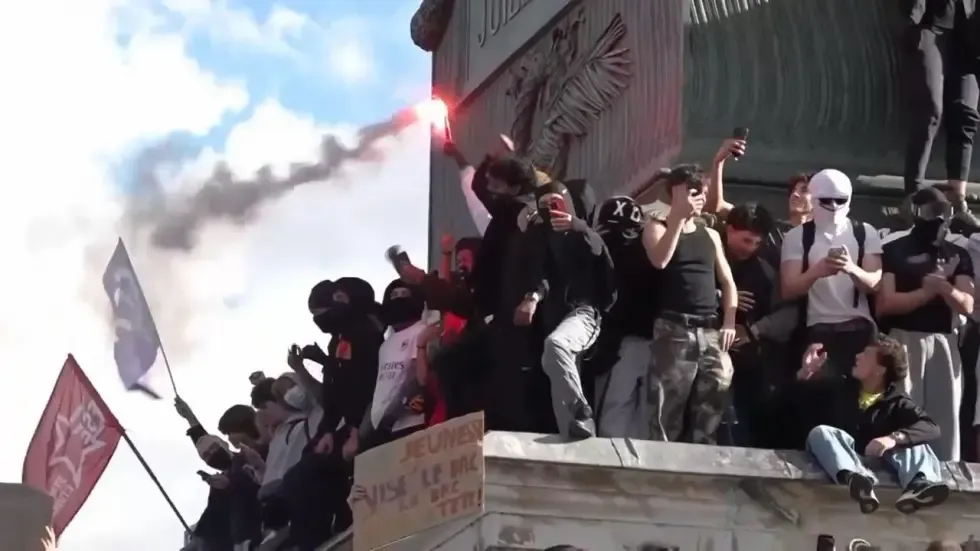
France faced another day of student demonstrations on Tuesday, October 13, as young people continued protesting against poor conditions in schools. The movement has spread beyond its original location and become a national issue, drawing attention from political leaders, education officials and families. Students have raised concerns about crowded classrooms, staff shortages, uncomfortable temperatures and buildings that need repair. They say these problems make it harder to learn and create an unfair experience for pupils across the country.
The protests began in a Paris suburb after students complained about conditions at their school. Since then, demonstrations and school blockades have appeared in other places. Some protests have remained peaceful, while others have led to clashes with police, property damage and school closures. The situation has created a difficult challenge for the government, which must respond to students’ concerns while also keeping schools safe and open.
Climate and social justice activist Greta Thunberg joined students at a high school in Saint-Denis, near Paris, on Tuesday. Her appearance brought more public attention to the demonstrations. Students used placards and megaphones to express their demands, while further marches and strikes were planned in several areas. Education officials said that about 200 schools were closed, although some closures were linked to safety concerns around planned demonstrations.
The police response has become another major issue. Reports of injuries and forceful crowd-control methods have raised questions about how authorities handle young protesters. Officials have defended the need to protect public safety, but critics say the response risks increasing anger rather than resolving the original problems. The demonstrations have also affected public debate about the quality of education and the government’s ability to support schools.
The movement comes as France approaches its 2027 presidential election. Political candidates have taken different positions on the protests, with some focusing on school funding and others stressing public order. The debate could influence how voters judge education policy and government priorities. For students, however, the immediate concerns remain practical: enough teachers, safe buildings, fair schedules and classrooms where learning is possible.
The government now faces pressure to offer a response that goes beyond managing demonstrations. Better communication with students, teachers and parents could help identify the most urgent needs. Any lasting solution will depend on funding, clear plans and a willingness to listen. The protests show that school conditions are not only an education issue but also a question of opportunity, equality and trust between young people and public institutions.
