


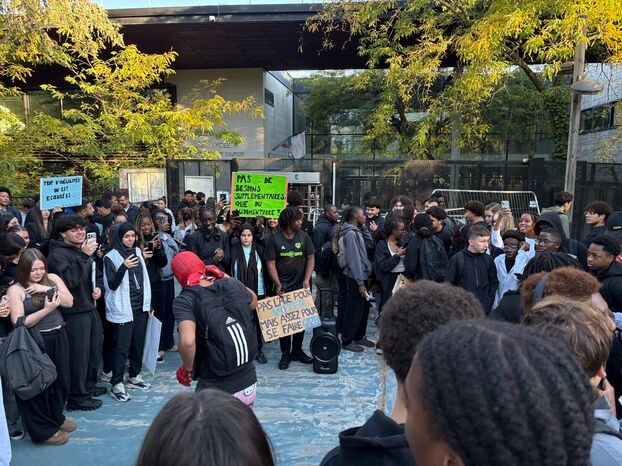
Student protests in France are putting fresh pressure on the government as thousands of young people prepare to join nationwide demonstrations on Tuesday, October 6. The movement has grown over concerns about overcrowded classrooms, poor school buildings and a lack of staff. What began as a local education dispute has now spread to several parts of the country. The protests have also become a major political challenge for Prime Minister Sebastien Lecornu, who is already facing pressure over France’s difficult budget situation.
The student movement has been building for several weeks, with pupils calling for more money and better conditions in schools. Demonstrators say many buildings are in poor shape and that some classrooms are too crowded for effective learning. They also want more teachers and other school workers. The government has said it understands some of the concerns and plans to create a platform where students can explain their problems. Officials have also promised an action plan for schools facing the most serious difficulties.
The protests have become more tense in recent days. Several schools have been damaged, while clashes between police and demonstrators have taken place in cities including Paris, Lille and Toulouse. A 15 year old student in Lens was seriously injured during a confrontation with police on Monday. His hand and part of his lower arm were reportedly destroyed after he picked up a police dispersal grenade. Authorities are investigating the incident as questions grow about the use of force during the protests.
The scale of the demonstrations has also created concern among school leaders and families. Hundreds of high schools have been closed or partly closed because of safety concerns and disruptions. Education officials have reported injuries among both students and school staff. Some schools have also suffered damage from fires or looting. The government wants affected schools to return to normal as quickly as possible, but the continuing demonstrations are making that goal harder to achieve.
The political pressure is increasing because the protests are taking place at a difficult moment for France. The government is trying to advance a 2027 budget plan while investors are already worried about the country’s public finances. Opposition parties have used the education crisis to criticize the government’s approach, while officials have accused some political groups of encouraging unrest. Those groups reject the accusation and say the demonstrations reflect real problems in the education system.
Student representatives are expected to remain active during Tuesday’s demonstrations. Trade unions and education workers have also shown support for the pupils, adding another layer to the unrest. The government is calling for calm and wants protests to remain peaceful. At the same time, security officials are preparing for possible clashes in major cities. The authorities are also considering measures that could make young people or their parents financially responsible for certain property damage caused during protests.
For the government, the challenge is now to respond to the education complaints without allowing the wider unrest to grow. Students want clear changes in schools, while officials must balance those demands with budget limits and public order concerns. Tuesday’s demonstrations could show whether the government’s planned response is enough to reduce tensions. For many families and students, however, the issue is no longer limited to one school or one city. It has become a wider demand for better conditions across France’s education system.
