


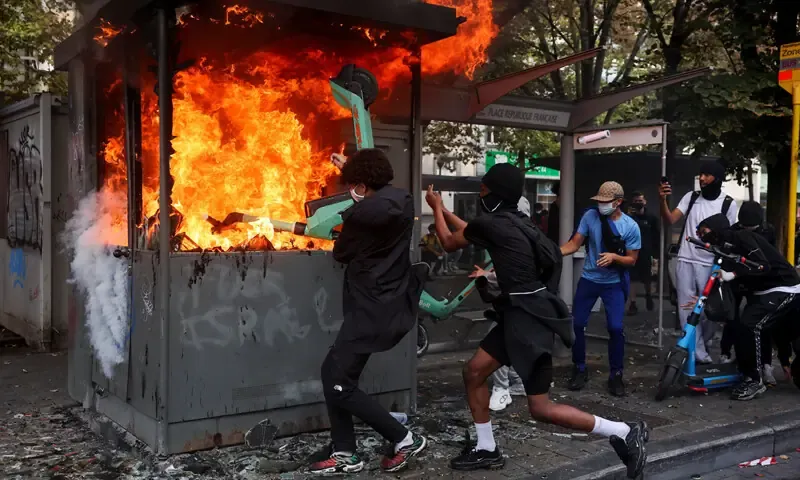
France has temporarily suspended the use of stun grenades by police during student protests after a 15 year old boy suffered a serious hand injury during a demonstration in Lens. The decision was announced as the school protest movement continued into Thursday, October 8, with more than 500 schools affected across the country. The government is facing growing pressure to respond to complaints about poor school conditions while also dealing with criticism over the way police have handled the demonstrations.
The protests began several weeks ago after students raised concerns about overcrowded classrooms, teacher shortages and deteriorating school buildings. The movement has since spread across France and attracted support from teachers, parents and trade unions. Demonstrators say many schools do not have enough staff to provide normal lessons and that some buildings require major repairs. Students are demanding practical changes rather than promises and have continued blocking school entrances and joining marches in several cities.
The decision to suspend stun grenades followed the serious injury in Lens. The teenager lost his hand during a confrontation with police, and the incident has become one of the most important points in the debate about police tactics. Authorities have opened investigations into several incidents involving officers and protesters. Interior Minister Laurent Nunez said the suspension was intended to reduce risks during the continuing movement while officials examine how police weapons were used.
The government has rejected accusations that police were ordered to use excessive force against students. Officials say officers have responded to violence, property damage and attempts to block public roads or buildings. However, rights groups, teachers and student representatives have continued to raise concerns about the treatment of young protesters. The dispute has become more serious because many of those taking part are minors, creating additional pressure on authorities to avoid unnecessary injuries.
More than 500 schools were closed or disrupted after nationwide demonstrations earlier this week. The protests have affected classes and public transport in several cities. In Paris, police and protesters have faced each other around blocked roads and university areas, while demonstrations have also taken place in Lyon, Rennes and other cities. The continuing disruption means that education officials must deal with both the original complaints from students and the practical problem of getting schools back to normal.
Prime Minister Sebastien Lecornu has promised that the government will prepare measures to address some of the students’ concerns. These include improving school infrastructure and examining problems linked to teacher shortages. Officials have also sought direct feedback from students through an online platform. However, student groups say they want concrete action and are not satisfied with waiting for proposals that may take months to become reality.
The political importance of the protests is also increasing. France is already dealing with pressure over public finances, while the country is moving toward a presidential election. Opposition parties have used the unrest to criticize the government’s education policy and its approach to public order. The government, meanwhile, is trying to avoid allowing the demonstrations to develop into a wider social crisis.
Thursday’s demonstrations will show whether the suspension of stun grenades reduces tensions between police and protesters. The government faces a difficult balance between protecting public order and allowing students to demonstrate safely. For the protesters, the central issue remains the condition of French schools. Until students see clear changes in staffing, buildings and classroom conditions, the demonstrations are likely to remain an important issue in French public life.
