


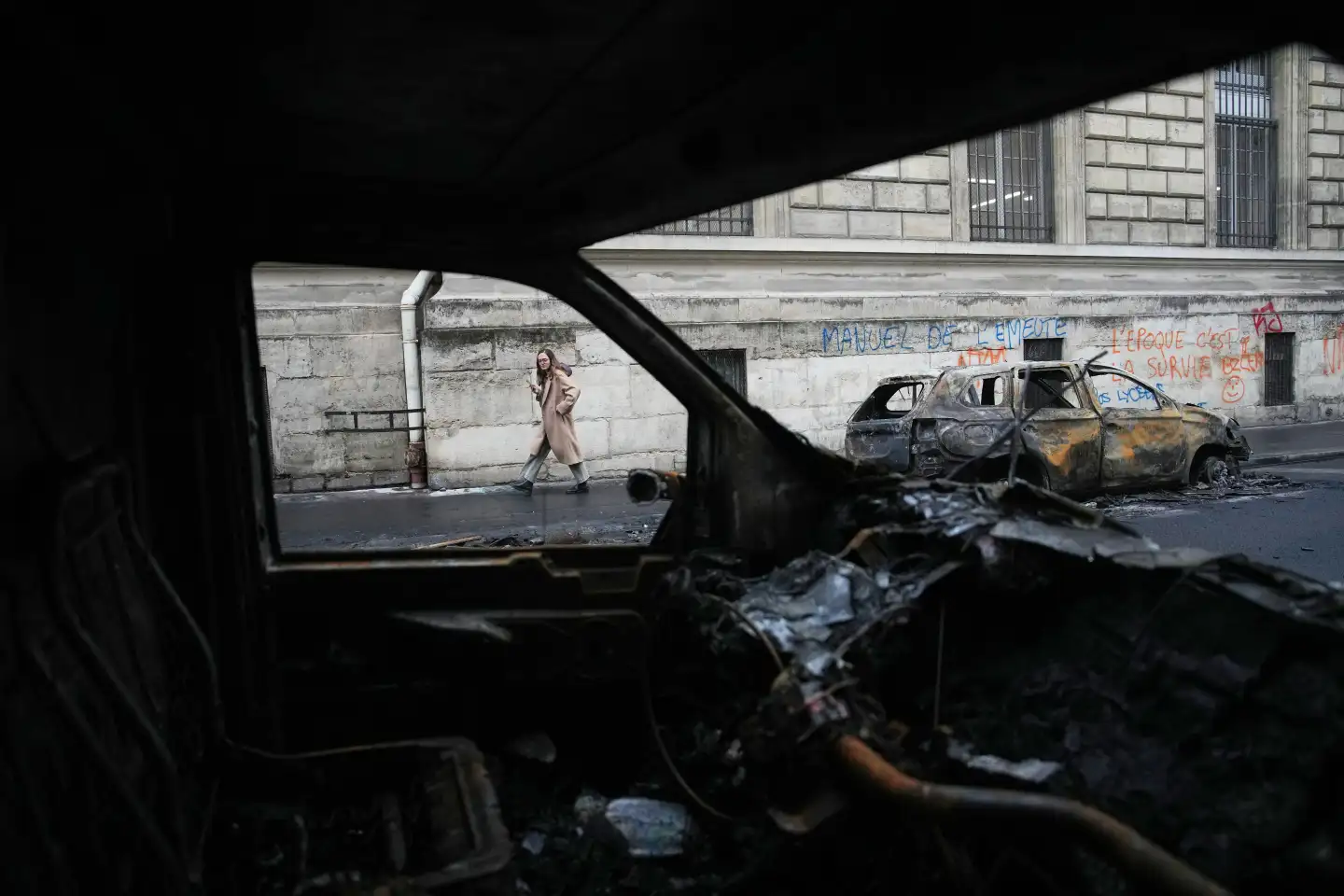
French officials are keeping strict security measures in place after violent protests shook Paris and other cities. The government has introduced night curfews in areas hit by the worst unrest. The steps aim to protect residents, limit fresh violence, and help public life return to normal. The measures come after clashes between protesters and police, fires, looting, and damage to public buildings raised fears about safety across the country.
Paris and Lyon are among the cities facing curbs in parts of their central areas. In Paris, the rules cover areas around Place de la République and Les Halles. In Lyon, a curfew runs from 9 p.m. to 6 a.m. Officials say the limits will remain in place for as long as needed. The move shows how seriously the authorities view the risk of more violence.
The unrest has led to thousands of arrests. Officials said at least 2,400 people had been detained after violent incidents across France. More than 800 suspects had faced charges, while some cases moved quickly through the courts. The figures show the scale of the police response, though they do not mean that every person arrested took part in violent acts.
The recent violence has included cars set on fire, shops looted, and clashes in public streets. Some public buildings were also attacked. In one case in Limoges, a suspect was held over a fire at a historic city hall. Such incidents have raised concern among local residents, shop owners, and public workers who fear more damage if the unrest returns.
The protests have been linked to anger over rising living costs and poor conditions in schools. These issues have placed pressure on families and public services. Many people have joined peaceful marches to call for change. Yet the violent acts by some people have shifted attention toward security and law enforcement. Officials say they must protect the right to protest while stopping attacks on people and property.
The government has blamed far-left groups and people who used the unrest to loot shops. Some critics have challenged the official account and called for a wider look at the causes of the crisis. The role of police has also become a point of debate. The use of force, arrests, and curfews may restore order in the short term, but they can also deepen mistrust if residents feel their concerns are ignored.
French leaders are now facing two linked tasks. They must prevent further violence while also addressing the issues that brought people into the streets. More police have been sent to areas where new protests are expected. Officials have also warned that those found guilty of violence will face legal action. At the same time, a parliamentary inquiry is set to examine the unrest and the police response.
For people who live and work in affected areas, the immediate concern is safety. Shops need to reopen, public transport must run, and families need to feel safe outside their homes. Curfews may offer a period of calm, but lasting peace will depend on more than police patrols. The response to the protests, the state of public services, and the cost of daily life are likely to remain key issues in France in the days ahead.
