


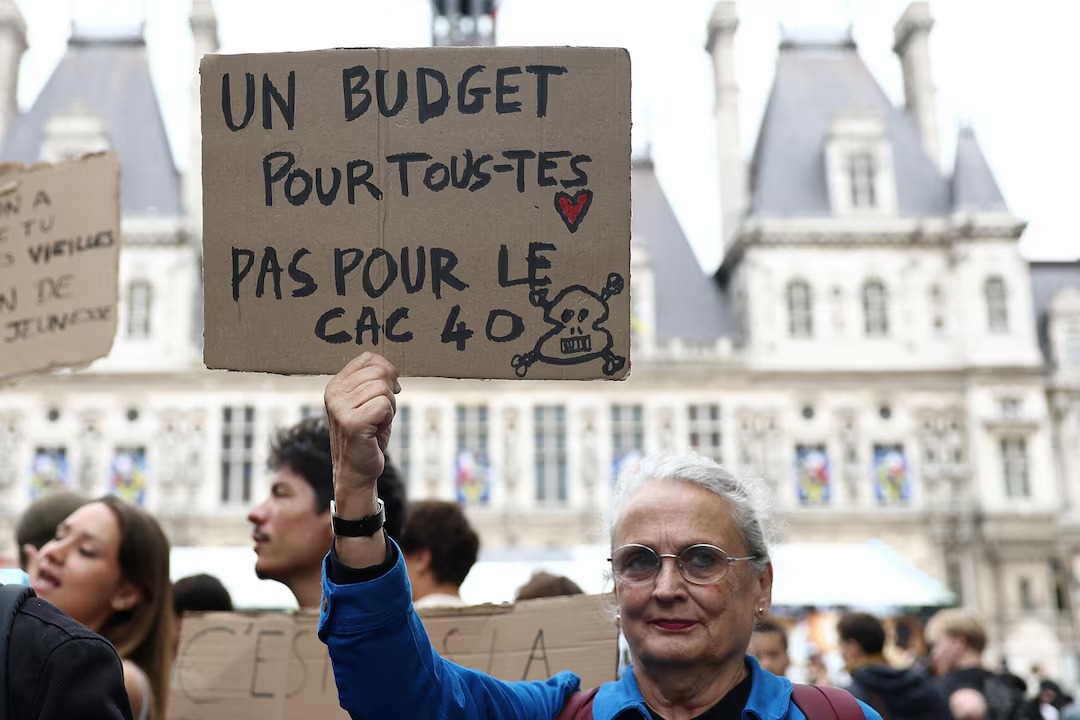
French shares fell on Monday as investors reacted to violent protests and growing political uncertainty. The unrest, which followed weeks of anger over living costs and public services, added pressure to an economy already facing slow growth and concerns about government debt. The decline also affected wider European markets as investors assessed the possible economic impact.
France’s CAC 40 index dropped by about one percent during the trading session. The wider European STOXX 600 index also moved lower after gaining ground the previous week. Banking shares were among the weaker performers, reflecting concern that political instability could increase financial risks and make investors more cautious about French assets.
The demonstrations began with students raising concerns about school conditions and public services. They later attracted workers and other people worried about rising prices and household budgets. Although many participants marched peacefully, some groups looted shops, damaged public buildings and fought with police. The damage has created costs for businesses and local authorities and may disrupt normal commercial activity.
Investors are concerned that prolonged unrest could make it harder for the government to manage the country’s finances. France has a high level of public debt, and borrowing costs have already been a subject of concern. If political conflict delays budget decisions or weakens confidence in the government’s plans, investors may demand higher returns to hold French government bonds.
The impact could extend beyond the stock market. Businesses may face repair costs, lost sales and uncertainty about customer demand. Tourism and retail activity can also suffer when streets are damaged or people avoid busy areas. However, the longer-term effect will depend on how quickly public order returns and whether the government can prevent further disruption.
The financial reaction also shows how closely investors watch political developments in major European economies. France plays an important role in the euro area, so sustained instability can influence market sentiment beyond its borders. A sharp rise in borrowing costs could make it more expensive for the government to finance public services and respond to economic shocks.
The immediate market decline does not mean a financial crisis is inevitable. Investors will be looking for signs that the government can restore order and provide a clear economic plan. The next steps will matter for both public confidence and the country’s ability to manage its financial challenges.
