


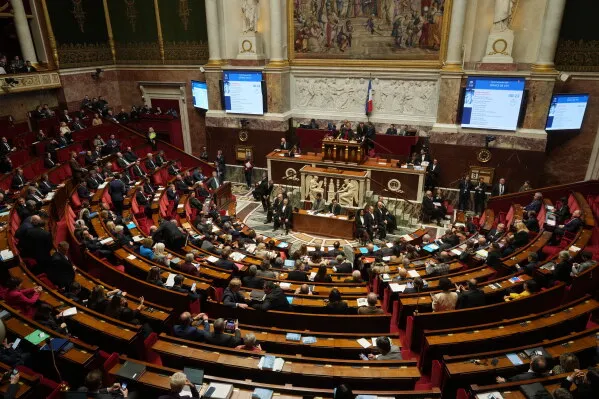
The French government presented a bill today aimed at modernizing several state services, a piece of legislation that has already become a flashpoint for public sector unions frustrated with working conditions across government agencies. The timing was not incidental, as firefighter unions specifically chose today’s date to launch their own extended protest action, hoping to draw attention to their demands for better funding and equipment just as the government unveils its broader public administration reform plans.
The bill arrives amid a particularly turbulent stretch for French public finances and government stability. Prime Minister Sebastien Lecornu, who has held the role since a period of significant political upheaval last autumn, continues working to steer the country through difficult budget negotiations while facing pressure from multiple directions within a deeply divided parliament. His government has pursued a target of cutting the budget deficit to five percent of economic output, a goal that has required difficult tradeoffs across numerous government spending areas.
State service modernization has become an increasingly central theme within French budget planning, as officials look for ways to improve efficiency across government agencies without simply cutting frontline services that citizens rely on daily. The reform push touches everything from digital transformation initiatives to administrative streamlining, reflecting a broader effort to demonstrate that budget discipline need not come entirely at the expense of service quality.
Public sector unions have watched the reform agenda with considerable skepticism, arguing that modernization efforts too often translate into reduced staffing and increased workload for remaining employees rather than genuine efficiency improvements. Firefighter unions specifically have called for modernization that includes better equipment and expanded recruitment, rather than administrative changes that unions fear could ultimately reduce frontline capacity within emergency services.
The reform bill’s presentation today also lands within a broader context of fiscal pressure facing virtually every part of French government. National debt has climbed above one hundred percent of yearly economic output, and multiple credit rating agencies have downgraded French government debt over the past year, adding urgency to the government’s efforts to demonstrate credible fiscal management to both domestic political audiences and international financial markets.
Civil service employment figures released alongside broader budget planning documents show a mixed picture across different ministries, with some departments including justice and the interior ministry seeing planned staffing increases, while the ministry overseeing public action and accounts itself faces reduced headcount. This uneven distribution reflects government priorities that favor security and justice related functions even as broader administrative modernization efforts proceed elsewhere.
Opposition lawmakers from multiple parties have signaled they will scrutinize the bill closely as it moves through parliamentary debate in the coming weeks. Given the fragmented nature of the current National Assembly, where no single party commands a majority, the bill’s ultimate fate remains genuinely uncertain, with its passage likely to require negotiation and compromise across traditional political divides that have complicated nearly every major piece of legislation over the past year.
As the bill begins its formal legislative journey, attention will turn to how quickly parliamentary committees take up detailed review, and whether the government can build sufficient cross party support to see the reform through to actual implementation. For public sector workers watching closely from picket lines and demonstrations outside hospitals and fire stations today, the coming weeks of parliamentary debate will determine whether this latest modernization push genuinely addresses their concerns about staffing, funding, and working conditions, or simply adds another layer of administrative change without the resources needed to make it meaningful.
