


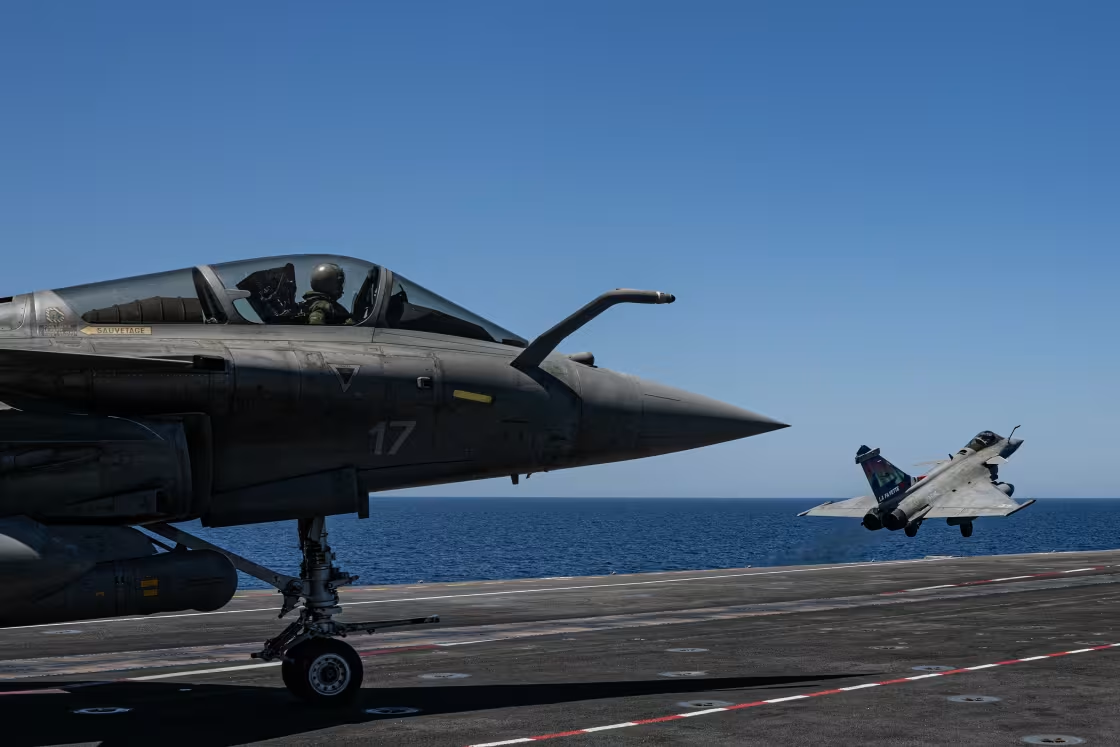
France has moved its aircraft carrier strike group closer to the Middle East as tensions rise around the Strait of Hormuz. The move is part of a possible France Hormuz carrier mission aimed at improving maritime safety in one of the world’s most important sea routes.
French President Emmanuel Macron confirmed on Wednesday that the aircraft carrier Charles de Gaulle is now heading south of the Suez Canal into the Red Sea. The naval group is preparing for a potential joint mission with Britain. The goal is to support shipping safety in the Strait of Hormuz if conditions allow.
The Strait of Hormuz is a key passage for global energy trade. Around one-fifth of the world’s oil normally passes through it. However, ongoing conflict in Iran has disrupted traffic. Hundreds of ships are now stuck, and insurance costs have increased sharply.
The France Hormuz carrier mission is separate from a U.S. operation that was recently paused. France and Britain are instead working on a European-led plan focused on maritime security. Macron said the mission would aim to restore confidence among shipowners and insurers.
He also said the effort is not part of the ongoing conflict between the war’s main sides. Instead, it is designed as a defensive mission under international law.
French military officials said the carrier group will only act if certain conditions are met. First, the threat to shipping must decrease. Second, shipping companies must feel safe enough to return to the route.
Officials also said that regional approval would be needed before any operation begins. This includes countries near the Strait of Hormuz, including Iran, which borders the waterway.
The French military spokesperson explained that the France Hormuz carrier mission is strictly defensive. He said France’s position has not changed since the start of the crisis. The focus is on security, not direct combat.
The deployment includes the nuclear-powered aircraft carrier Charles de Gaulle and several escort ships. Fighter jets on board have previously taken part in NATO exercises and regional patrols.
France has also increased its military presence in the region since the conflict began. Rafale fighter jets based in the United Arab Emirates have been used to intercept drones and missiles over Gulf airspace. This is part of an existing defense agreement with Abu Dhabi.
Military planners from more than 30 countries have been involved in discussions about the wider maritime security plan. Earlier meetings in Paris brought together dozens of nations to explore ways to protect global shipping routes.
The France Hormuz carrier mission is similar in structure to past European military cooperation efforts. It follows a model of joint action seen in other international security operations led by France and Britain.
However, the United States is not part of the current European planning. French officials say the two approaches are separate, even though both aim to improve safety in the Strait of Hormuz.
Macron has also spoken directly with Iran’s president about the situation. He said easing tensions in the region could help support broader talks on nuclear issues and regional security.
Insurance costs for ships crossing the Strait of Hormuz have increased significantly. Industry reports show war-risk premiums are now several times higher than before the conflict. Many shipping companies have paused operations due to safety concerns.
Experts say this has created a serious disruption in global trade. The Strait of Hormuz is one of the most important oil routes in the world, and any closure or risk affects global energy markets quickly.
French officials say the France Hormuz carrier mission is intended to reduce that risk. They believe a visible naval presence could help restore confidence and reopen the route for commercial shipping.
Still, no exact timeline has been given for when the carrier group will arrive or when operations might begin. Officials say everything depends on how the security situation develops in the coming days.
For now, the deployment signals Europe’s growing role in managing maritime security in a highly sensitive region. The situation around the Strait of Hormuz remains tense, with global attention focused on whether diplomatic or military efforts will restore stability.
