


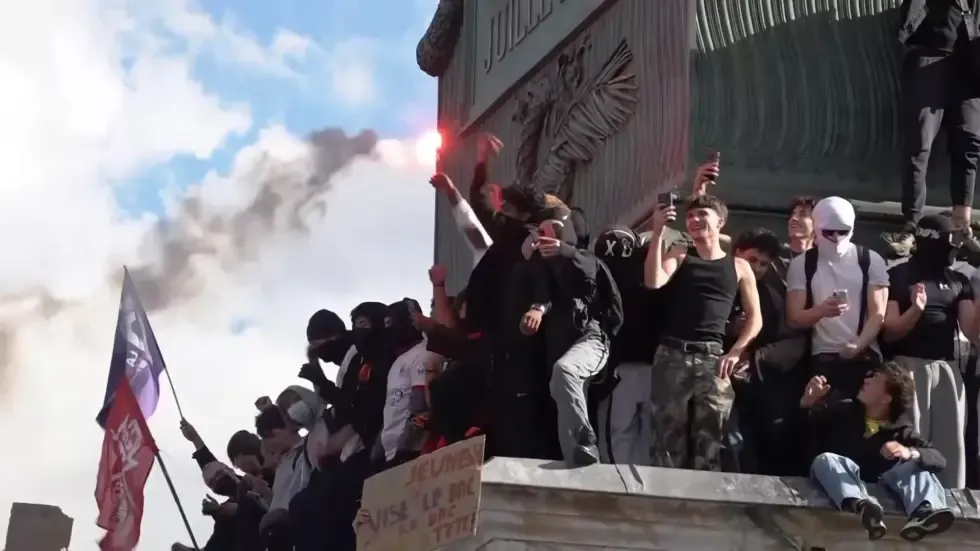
Student protests continued across France as young people called for better school conditions, more education funding and action over alleged police violence. The demonstrations have placed fresh pressure on the government, which is trying to respond to public anger while facing serious limits on public spending. A report published on October 9 described renewed unrest in Paris and other parts of the country after demonstrations on Thursday, October 8.
One focus of the latest unrest was Hélène Boucher high school in Paris. Students had blocked access to the school before police moved in and used tear gas to disperse the crowd. The incident reflected the growing tension between young protesters and the authorities. Some students say their schools lack basic resources and are not suitable places for learning, while others have raised concerns about the way police handle demonstrations.
The protests are linked to complaints about damaged buildings, crowded classrooms and shortages of teachers. Students have also described problems such as water leaks and rodent infestations. They argue that schools should provide safe and healthy places to study, regardless of the area where a student lives. The demands have attracted support from people who believe that public education needs more attention and investment.
The unrest has spread beyond Paris. Demonstrations and school blockades have affected institutions in several French cities. The movement has also influenced student actions in Belgium and Italy, where young people have raised concerns about education costs, facilities and public services. This wider response suggests that frustration over school conditions is not limited to one city or one national debate.
The scale of the demonstrations has created a challenge for the government. Officials must respond to students’ complaints while also preventing violence and damage to public property. Prime Minister Sébastien Lecornu has condemned violent incidents and accused some political figures of using the anger for their own purposes. However, the students say that promises alone will not resolve the problems they face every day.
The issue is also becoming part of France’s wider political debate. The government is under pressure to manage public finances, but families and teachers argue that schools cannot wait for long-term plans. More staff, better-maintained buildings and smaller classes are among the changes protesters want to see.
The latest demonstrations show that the conflict remains unresolved. Students have indicated that they intend to continue pressing their demands, while officials face the task of restoring calm without ignoring the reasons behind the protests. The coming days may show whether the government can offer measures that satisfy students and teachers. For now, the movement has kept education conditions and police conduct at the centre of France’s public debate.
