


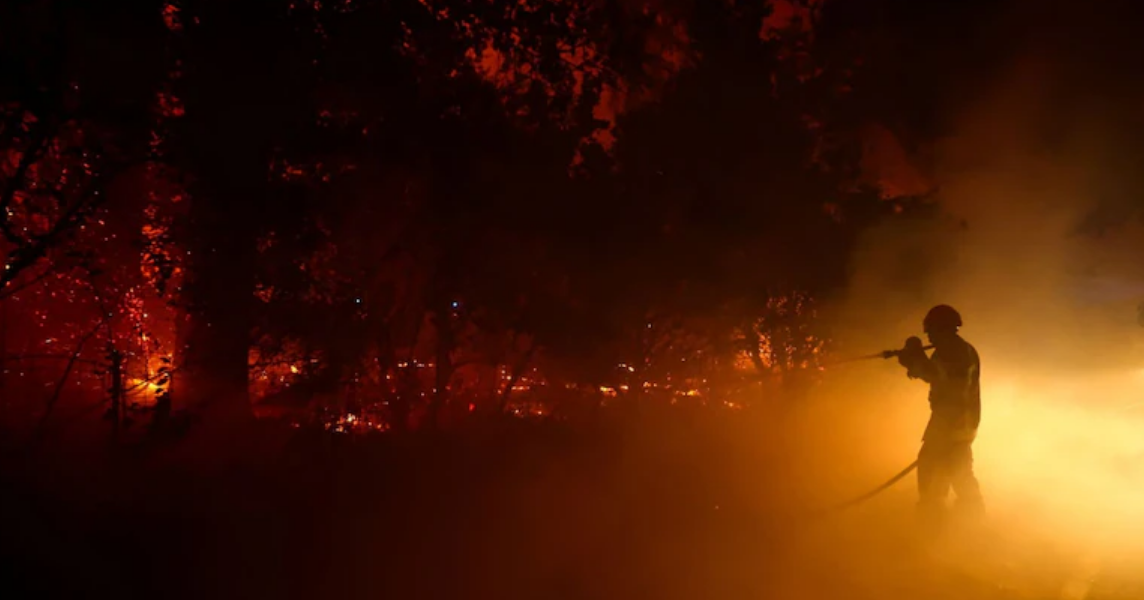
Nearly 40,000 people have been evacuated from a popular tourist area in southwest France as a massive wildfire continues to spread. Emergency crews are working around the clock to contain the blaze, which has already burned more than 10,000 hectares (about 25,000 acres) of land.
The wildfire began on Wednesday in the village of Saumos, located west of Bordeaux. Since then, strong winds and dry conditions have pushed the flames toward the Cap-Ferret peninsula, a well-known holiday destination famous for its pine forests, dunes, beaches, and oyster villages.
French Interior Minister Laurent Nunez said authorities have carried out large-scale evacuations to protect residents and visitors. He confirmed that around 40,000 people have either already left the area or are currently being moved to safer locations.
Officials described the wildfire as the largest France has experienced this season. Despite the scale of the disaster, authorities said there have been no reported deaths or injuries, as emergency services continue to focus on protecting lives.
The fire has caused significant property damage. According to the Interior Ministry, 80 homes have been affected by the flames, with about 50 houses completely destroyed.
Firefighters remain on the front lines as they try to stop the wildfire from spreading further. Around 1,000 firefighters have been deployed across the affected region, supported by specialized equipment and aircraft.
Officials said the fire is not yet under control, and changing weather conditions continue to make firefighting efforts more difficult. Emergency teams are closely monitoring wind patterns while creating firebreaks to slow the advance of the flames.
The evacuation operation has included both land and sea transport. Local authorities said boats have safely evacuated more than 400 people from the Cap-Ferret peninsula, where road access has become increasingly difficult because of the fire.
Residents, tourists, and local businesses have been urged to follow official instructions and avoid returning to evacuation zones until authorities declare the area safe.
French President Emmanuel Macron described the situation as extremely tense in a public message. He said the government is working with local authorities and emergency services to respond to the wildfire as quickly as possible.
To strengthen the response, France has activated the European Union Civil Protection Mechanism, allowing the country to receive additional international support. The program enables European nations to assist one another during major emergencies such as wildfires, floods, and natural disasters.
As part of that assistance, the Czech Republic and Slovakia are sending two Black Hawk helicopters to help with aerial firefighting operations. These aircraft are expected to support French emergency crews by dropping water on active fire zones and assisting with difficult-to-reach areas.
Wildfires have become an increasing challenge across southern Europe during recent summers. Hot temperatures, prolonged dry weather, and strong winds have created conditions that allow fires to spread rapidly through forests and rural areas.
The Cap-Ferret peninsula is one of France’s most popular coastal destinations, attracting visitors each year with its natural scenery and outdoor activities. The wildfire has disrupted tourism during a busy travel period while forcing thousands of people to leave hotels, holiday homes, and campsites.
Emergency officials continue to monitor the fire’s progress and assess the risk to nearby communities. Additional evacuations may be ordered if weather conditions change or if the blaze moves toward new areas.
Authorities have urged the public to stay informed through official emergency updates and to avoid entering restricted zones. Firefighters remain focused on protecting lives, homes, and critical infrastructure while working to contain the wildfire.
As emergency operations continue, France is receiving both national and international support to battle one of its largest wildfires of the year. Officials say their priority remains ensuring public safety, limiting further damage, and bringing the massive blaze under control as quickly as possible.
