


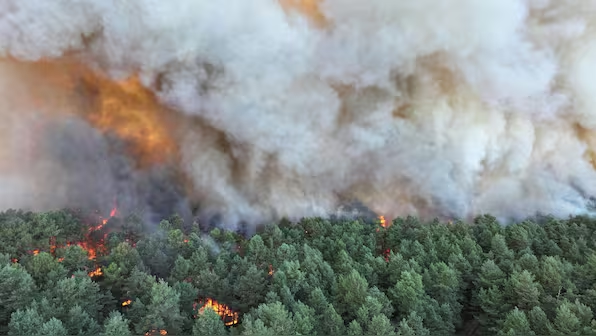
A large wildfire swept through the Fontainebleau forest southeast of Paris on Sunday, forcing evacuations, disrupting transport, and triggering a major emergency response as France continued to experience extreme summer heat.
The fire broke out in the Fontainebleau forest, about 60 kilometers from the French capital. Authorities said the blaze spread quickly because of hot, dry weather and strong conditions that increased the risk of fire.
By early Monday, officials reported that nearly 800 hectares of forest had burned. Firefighters continued working through the night as flames advanced across wooded areas near several communities.
Emergency officials described the wildfire as exceptionally intense. They said its rapid spread required a large response from firefighting teams across the country.
Nearly 400 firefighters were deployed to contain the blaze. Firefighting aircraft from southern France were also sent to assist after officials determined the fire had reached an unusual scale for the Paris region.
Aerial firefighting operations continued until nightfall before aircraft were grounded because of darkness. Ground crews remained at the scene overnight, working to slow the fire and protect nearby homes.
Authorities evacuated around 15 homes in the village of Vaudoue as a precaution. Firefighters also focused on defending neighboring communities that were at risk as the flames moved through the forest.
Officials said the deployment of firefighting aircraft helped reduce the immediate danger to nearby villages. Emergency teams continued monitoring conditions to determine whether additional evacuations would be necessary.
The wildfire also caused major transportation problems. Part of the A6 motorway, one of France’s busiest north-south highways, was temporarily closed as emergency crews responded to the fire.
Rail travel was also affected. The wildfire disrupted high-speed train services linking Paris with southeastern France, causing significant delays for passengers during one of the busiest travel periods of the summer.
France’s national rail operator reported that some trains arriving at and departing from Paris Gare de Lyon were delayed by several hours as crews worked to ensure passenger safety.
The wildfire occurred just before France’s July 14 national holiday, when millions of people travel across the country. The combination of holiday traffic and emergency closures created additional disruption on roads and rail lines.
Officials said this marked the first time water bomber aircraft based in southern France had been deployed to fight a wildfire near Paris. Two firefighting helicopters and an observation aircraft also supported the emergency operation.
Emergency responders said protecting lives and property remained the highest priority while efforts continued to contain the blaze.
The wildfire comes during France’s third major heatwave since May. High temperatures, dry vegetation, and low rainfall have created dangerous conditions for wildfires across many parts of the country.
Climate experts have warned that repeated heatwaves increase the likelihood of large wildfires by drying forests and grasslands. Recent extreme weather has affected several European countries with record-breaking temperatures.
The hot weather has also affected other sectors. French authorities temporarily reduced operations at several nuclear power stations because of high temperatures, while organizers of a major cycling event shortened one stage to protect participants from extreme heat.
Government officials said wildfire activity has increased sharply this year. Thousands of hectares of land have already been destroyed by fires across France, with the total burned area expected to exceed last year’s figures by a wide margin.
Emergency services continue monitoring weather conditions as hot temperatures persist. Firefighters remain on alert for additional outbreaks while authorities urge residents to follow safety guidance and avoid activities that could start new fires.
As firefighting operations continue near Paris, officials are focused on containing the blaze, protecting communities, and restoring transportation services. The latest wildfire highlights the growing challenges posed by prolonged heatwaves and increasingly severe fire seasons across France.
