


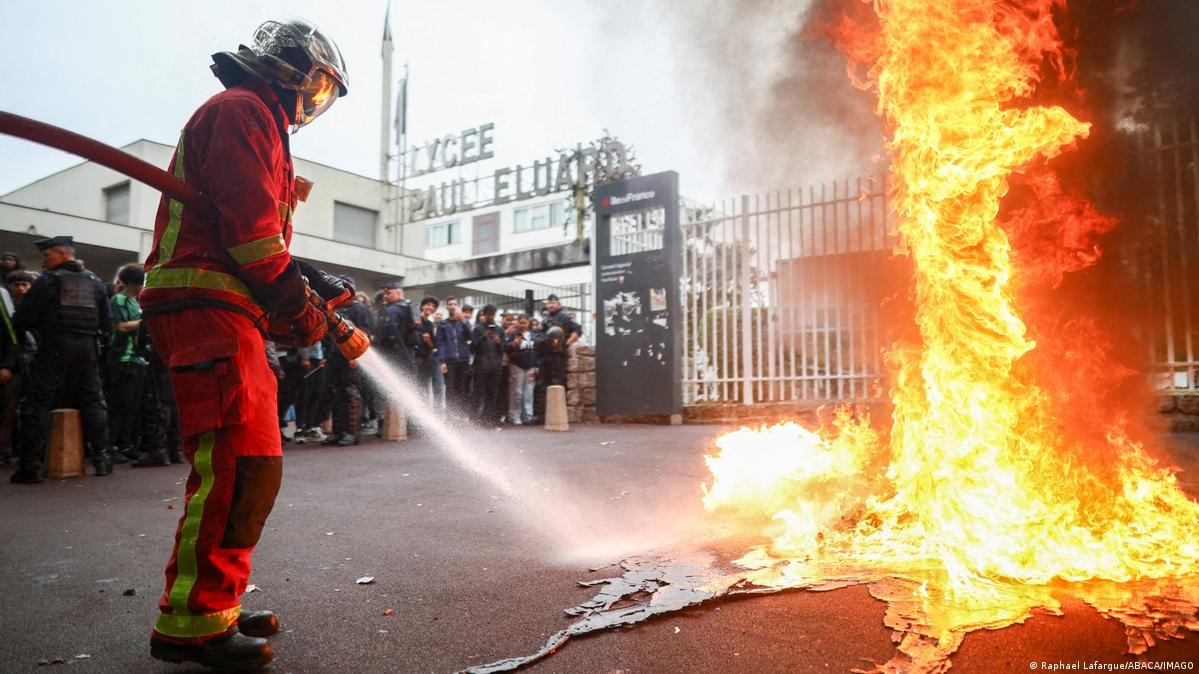
French student protests have grown sharply across the country, with hundreds of people arrested and dozens injured as young demonstrators demand better school conditions. The protests have become one of the main domestic stories in France at the start of October. Students have raised concerns about crowded classrooms, heavy workloads, weak learning materials and a shortage of teachers. The demonstrations have also created serious security problems in several areas, with police reporting clashes, fires and other incidents during the unrest. The latest developments were reported by DW on October 1, based on events that took place on September 30.
French authorities said security forces detained more than 600 people during Wednesday’s demonstrations. The protests have affected schools in several parts of the country, with Saint-Denis near Paris among the places where tensions became especially visible. Images and reports from the area showed students gathering outside schools while firefighters and police responded to incidents. Officials said dozens of security personnel were injured during clashes and arson attacks. The unrest has raised concerns about how quickly school protests can spread when local complaints connect with wider frustration about education services and public spending.
Students taking part in the demonstrations have focused mainly on conditions inside schools. They have complained about overcrowded classes, a shortage of substitute teachers and a lack of suitable learning resources. Some students have also raised concerns about classroom temperatures and the condition of school buildings. These issues are not limited to one school or one city. The protests have spread to many secondary schools, giving the movement a broader national character. Education officials now face pressure to respond to the concerns while also dealing with the disruption caused by demonstrations and clashes.
The protests have also become part of a wider debate about public services in France. Demonstrations by students have coincided with broader industrial and public-sector tensions. This has made the situation more difficult for authorities because police and other emergency services have had to manage several forms of public unrest at the same time. Government officials have acknowledged problems within the education system while warning against violence and attacks on public property. The government must now balance demands for better school conditions with the need to keep schools open and protect students, teachers and local communities.
The situation is particularly important in the Paris region because several affected schools are located in densely populated areas. Saint-Denis, north of the capital, has seen some of the strongest scenes. Students there have described problems linked to staffing and classroom conditions. The demonstrations have also attracted political attention, although the main demands remain focused on education. French authorities are expected to continue monitoring schools and protest locations as the movement develops. Further demonstrations could occur if students believe that their demands are not receiving a clear response.
The scale of the arrests has also become an important part of the story. Officials said most of those detained were teenagers. That fact has increased concern about the involvement of minors in violent incidents and the possible impact of the unrest on young people. At the same time, student groups argue that peaceful demonstrations should not be dismissed because some protests have become violent. The distinction between peaceful protest and criminal acts is therefore becoming an important issue as authorities continue their response.
For now, French schools remain at the centre of a national discussion about education, staffing and public services. The protests show that concerns among students have moved beyond individual schools and become part of a wider public debate. Authorities will need to address the practical problems raised by students while maintaining public order. The coming days will show whether the protests lose momentum or continue to spread. For families, teachers and students, the immediate focus remains the same: safer schools, enough teachers and better conditions for learning.
