


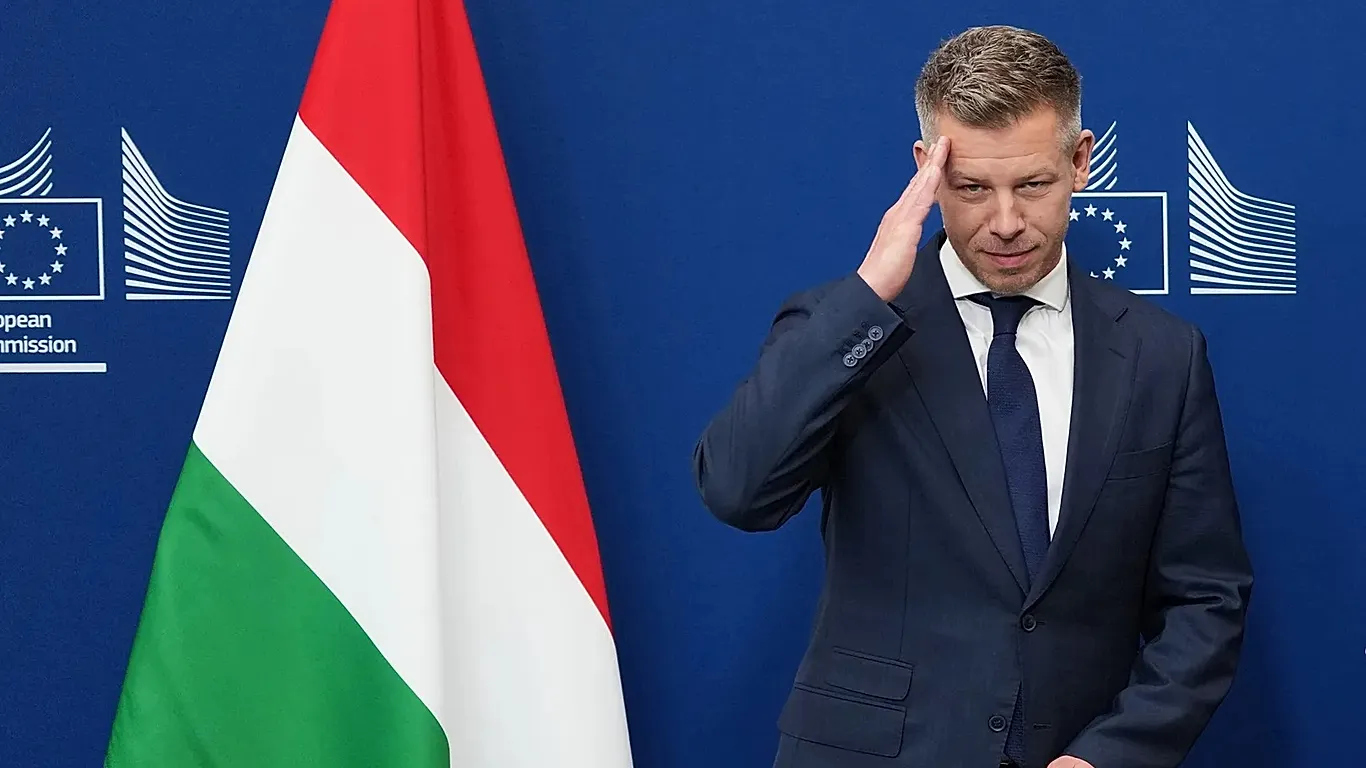
Hungary’s Prime Minister Péter Magyar will travel to Germany and France this week as part of a diplomatic campaign aimed at restoring the country’s position within the European mainstream following years of strained relations with European Union institutions.
The visits come shortly after Magyar secured a major breakthrough with the European Commission that could unlock billions of euros in previously frozen EU funding for Hungary.
Magyar, who took office in May after defeating the long-ruling Fidesz party led by Viktor Orbán, has made stronger ties with European partners one of the central goals of his administration. His government has pledged to improve cooperation with Brussels and rebuild trust with key European allies.
The Hungarian leader is scheduled to meet German Chancellor Friedrich Merz in Berlin on Tuesday. According to the German Chancellor’s Office, the two leaders will hold talks focused on bilateral relations and major European issues before addressing the media during a joint press conference.
Officials said discussions are expected to include European security, continued support for Ukraine, and broader cooperation within the European Union and NATO.
On Wednesday, Magyar will travel to Paris for talks with French President Emmanuel Macron. While French officials have not yet released details of the meeting, analysts expect European integration, economic cooperation, and regional security to be among the key topics on the agenda.
The trip marks Magyar’s second major diplomatic tour since taking office. Two weeks earlier, he visited Poland and Austria, signaling his intention to strengthen Hungary’s relationships with European partners.
The latest diplomatic effort follows an important agreement reached with the European Commission regarding frozen EU funds. Under the arrangement, Hungary could regain access to €16.4 billion that had been withheld because of concerns related to corruption and rule-of-law standards.
The funding dispute had become one of the most significant points of tension between Budapest and Brussels in recent years. European officials argued that reforms were needed to strengthen transparency, judicial independence, and anti-corruption measures.
While the agreement represents a major step forward, access to all of the funds is not guaranteed. Approximately €10 billion from the European Union’s post-pandemic recovery program could still be lost if Hungary fails to meet remaining conditions before the end of August.
In addition, final disbursement of the funding requires approval from all EU member states. As a result, Magyar has been working to secure support from national leaders across Europe.
Speaking in Brussels last week, the prime minister confirmed that discussions with several European governments were ongoing. His visits to Berlin and Paris are widely viewed as part of that effort.
European leaders have welcomed signs of a more cooperative approach from Budapest. However, several important issues remain unresolved, including Hungary’s position on Ukraine’s future relationship with the European Union.
The EU has been urging Hungary to remove its veto on Ukraine’s accession process. Progress on that issue is considered important by many member states as the bloc continues to support Ukraine amid ongoing security challenges.
Magyar has indicated that his government is willing to support Ukraine’s path toward EU membership under certain conditions. He has stated that approval would depend on guarantees protecting the educational and language rights of the Hungarian minority living in Ukraine.
The issue remains sensitive in both countries and has been a source of political debate for years. Hungarian officials argue that minority rights must be protected before further progress can be made.
Political observers say Magyar’s European outreach represents a significant shift in tone compared with previous years. His government has emphasized cooperation, dialogue, and closer engagement with EU institutions.
Supporters argue that stronger relations with Brussels could help attract investment, improve economic growth, and strengthen Hungary’s influence within Europe. Access to frozen EU funds could also provide an important boost to the country’s economy.
Critics, however, caution that substantial reforms may still be required before all concerns raised by European institutions are fully addressed.
For now, the meetings in Germany and France are expected to play an important role in shaping Hungary’s future relationship with the European Union. As negotiations over funding, reforms, and Ukraine continue, Magyar’s government is seeking to demonstrate that Hungary is ready to play a more active and cooperative role within the European community.
The outcome of this diplomatic push could have lasting implications for Hungary’s economy, international standing, and influence within the European Union in the years ahead.
