


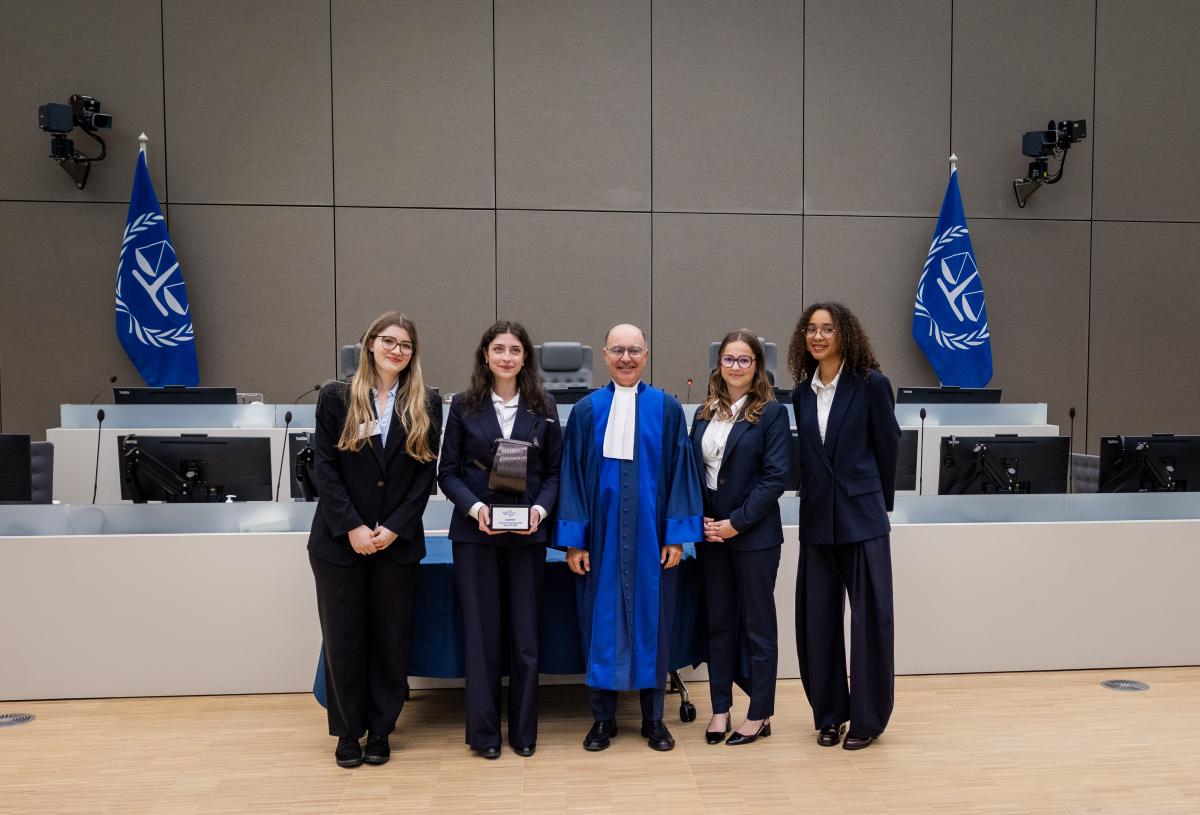
Paris Nanterre University has been named the winner of the French edition of the International Criminal Court moot court competition. The ICC moot court winner was announced after the final round was held inside Courtroom 2 of the International Criminal Court in The Hague, Netherlands.
The competition brought together law students from universities across multiple countries to argue a fictional legal case based on international criminal law. Teams acted as legal representatives for victims and the defence, presenting structured oral arguments before a panel of judges.
International Criminal Court hosted the final round of the competition as part of its academic outreach programme. The event was supported by The Hague Academy of International Law and the French Embassy in the Netherlands.
Paris Nanterre University secured first place in the competition, while Paris 1 Panthéon Sorbonne University finished in second place. The winning team included Maude Besné, Lola Scotti, Charlie Letort, and Eva Drame.
Individual awards were also presented. Maude Besné from Paris Nanterre University and Marina Hillary Lutete from Paris 1 Panthéon Sorbonne University were both recognised as Best Speakers for their performance during the final rounds.
The ICC moot court winner competition is designed to give law students practical experience in international criminal proceedings. Participants argue complex legal issues in a simulated courtroom environment, helping them develop advocacy and legal reasoning skills.
Judge Haykel Ben Mahfoudh presided over the final session of the competition. The proceedings were also made available through a live webcast on the ICC website, allowing wider access for academic audiences and legal observers.
A total of 37 universities from 15 countries participated in this year’s French language edition of the competition. The event highlights growing international interest in international criminal law and judicial processes.
Organisers said the competition plays an important role in strengthening understanding of the work of the International Criminal Court. It also helps promote awareness of international justice systems among students and academic institutions.
The ICC supports moot court competitions in several languages, including English, Spanish, French, and Chinese. There are also plans to expand similar initiatives into Arabic in the future.
Legal education experts say moot court competitions help bridge the gap between classroom learning and real world legal practice. Students gain experience in legal research, public speaking, and courtroom strategy.
The Hague based competition is considered one of the key academic events in international law education. It attracts law students from around the world who are interested in careers in international justice and human rights law.
Officials said the growing participation in the ICC moot court competition reflects increasing global engagement with international law. They added that such programmes help build future legal professionals who understand international justice frameworks.
The victory for Paris Nanterre University adds to its reputation in legal education circles. The university has consistently participated in international law competitions and academic programmes.
As the event concluded, organisers praised the high level of preparation and performance shown by all participating teams. They said the competition continues to grow in both scale and academic impact each year.
