


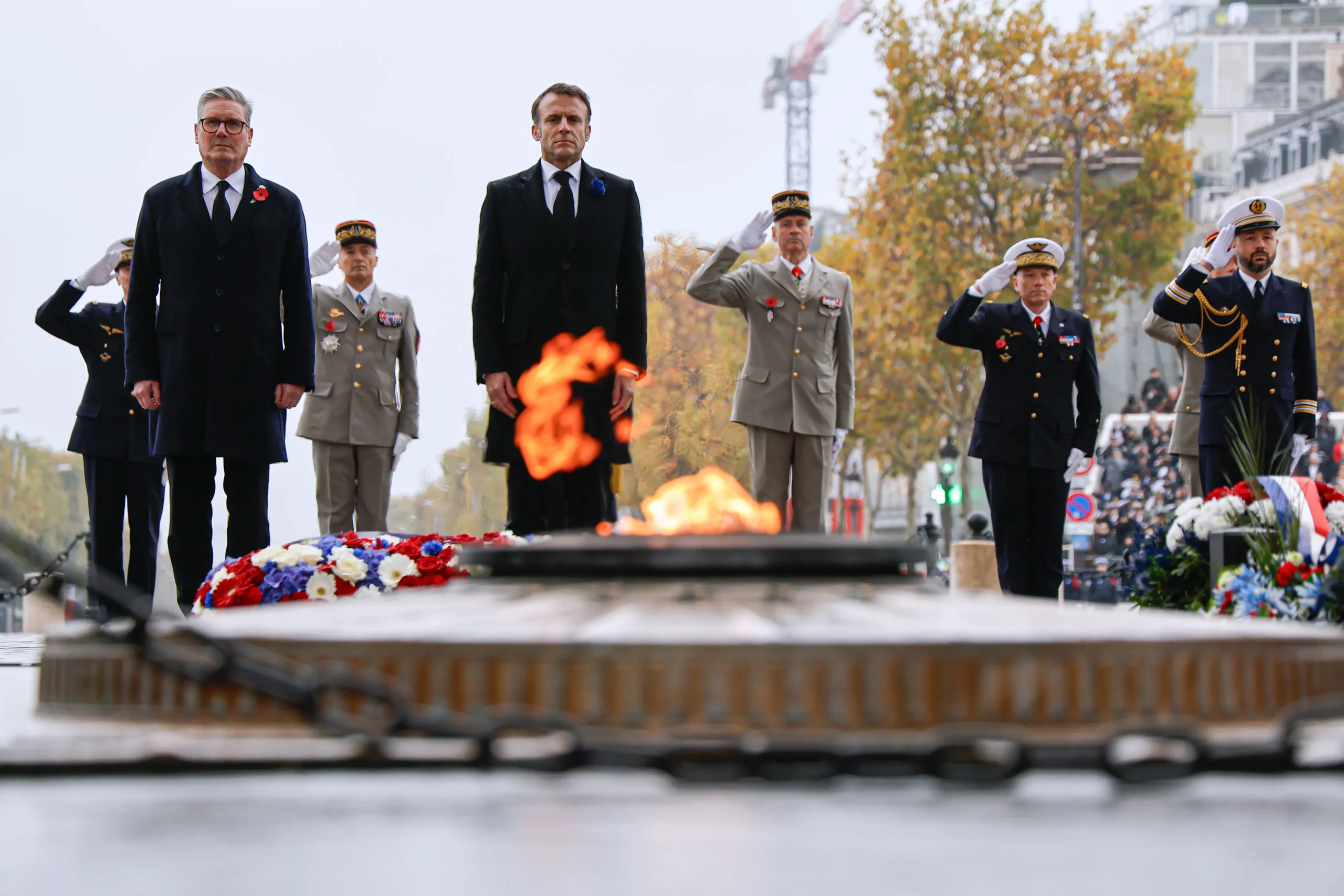
French President Emmanuel Macron has led the country’s national Remembrance Day ceremony in Paris for the final time during his presidency. The event took place on Wednesday, November 11, marking the 108th anniversary of the armistice that ended the First World War. The ceremony was held beneath the Arc de Triomphe, where national leaders and members of the armed forces gathered to honour those who died in war.
Macron began the commemorations by laying a wreath in front of the statue of former French Prime Minister Georges Clemenceau. He then joined the traditional tribute to the Unknown Soldier and renewed the eternal flame beneath the Arc de Triomphe. The president also reviewed the troops gathered for the occasion, while the names of five French soldiers killed during 2026 were read aloud.
The five service members honoured included soldiers who died in Jordan, Iraq and Lebanon. Their deaths brought the cost of France’s overseas military commitments into the ceremony, which traditionally remembers those who gave their lives in the country’s defence. Macron had earlier called on people to wear the blue cornflower, known in France as the bleuet, as a symbol of remembrance and solidarity with veterans and military families.
Prime Minister Sébastien Lecornu also took part in the national commemorations before travelling to Vernon in Normandy. There, he was expected to deliver an official speech and present military decorations. Other political figures attended ceremonies in different parts of France, reflecting the importance of November 11 across the country’s political and civic life.
The ceremony also took place against the background of the 2027 presidential election campaign. Marine Le Pen attended commemorations in Hénin-Beaumont, while Jean-Luc Mélenchon travelled to Creuse to pay tribute at a pacifist war memorial. Other political leaders, including Bruno Retailleau and Raphaël Glucksmann, also took part in events.
The anniversary has become a moment of national reflection, but this year’s ceremony has also renewed debate about how the history of war should be taught to younger generations. A government circular introduced plans for an annual school tribute to people who died for France. Some teachers’ unions have criticised the initiative, arguing that military ceremonies in schools could risk turning education into a political exercise.
Government representatives have defended the plan, saying it can help students understand the history of the country and the sacrifices made by earlier generations. The discussions have included the role of women in the Resistance and the contribution of soldiers from former French colonies.
For Macron, the ceremony carried additional significance because it was his final November 11 commemoration as president. It brought together military personnel, political leaders, veterans and members of the public at a time when France is preparing for a major political transition. The event served both as a tribute to the dead and as a reminder of the continuing place of military memory in French national life.
