


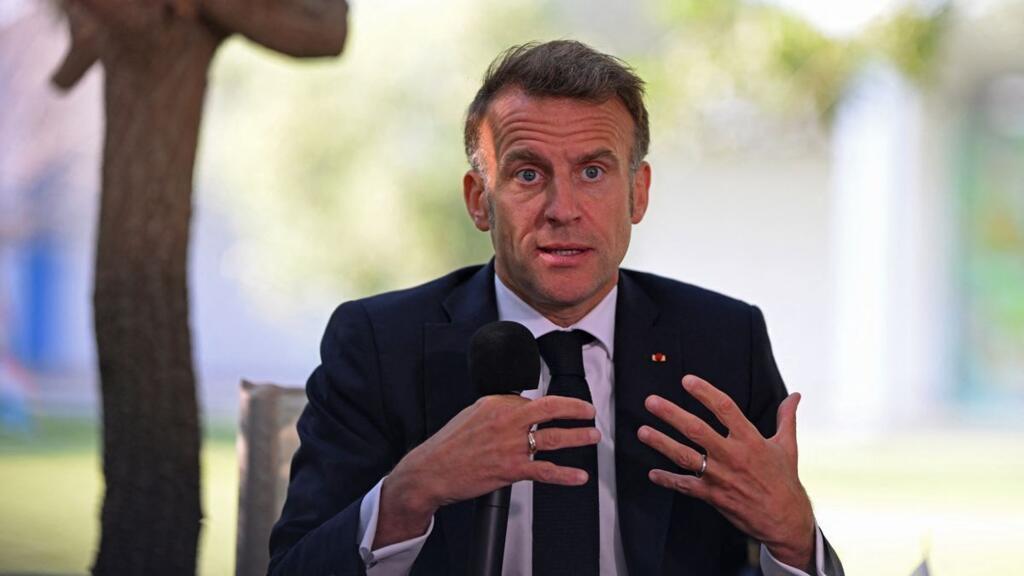
Macron political future has become a major topic of discussion after French President Emmanuel Macron said he does not plan to stay in politics once his presidency ends in 2027. His latest comments mark a clear shift from earlier remarks that suggested he might remain active in political life.
Speaking to students in Nicosia, Cyprus on Thursday, Macron said he had no political involvement before becoming president and does not expect to have any after leaving office. His statement was direct and simple, signaling a possible full exit from public political life.
“I wasn’t involved in politics before and I won’t be involved afterwards,” Macron said.
The comment has drawn attention because it appears to contrast with his earlier statements. In July 2025, while speaking at a rally in Paris, Macron gave a very different impression about his long-term plans.
At that event, he addressed the youth wing of his political movement during its 10th anniversary celebration. He told supporters that he expected to still need their support in the coming years.
“I will need you in two years, in five years, in 10 years,” he said at the time.
That earlier statement was widely interpreted by political observers as a possible signal that Macron could consider another presidential run in 2032, even after completing his second term.
The latest remarks, however, have changed that narrative. By suggesting he may step away completely, Macron has added new uncertainty to the discussion about his political future. Analysts are now questioning whether he intends to follow the traditional path of former French presidents or take a different direction.
The Macron political future debate is important because France has a unique political history. In modern French politics, no former president has successfully returned to office after leaving the presidency. This makes any potential comeback highly unusual and politically complex.
Macron’s presidency has already been marked by major political and economic challenges. He has dealt with domestic protests, pension reforms, and shifting public opinion. Despite this, he remains a central figure in European politics and international diplomacy.
His comments in Cyprus suggest a more personal reflection on life after leadership. He emphasized that his political career began with the presidency and may also end with it. This tone is different from earlier years when he often spoke about long-term political transformation in France and Europe.
Political analysts say the shift in messaging could reflect changing priorities as his second term progresses. Leaders often reassess their future plans as they approach the end of their time in office. However, Macron’s earlier suggestion of continued involvement had kept speculation alive about his next move.
The Macron political future discussion also comes at a time when France is preparing for the post-Macron era. Political parties are already positioning themselves for the next presidential election. His exit, if confirmed, could reshape the political landscape significantly.
Supporters of Macron say his leadership has modernized parts of France’s economy and strengthened its role in the European Union. Critics argue that his policies have also faced resistance from large sections of the population.
For now, Macron has not announced any formal retirement plan or future role outside politics. His statement only refers to his intention after 2027, leaving some room for interpretation.
Observers note that French political figures often remain influential even after leaving office, through writing, advising, or international roles. Whether Macron follows that path remains unclear.
As the Macron political future debate continues, attention will turn to how his second term unfolds and whether his final years in office reinforce or change his current position. For now, his message is simple but significant: he sees his political journey as limited to his presidency, not beyond it.
