


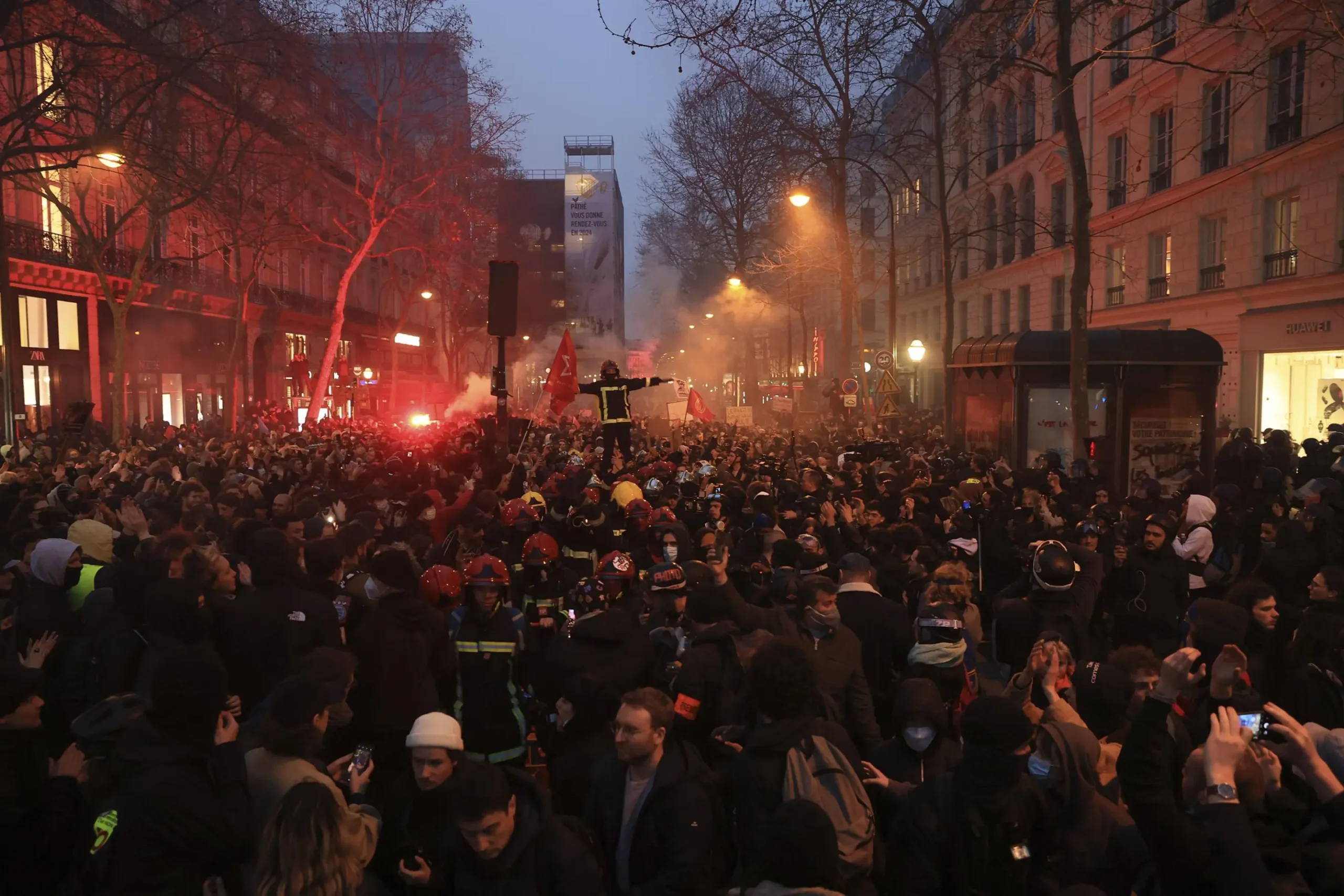
Thousands of people gathered in the streets of Paris on June 6, 2026, for a large demonstration against fascism and war. The protest brought together activists, community groups, and international supporters. Many carried flags, banners, and flares as they marched through central areas of the city.
The demonstration focused on growing concern over far-right political movements and rising violence linked to extremist groups. Protesters said they wanted to send a clear message against fascist ideas and what they see as a global shift toward political division and intolerance.
Many participants also spoke out against ongoing armed conflicts around the world. The event included messages of solidarity with several international causes. One of the most visible themes was support for people affected by the conflict in Palestine. Demonstrators called for peace and an end to violence in conflict zones.
The atmosphere of the protest was intense but largely organized. Groups marched in coordinated lines while chanting slogans. Some carried large banners with messages calling for unity, peace, and human rights. Others used flares that created thick clouds of colored smoke above the crowd.
Police monitored the demonstration from a distance. Security presence was visible along major streets, but there were no early reports of major clashes. Authorities managed traffic as large sections of the city were temporarily affected by the march.
Organizers said the protest was planned to highlight what they describe as a dangerous rise in extremist politics across Europe and beyond. They argued that fascism and authoritarian ideas are becoming more visible in public debate and online spaces.
Speakers at the event urged people to stay active in civic life. They encouraged young people in particular to take part in peaceful political action and community organizing. Many emphasized that silence in the face of political violence can allow harmful movements to grow.
Some demonstrators shared personal reasons for attending. A number said they were worried about the future of democracy and human rights. Others said they were motivated by recent global conflicts and the suffering of civilians in war zones.
The protest also included calls for stronger international cooperation to prevent war. Participants said governments should invest more in diplomacy and less in military expansion. They argued that global tensions are increasing and that ordinary people are often the ones who suffer the most.
As the march moved through the city, large crowds gathered along sidewalks to watch. Some residents joined the demonstration spontaneously. Others filmed the event on their phones as it passed through major streets.
Despite the size of the gathering, the protest remained mostly peaceful. Small groups of police were present to manage intersections and ensure emergency routes remained open. No widespread arrests were reported during the main march.
The demonstration ended with speeches in a central public space. Organizers thanked participants for attending and urged continued activism beyond the event. They said the protest should be seen as part of a longer movement, not a single day of action.
Speakers repeated calls for unity against political extremism. They said society must reject violence and discrimination in all forms. Many also stressed the importance of protecting freedom of speech and the right to protest peacefully.
The event reflected wider tensions in Europe over political direction and social change. In recent years, debates over immigration, security, and national identity have become more intense in many countries. Protesters said these issues are often used by extremist groups to gain support.
The march also highlighted growing public concern about global conflicts. Many participants linked war and political extremism, saying both are driven by division and fear. They called for stronger efforts to build understanding between communities and nations.
As night fell, the crowds slowly dispersed. Some groups remained behind to clean up banners and organize equipment. Others continued discussions about future protests and campaigns.
Organizers said they plan to hold more events in the coming months. They hope to build a wider coalition of groups opposed to fascism, war, and political violence. They believe sustained public pressure is needed to influence political change.
The demonstration in Paris added to a series of similar protests seen in different parts of the world. While each event has its own local context, many share common themes of anti-war messaging and opposition to far-right movements.
For now, the June 6 protest stands as one of the largest recent gatherings on these issues in the city. It showed both the scale of public concern and the continuing effort by activists to push their message into public debate.
