


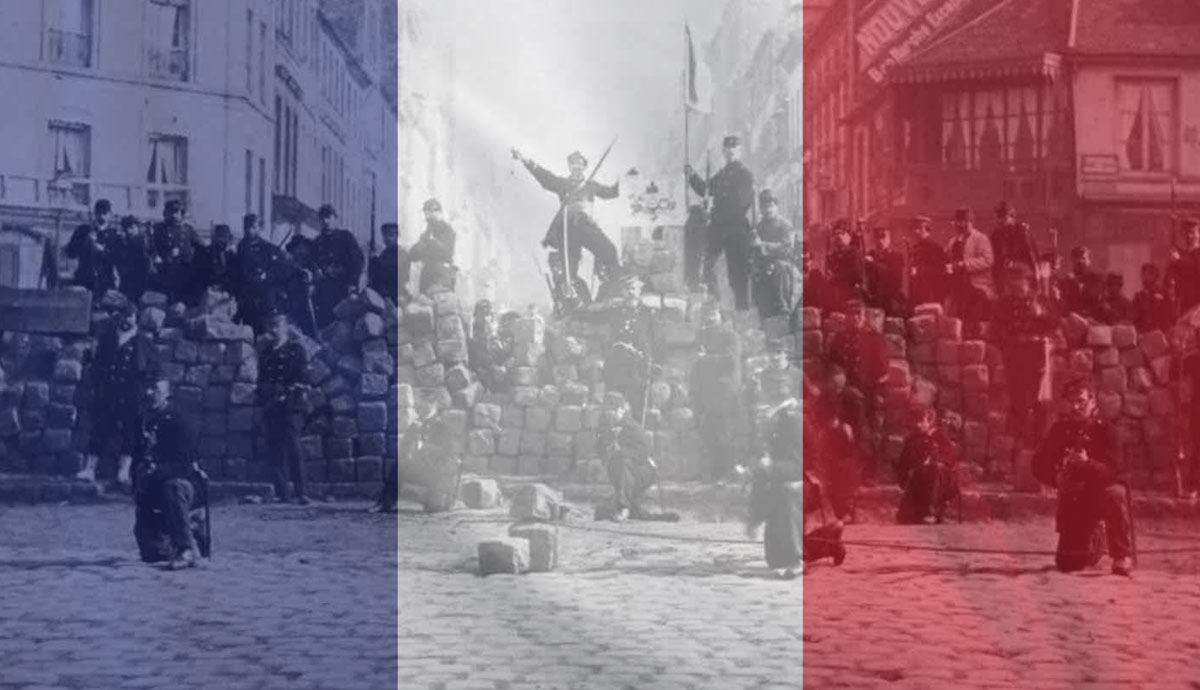
The Paris Commune of 1871 remains one of the most important events in modern French history, with its influence continuing to shape the country’s political system, governance structure and relationship between citizens and the state.
Historians often point to the Paris Commune as a defining moment that changed the direction of France after a period of political instability, war and social unrest. The uprising lasted only a little more than two months, but its consequences extended far beyond the streets of Paris.
The Commune began on March 18, 1871, when tensions between the people of Paris and the national government reached a breaking point.
France had recently suffered defeat in the Franco-Prussian War, and public frustration was growing. Many Parisians opposed decisions made by the national government and believed their interests were being ignored.
As political tensions increased, citizens and members of the National Guard resisted efforts by government forces to seize weapons stored in Paris.
The confrontation quickly escalated into a broader revolt.
Soon after, the national government relocated to Versailles, leaving Paris under the control of a revolutionary administration known as the Paris Commune.
For the next two months, the city operated separately from the national authorities.
The Commune was composed largely of workers, reformers and political activists who sought to create a new form of government based on local control, social reforms and greater political participation.
Leaders of the Commune introduced a range of measures aimed at improving conditions for ordinary citizens.
These included proposals related to workers’ rights, public services, education and local democracy.
Supporters viewed the movement as an effort to build a more equal society, while opponents considered it a threat to national stability and public order.
The division between Paris and the government in Versailles deepened as both sides prepared for confrontation.
The conflict reached its climax in May 1871 when government forces launched a major operation to retake the capital.
The final week of fighting became known as the “Bloody Week.”
Government troops entered Paris and engaged in intense street battles with Commune defenders.
The violence caused widespread destruction across parts of the city and resulted in significant loss of life.
Thousands of people were killed during the crackdown, while many others were arrested, imprisoned or sent into exile after the rebellion was defeated.
The suppression of the Commune marked one of the most violent episodes in French domestic history.
The defeat of the uprising had a lasting impact on how France approached governance and national unity.
Political leaders became increasingly determined to strengthen central authority and prevent similar rebellions from emerging in the future.
As a result, the French state expanded administrative control and reinforced institutions designed to maintain public order.
The events of 1871 also influenced debates about democracy, citizenship and the balance of power between local communities and the national government.
Many of these discussions continued throughout the development of the French Republic.
The memory of the Commune remained deeply controversial for decades.
Some viewed the participants as dangerous revolutionaries who threatened the stability of the nation.
Others regarded them as defenders of social justice and democratic rights.
Because of these competing interpretations, the Paris Commune became a powerful symbol for different political movements across France and beyond.
Its influence extended into labor organizations, socialist movements and broader debates about workers’ rights during the late nineteenth and early twentieth centuries.
The destruction associated with the uprising also left a visible mark on Paris.
Several important buildings were damaged or destroyed during the fighting, including the historic Tuileries Palace.
Although many physical traces of the conflict eventually disappeared, the political and social questions raised by the Commune continued to shape public debate.
Today, historians consider the Paris Commune a key chapter in understanding modern France.
The uprising highlighted tensions between local autonomy and centralized authority, issues that remain relevant in political discussions.
It also demonstrated how periods of crisis can transform institutions and redefine the relationship between governments and citizens.
More than 150 years later, the legacy of the Paris Commune continues to influence historical scholarship and public memory.
Its brief existence and dramatic end remain powerful reminders of the struggles that helped shape France’s modern political identity and democratic institutions.
