


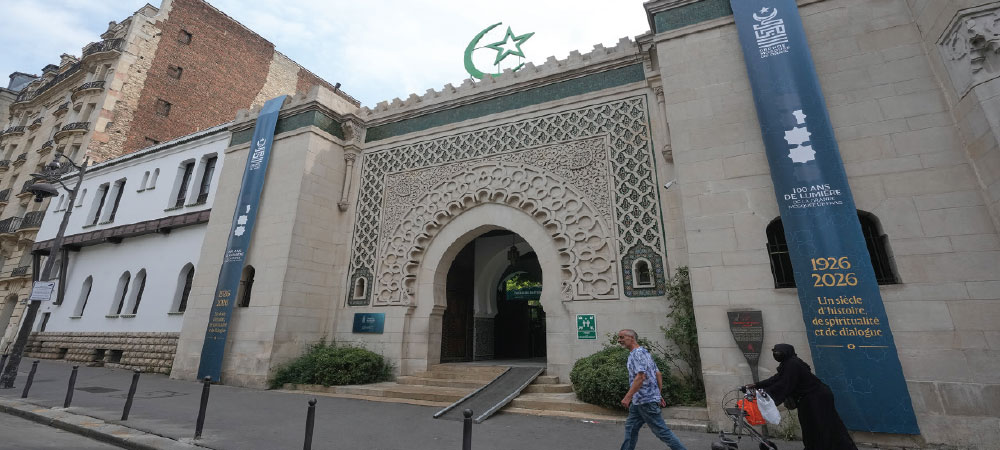
The Paris Grand Mosque Anniversary marks a major moment in French history. The famous mosque has now stood for 100 years. It was built to honor Muslim soldiers from French colonies who fought and died during World War I. Today, it remains an important place for prayer, culture, and community in the heart of Paris.
People from many backgrounds gathered for the special anniversary event. Some were born in France. Others came from countries such as Algeria, Senegal, and other parts of Africa. Many families have strong historical ties to France through its former colonies.
The mosque stands in the busy Latin Quarter. It is known for its beautiful design and peaceful atmosphere. Visitors often admire its large prayer hall, detailed artwork, and tall minaret. The building also includes a tea room and traditional steam baths, making it a popular place for both worshippers and tourists.
Even after 100 years, the mosque continues to serve as more than a historic building. It is an active place of worship where thousands of Muslims gather throughout the year. It also welcomes visitors who want to learn about its history and architecture.
The mosque was built as a tribute to Muslim soldiers who gave their lives while defending France during World War I. Many of those soldiers came from African territories that were part of the French colonial empire at the time. The project was meant to recognize their courage and sacrifice.
Religious leaders said the mosque also represents the values of unity and respect between different faiths. They believe it shows how people from different cultures can share the same national identity while keeping their own traditions.
During the anniversary gathering, many worshippers spoke about the importance of peace and mutual understanding. They said the mosque has always been a place where people can meet with respect, regardless of their background.
The Paris Grand Mosque Anniversary also comes at a time when discussions about religion and identity remain active in France. Islam is the country’s second-largest religion, and France has the biggest Muslim population in Western Europe.
Many Muslims say they still face challenges in daily life. Some believe there are misunderstandings about their religion. Others point to discrimination and negative stereotypes that continue to affect Muslim communities.
Public debate about immigration and religion has also become more visible as France prepares for its next presidential election. These topics are expected to remain important during the campaign, with different political parties offering their own views on national identity and social policy.
Some worshippers also spoke about rules affecting the wearing of Muslim headscarves in certain schools and workplaces. They said people should have the freedom to make personal religious choices while respecting French law.
Despite these concerns, the anniversary event focused mainly on hope and unity. Many people said the mosque represents friendship between cultures and encourages peaceful dialogue among different communities.
Visitors described the mosque as a welcoming place where everyone can feel at home. For many newcomers arriving in France, it is often one of the first places they visit. Community members said the mosque offers support, guidance, and a sense of belonging.
Tourists also continue to visit the landmark throughout the year. Its unique architecture, peaceful gardens, and historic importance make it one of the city’s well-known attractions. Many visitors come to admire its beauty while learning more about France’s diverse cultural history.
As the Paris Grand Mosque Anniversary celebrates a full century, the mosque remains a lasting reminder of shared history, respect, and faith. Built to honor sacrifice during World War I, it continues to bring together people from different cultures and generations.
One hundred years after its opening, the Grand Mosque of Paris stands not only as a historic monument but also as a symbol of remembrance, community, and dialogue. Its anniversary highlights both its rich past and its continuing role in modern France.
