


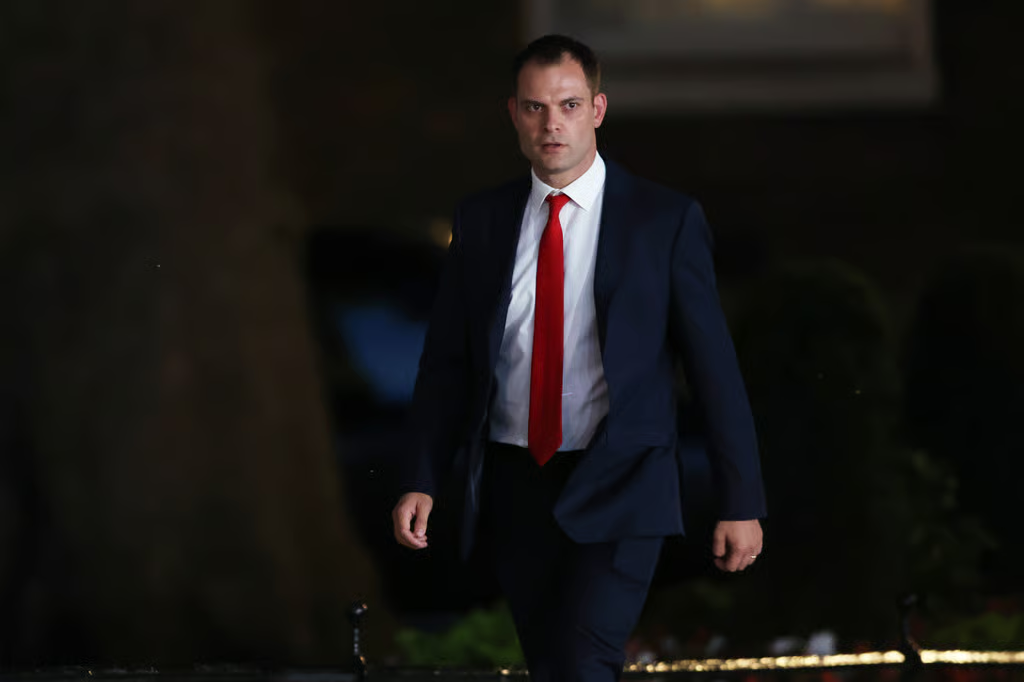
Ed Miliband has started his role as the United Kingdom’s foreign secretary with a strong focus on climate action, international development, and closer ties with European partners.
His early moves show a clear shift in foreign policy priorities. Climate change and cooperation with Europe now appear set to play a larger role in the government’s international agenda.
The Foreign, Commonwealth and Development Office is preparing for changes under Miliband’s leadership. Officials expect climate policy and development issues to receive greater attention in the months ahead.
Miliband has long supported action on climate change. He has also argued that international development should remain a key part of Britain’s global role.
People familiar with discussions before his appointment said Miliband wanted assurances that he would be able to focus on climate challenges and development programs. These issues have received less attention in recent years as governments increased spending on security and defense.
His first overseas visits reflected these priorities.
This week, Miliband traveled to Paris and Madrid for talks with his French and Spanish counterparts. Both countries have faced severe wildfire seasons in recent years, making climate cooperation a key topic.
The visits were designed to strengthen partnerships with European allies and explore shared responses to environmental threats.
Speaking at a policy event in London, Miliband said climate and environmental issues should have a much stronger place in foreign policy.
He also emphasized his political approach to the role. He indicated that he plans to take an active and visible position on major international issues rather than follow a purely diplomatic style.
Observers see this as a sign that Miliband intends to be a high-profile foreign secretary who champions specific causes, especially climate action and international development.
As he settles into the position, Miliband has sought advice from experienced figures in British diplomacy.
He has consulted former senior officials with extensive foreign policy experience. Reports suggest he may also hold discussions with former leaders who previously served as foreign secretary.
The outreach reflects his desire to move quickly and establish clear priorities at the start of his term.
Miliband also spoke about his family history during the London event.
He reflected on how remarkable it would have seemed to his grandfather that two members of the same family would serve as British foreign secretary.
His brother, David Miliband, previously held the position from 2007 to 2010 and remains a well-known figure in international affairs.
Alongside the climate agenda, another major policy change is taking shape.
The government is placing renewed focus on rebuilding relations with the European Union.
Miliband has accepted an invitation to attend an informal meeting of European foreign ministers in September. The move signals a desire for stronger engagement with European partners after years of post-Brexit tensions.
He said Britain’s economic and security interests are best served through closer cooperation with European allies.
According to Miliband, stronger partnerships can help protect national interests while supporting shared values and common goals.
The government has also appointed Hamish Falconer as Europe minister and minister for inter-governmental relations.
Falconer will attend Cabinet meetings and play a key role in managing relations with European partners.
His appointment reconnects diplomatic efforts with broader discussions on Britain’s relationship with the European Union.
In recent years, many Brexit-related matters were managed through the Cabinet Office. The new arrangement gives the Foreign Office a more direct role in shaping future cooperation.
Falconer has linked stronger European relations with the government’s wider goal of making policy decisions more relevant to everyday life.
He brings experience in national security and international diplomacy. His previous work included efforts related to Afghanistan and Gaza.
A major challenge awaits both Miliband and Falconer.
The United Kingdom and the European Union had planned to hold a summit in July to discuss trade and cooperation agreements covering agriculture, emissions policies, and youth mobility programs.
The meeting was postponed following political changes in Britain.
Government leaders now want the summit to take place later this year. However, a new date has not yet been announced.
The planned discussions are expected to focus on improving cooperation and strengthening the relationship between Britain and the European Union.
For now, the UK Climate Diplomacy Push is emerging as one of the defining themes of the new foreign secretary’s agenda. Through climate leadership, stronger European ties, and renewed development efforts, Miliband is seeking to reshape Britain’s role on the global stage.
