


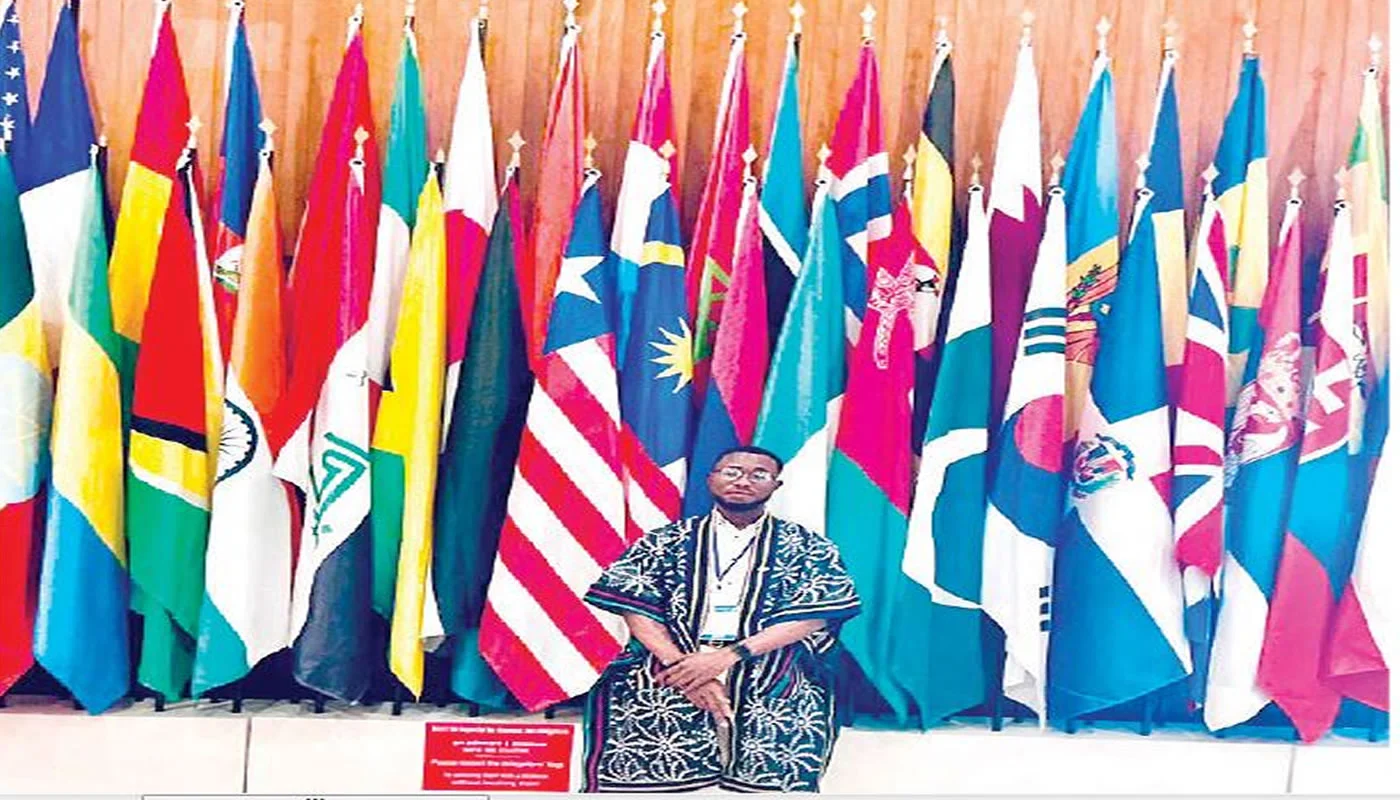
Young people should play a central role in shaping education policies after 2030, according to Blessing Dada, a Global Youth Leader on UNESCO’s SDG 4 High-Level Steering Committee. He said governments should treat young people as equal partners in designing, implementing, and monitoring education systems instead of limiting their role to consultation.
Dada made the remarks after representing the SDG 4 Youth and Student Network at the Transforming Education Summit +4 and the SDG 4 High-Level Steering Committee Leaders’ Meeting held in Paris, France. The meetings brought together education leaders and policymakers to review progress since the 2022 summit and discuss priorities for the future of global education.
He said the success of education reforms depends not only on new policies but also on who takes part in creating them. According to Dada, giving young people meaningful opportunities to contribute to decision-making will help build stronger and more inclusive education systems.
Reflecting on his own experience, Dada shared that he spent two years out of school while growing up in a rural community in Ekiti State because his family could not afford education costs. He said that experience made it especially meaningful to represent young people before international education leaders.
Dada described education as a pathway to opportunity, leadership, and dignity. He said quality education can help individuals overcome poverty while creating stronger communities and better futures for young people around the world.
The discussions in Paris focused on preparing a global education agenda beyond the Sustainable Development Goals deadline of 2030. Participants reviewed achievements made over the past several years while identifying areas that still require greater attention.
According to Dada, one of the key outcomes of the meetings was growing recognition that young people should be viewed as active partners in global education governance rather than observers. He said consultations with youth from different regions helped identify several priorities for future education reforms.
The first priority is increasing investment in teachers. Dada said countries should improve teacher recruitment, ensure fair deployment, expand professional development opportunities, and provide stronger support systems. He noted that teacher shortages continue to affect learning outcomes in many parts of the world.
The second priority is strengthening foundational education and lifelong learning. He said education systems should help learners develop literacy, numeracy, critical thinking, and practical skills while becoming more resilient to challenges such as poverty, conflict, displacement, and climate-related disruptions.
Dada also highlighted the importance of digital transformation in education. He said technology and artificial intelligence should be used to improve access to quality learning while reducing educational gaps instead of creating new inequalities.
He encouraged governments to invest in affordable internet access, digital infrastructure, and responsible governance of artificial intelligence. He also stressed that students in rural communities and learners with disabilities should have equal access to digital education opportunities.
In addition to these priorities, Dada said sustainable education funding, climate resilience, gender equality, and youth participation should remain at the center of future education reforms. He believes these areas are closely connected and essential for building stronger education systems.
He added that many of the issues discussed in Paris are especially important for Nigeria, where challenges such as out-of-school children, teacher shortages, learning poverty, digital exclusion, and insecurity continue to affect education.
Dada said young people are increasingly contributing ideas that help shape education policies rather than simply requesting opportunities to participate. He called for permanent systems that allow young people to take part in policy development and accountability at every stage.
Drawing on his work with underserved communities through the Slum and Rural Aid for African Child Development Initiative, Dada said lasting education solutions are more likely to succeed when the people most affected by the challenges are directly involved in creating them.
